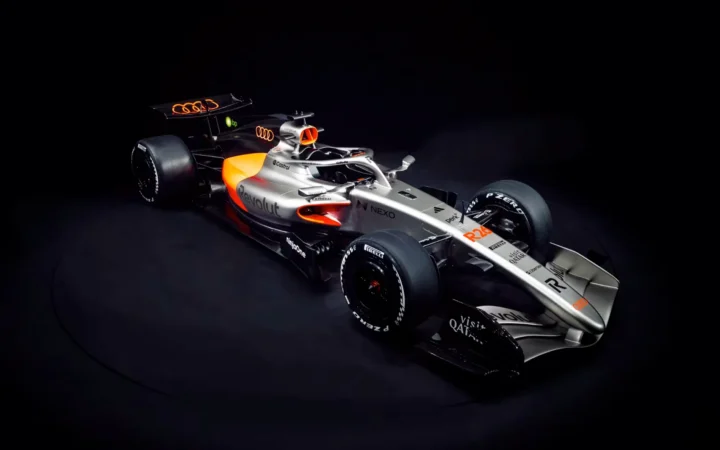
































The opening day of Formula 1’s 2026 pre-season running in Bahrain has provided the clearest indication yet that Audi is prepared to take significant aerodynamic risks.
After debuting its R26 in relatively conservative trim during the Barcelona shakedown, the team has now revealed a dramatically reworked sidepod solution for Bahrain. The contrast between the two specifications underlines just how aggressively Audi is developing ahead of its first full campaign under the new regulations.
See Also…


At Barcelona, the car featured sidepods with a modest inlet “overbite” and a largely inwashing philosophy. The rear edge of the pods was drawn tightly inward, and the upper surface was comparatively smooth and uncomplicated. It was tidy, controlled – and, by modern standards, orthodox.
The Bahrain version is anything but.
A more sculpted, more intricate approach
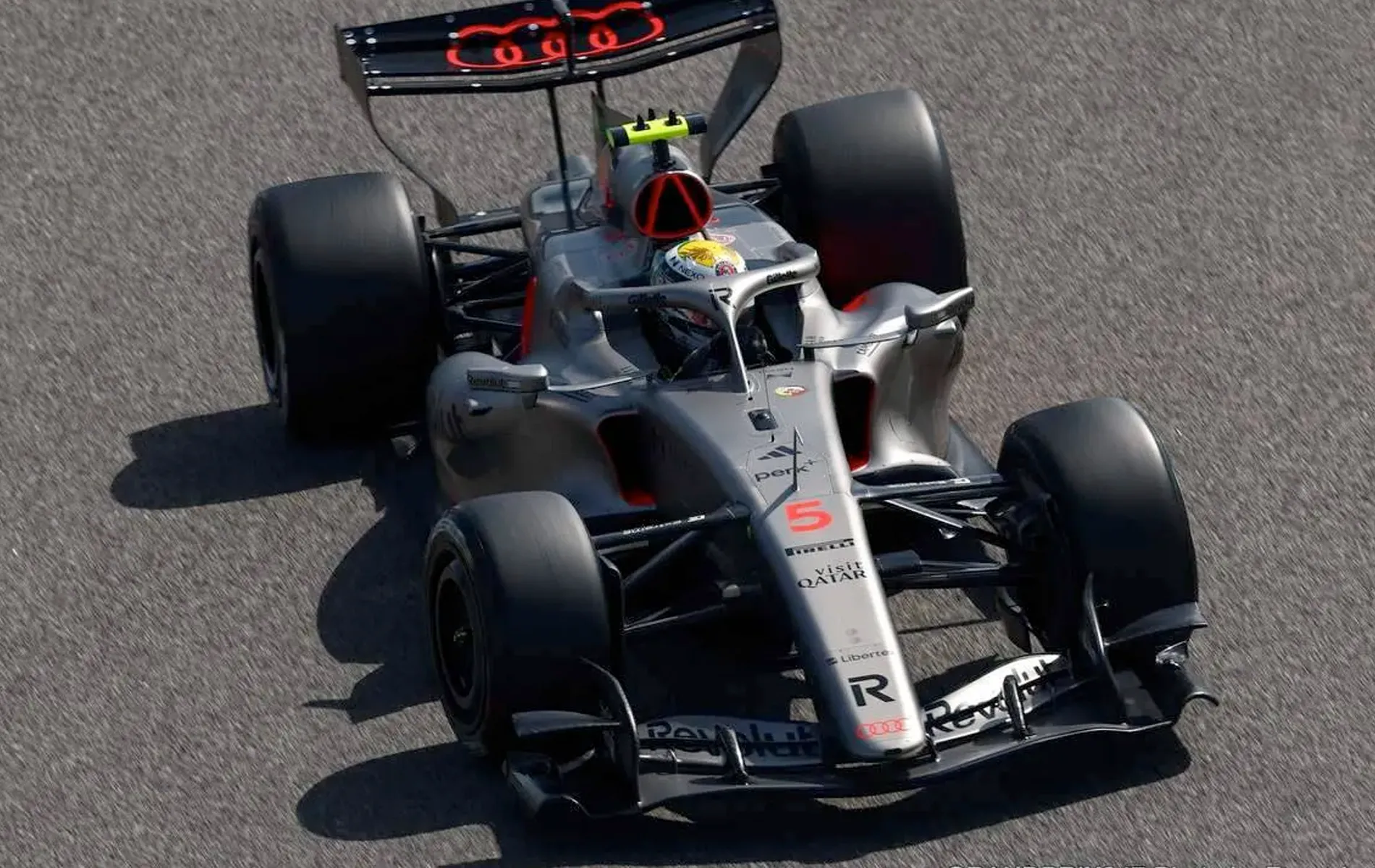
The most obvious change lies in the inlet geometry. Audi has shifted to a taller, narrower intake positioned tightly alongside the chassis flanks. Rather than feeding directly into a broad, conventional body shape, the airflow is encouraged outward via an aggressively ramped undercut that guides it towards the floor edges.
Above this, the top surface has been carved to introduce a defined channel running rearwards. The intent appears clear: streamline the journey of airflow toward the diffuser by shortening and tidying its route. By reducing the distance the air must travel across the upper bodywork, the design should help preserve flow energy before it reaches the critical upper diffuser region.
The sidepods themselves have been tightly shrink-wrapped around the mandatory side-impact structures. A small blister adjacent to the mirror mount accommodates the upper crash structure, while the undercut ramp neatly integrates the lower element. The packaging is visibly tighter and more deliberate than in Barcelona trim.
Beyond the obvious aerodynamic gains, there is a secondary benefit. By bringing the inlets further inboard, Audi may have insulated the cooling system from the variability created by front-tyre wake. Turbulence shed from the rotating front tyres can disturb the mass flow rate through the intakes, particularly during yaw and steering input. Moving the openings inward reduces their exposure to that disturbed air.
This positioning could also pay dividends mid-corner. With the sidepods assuming more responsibility for managing tyre wake, Audi may gain greater consistency in the airflow directed towards the floor and diffuser during high-load phases.
What lies beneath?
From the currently available trackside photography and broadcast footage, it remains difficult to draw firm conclusions about the detail beneath the inlet line. However, the shapes visible hint at a possible attempt to create a bargeboard-style outwash effect within the permitted 2026 architecture.
If that interpretation proves correct, the design could help moderate airflow towards the floor’s leading edge and interact strategically with the wake management devices further downstream. As more detailed imagery emerges over the course of the Bahrain test, a clearer picture should form.
Changes extend to the front wing
Audi’s updates are not confined to the sidepods. The front wing assembly also carries noteworthy revisions.
Rather than employing a single central active-aero actuator beneath the nose, the team has opted for a twin-actuator arrangement. This configuration allows the nose to sit lower without excessive blockage from the actuator housing, potentially improving airflow continuity beneath the chassis.
In addition, small outwashing fins have been added atop the front wing’s vortex tunnels. These elements should enhance the interaction between the vortex structures generated by the wing and the endplate winglets, helping to more effectively guide airflow around the front tyres.
A clear statement of intent
Taken together, Audi’s Bahrain specification signals a team willing to diverge from safe, baseline solutions in pursuit of performance. The Barcelona configuration now appears to have been a stepping stone – a controlled reference point before introducing a far more ambitious aerodynamic package.
With Gabriel Bortoleto and the Audi squad now accumulating mileage in Bahrain, attention will inevitably turn to correlation data and stability across long runs. But from a visual and conceptual standpoint, the R26’s sidepod overhaul already stands out as one of the most intriguing developments of the 2026 test so far.
As testing progresses, further detail should clarify just how deep this rethink runs — and whether Audi’s radical interpretation offers the competitive edge it is clearly targeting.
Seen in: