


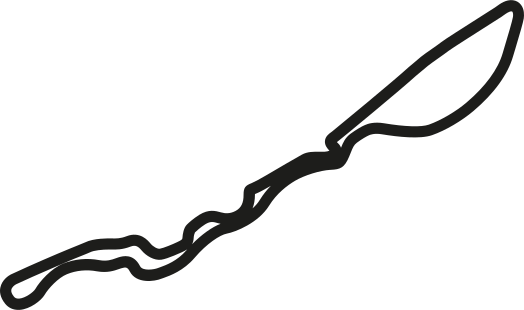




















The Circuit Bremgarten was a historic road racing circuit located in the Bremgartenwald forest near Bern. Opened in 1931, the 7.28-km circuit became famous for hosting the Swiss Grand Prix during the early years of Formula One.
Running entirely through forest roads, Bremgarten was known for its fast-flowing corners, low visibility and constantly changing grip levels. Although admired for its challenge, it was also regarded as one of the most dangerous circuits ever used in Grand Prix racing.
After the 1955 Le Mans disaster, Switzerland banned circuit racing, bringing Bremgarten’s motorsport history to an abrupt end.
See also…
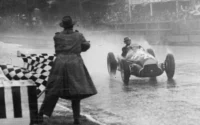
Circuit Bremgarten
| First Grand Prix | 1950 Swiss Grand Prix |
| Number of Laps | 80 |
| Circuit Length | 7.280 km |
| Race Distance | 304.000 km |
| Lap Record | 2:39.700 Juan Manuel Fangio (1954) |
Circuit
When was Circuit Bremgarten built?
The Bremgarten Circuit opened in 1931 as a motorcycle racing venue in the forest north of Bern.
Unlike many road circuits of the era, the track did not feature a long straight. Instead, it was made up almost entirely of fast, sweeping corners connected by short sections of road.
The layout ran through the dense Bremgartenwald, where the tall trees created constantly changing light conditions, damp surfaces in shaded areas and slippery leaves and moss on the road. These factors made the circuit particularly treacherous in wet weather.
The first automobile race was held in 1934, marking the beginning of Bremgarten’s long association with the Swiss Grand Prix.
Why was Bremgarten considered so dangerous?
Although many drivers admired the circuit’s rhythm and speed, Bremgarten had several features that made it extremely hazardous:
- Tree-lined roads with virtually no run-off areas
- Poor visibility due to shadows in the forest
- Changing road surfaces, including asphalt and concrete
- High-speed curves with no margin for error
The circuit claimed several lives during its history.
In 1934, British driver Hugh Hamilton was killed during a race. Another tragedy occurred in 1948 when Italian Grand Prix star Achille Varzi died after crashing in wet conditions.
Motorcycle racing also saw fatal accidents, including the death of Italian rider Omobono Tenni during practice in 1948.
When was the first Swiss Grand Prix at Circuit Bremgarten?
The Swiss Grand Prix was one of the early fixtures on the Formula One calendar.
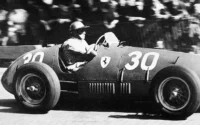
Bremgarten hosted Formula One championship races between 1950 and 1954, with victories by several legendary drivers, including Juan Manuel Fangio.
The final Formula One race at the circuit was the 1954 Swiss Grand Prix, which Fangio won driving a Mercedes-Benz W196.
Why did racing stop at Bremgarten?
The end of racing at Bremgarten came after the 1955 Le Mans disaster.
In response to the tragedy, Switzerland introduced a nationwide ban on circuit racing, allowing only time-trial-style motorsport, such as hill climbs and rallies.
As a result the 1955 Swiss Grand Prix was cancelled and Bremgarten never hosted another race. Switzerland effectively disappeared from the Formula One calendar, and the ban remained in place for decades, although electric racing returned briefly when the Zurich ePrix was held in 2018.
What remains of the circuit today?
Much of the original Bremgarten circuit has disappeared over time.
Parts of the route have been converted into public roads, turned into cycling paths and absorbed by forest infrastructure. However, small sections of the original layout remain visible in the Bremgartenwald, including the historic Eymatt and Tenni curves.
Circuit Bremgarten lap record
The official Formula One race lap record on the original circuit is 2:39.700, set by Juan Manuel Fangi driving the Mercedes-Benz W196 during the 1954 Swiss Grand Prix.
Despite its dangerous reputation, Bremgarten is remembered as one of the most atmospheric road circuits in motorsport and F1 history, representing an era when Grand Prix racing took place on fast public roads carved through forests and mountains.