




























Situated in downtown Detroit, Michigan, the Detroit Street Circuit became one of the most demanding temporary tracks in Formula One during the 1980s.
Constructed on public roads around the Renaissance Centre and Cobo Arena, the circuit ran alongside sections of the famous Woodward Avenue and through Detroit’s downtown waterfront district. Known for its tight layout, bumpy surface and punishing braking zones, the track quickly gained a reputation as one of the toughest street circuits on the Formula One calendar.
The Detroit Grand Prix was part of a wave of American races in the early 1980s as Formula One sought to strengthen its presence in the United States. Although the event lasted less than a decade on the F1 calendar, it produced several memorable races and dominant performances from one of the sport’s greatest drivers.
See also…
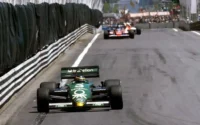
Detroit Street Circuit
| First Grand Prix | 1982 Detroit Grand Prix |
| Number of Laps | 62 |
| Circuit Length | 4.023 km |
| Race Distance | 249.426 km |
| Lap Record | 1:40.464 Ayrton Senna (1987) |
Circuit
When was the Detroit Street Circuit built?
The Detroit Street Circuit was created in 1982 as a temporary street course in downtown Detroit, Michigan. Built using a network of public roads around the Renaissance Centre and the Detroit riverfront, the track was designed as part of an effort to improve the city’s international image and attract global sporting events.
The original circuit measured approximately 4.168 km and featured 24 corners, making it one of the most technical street circuits in Formula One at the time. The layout was slightly modified from 1983 onward, reducing the number of corners to 22 while maintaining the circuit’s tight and challenging character.
The track surface quickly became infamous for its rough and bumpy nature. Combined with Detroit’s hot summer weather, the asphalt often deteriorated during race weekends. Drivers also had to contend with narrow concrete barriers and a layout that demanded heavy braking more than twenty times per lap.
These characteristics placed enormous strain on both drivers and machinery. Gearboxes and brakes were pushed to their limits, and races frequently became attrition races where simply finishing was considered an achievement.
When was the first Detroit Grand Prix?
The first Detroit Grand Prix took place in 1982 as a round of the Formula One World Championship. That season marked the only time until 2020 that a country hosted three Formula One races in a single year, with the United States also staging Grands Prix in Long Beach and Las Vegas.
The inaugural race produced a remarkable result when John Watson won for McLaren after starting from 17th on the grid — at the time the lowest starting position for a winner of a Formula One street race.
Throughout its time on the calendar, the Detroit Grand Prix became known for producing dramatic and physically demanding races. The circuit’s punishing conditions regularly led to high retirement rates, with mechanical failures and crashes against the unforgiving walls common occurrences.
One of the defining figures at Detroit was Ayrton Senna. The Brazilian driver dominated the circuit during the late 1980s, winning the race three consecutive times between 1986 and 1988 and establishing himself as the master of the challenging street layout.
Despite its memorable races, Formula One left Detroit after the 1988 event when officials ruled that the temporary pit facilities did not meet the sport’s required standards. The race continued as a CART IndyCar event until 1991, then moved to a different circuit on Belle Isle.
Detroit Street Circuit lap record
The official Formula One lap record for the Detroit street circuit is 1:40.464, set by Ayrton Senna driving the Lotus 99T during the 1987 Detroit Grand Prix.
More than three decades later, the Detroit Grand Prix returned to downtown streets in 2023 with a new, shorter circuit layout used by the IndyCar Series. While the modern configuration differs significantly from the original Formula One track, the event continues Detroit’s long tradition of hosting top-level motorsport in the heart of the city.