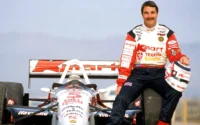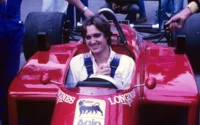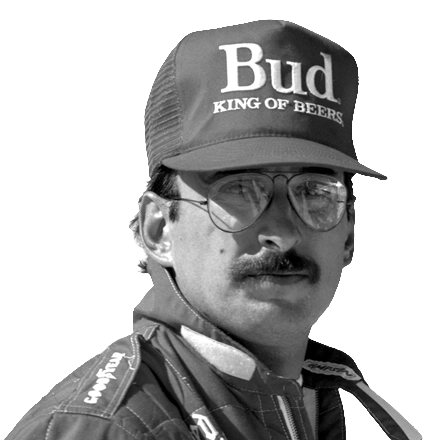
Bobby Rahal—known to generations of racing fans simply as Bobby Rahal—stands as one of American motorsport’s most complete figures: a champion driver, successful team owner, respected executive, and enduring ambassador for open-wheel racing.
| Nationality | American |
|---|---|
| Born | Robert Woodward Rahal 10 January 1953 (age 73) Medina, Ohio, U.S. |
Rahal grew up immersed in racing culture. His father, Mike Rahal, was a long-time racer himself, and the sport quickly became a family language. Raised in Glen Ellyn, Illinois, Rahal balanced his competitive instincts with academics, graduating from Glenbard West High School in 1971 and later from Denison University, following in his father’s footsteps.
From Club Racing to Formula One
Rahal’s racing career began in the SCCA feeder ranks, where his discipline and mechanical sympathy set him apart early. His breakthrough came in 1977 when he finished second in the Formula Atlantic Championship—behind only Gilles Villeneuve, a name that would soon become legendary.
In 1978, Rahal’s ambitions took him overseas. He competed in the New Zealand Grand Prix with Fred Opert Racing in Formula Pacific, raced in European Formula Three with Wolf Racing, and ultimately earned a brief but significant opportunity in Formula One. Driving for the Wolf F1 team, Rahal entered the 1978 United States Grand Prix at Watkins Glen and the Canadian Grand Prix later that season. Though his F1 tenure lasted just two starts, the experience hardened his resolve and expanded his technical understanding of elite-level racing.
When Wolf signed James Hunt for 1979, Rahal returned to the United States after a short stint in Formula Two, reestablishing himself in Can-Am and sports car competition. Throughout the early 1980s, he raced extensively in endurance events, including multiple appearances at the 24 Hours of Le Mans, IMSA GT races, and a victory at the 24 Hours of Daytona in 1981.
CART Stardom and the Indianapolis 500
Rahal’s defining chapter began in 1982 when he joined the CART Indy car series with Truesports. The impact was immediate: two victories in his rookie season and a runner-up finish in the championship standings behind Rick Mears. From that point forward, Rahal became a fixture at the front of the field, winning at least one race every season through 1988.
The pinnacle came in 1986. At the Indianapolis 500, Rahal made a daring pass on Kevin Cogan during a late restart, securing victory with just two laps remaining. The win carried profound emotional weight—it came only days before Truesports owner Jim Trueman passed away from cancer. Rahal honoured his team owner with a championship that same season and followed it up by successfully defending the CART title in 1987.
In 1988, Rahal delivered another milestone victory at the Pocono 500, marking the final win for Truesports and the only Indy car victory ever achieved with a Judd engine.
Across his CART career, Rahal competed in 265 races over 17 seasons, amassing 24 wins, 88 podiums, and 17 pole positions. He claimed three CART championships—in 1986, 1987, and 1992—cementing his reputation as one of the era’s most reliable and intelligent competitors.
Owner-Driver and Final Championships
By 1991, Rahal’s career evolved once again. After finishing second in the championship to Michael Andretti, he partnered with Carl Hogan to acquire the former Pat Patrick Racing team, becoming an owner-driver. The move paid off instantly. In 1992, Rahal won four races and secured his third CART championship, becoming the last owner-driver to win a CART title—a feat not repeated in the series’ modern era.
Rahal’s team experimented with a proprietary chassis in 1993, but after failing to qualify for the Indianapolis 500, returned to proven Lola equipment. In 1994, the team introduced Honda engines to CART, laying the groundwork for what would soon become the dominant powerplant in the series. Although early results were modest, Rahal remained competitive, finishing third in the 1995 standings despite not winning a race.
That same year, at Long Beach, Rahal became just the tenth driver in Championship Car history to start 200 races.
Rahal continued racing through 1998, closing his driving career with 24 CART wins and a reputation for consistency, technical insight, and leadership.
NASCAR and Sports Cars
Rahal’s versatility extended beyond open-wheel racing. He competed in IMSA, IROC, and endurance racing throughout the 1980s, including the 12 Hours of Sebring, which he won in 1987.
He also made a single NASCAR Cup Series start in 1984, substituting for Buddy Baker in the Wood Brothers’ No. 21 Ford at Riverside. Mechanical failure limited him to 44 laps and a 40th-place finish, but the appearance underscored his willingness to test himself across disciplines.
Team Owner, Executive, and Beyoind
Following his retirement from driving, Rahal moved into leadership roles. His team evolved into Team Rahal in 1996, and later Rahal Letterman Racing after David Letterman joined as a minority owner. In 2004, the organisation became Rahal Letterman Lanigan Racing and moved full-time to the IndyCar Series.
As a team owner, Rahal reached the Indianapolis 500 victory lane again—this time as an executive—with wins in 2004 (Buddy Rice) and 2020 (Takuma Sato).
Beyond team ownership, Rahal served as CART’s interim President and CEO during the 2000 season and briefly joined the Jaguar Formula One team in a management role. His tenure included a high-profile, ultimately unsuccessful attempt to recruit Adrian Newey and ended amid internal politics that foreshadowed Jaguar’s later struggles.
Rahal also co-owned Gloy-Rahal Racing in the NASCAR Craftsman Truck Series from 1997 to 1999.
Outside the cockpit, Rahal built the Bobby Rahal Automotive Group, a major dealership network across western and central Pennsylvania representing brands including BMW, Honda, Lexus, Mercedes-Benz, Toyota, Jaguar, and Land Rover.
In 2021, Rahal expanded into race promotion, partnering with former Indianapolis Motor Speedway owner Tony George to bring IndyCar back to Iowa Speedway. By securing Hy-Vee as a title sponsor, he helped establish a multi-year doubleheader agreement beginning in 2022—one of the series’ most successful modern events.
Honours and Recognition
Rahal’s contributions have been widely recognised. He is a member of the International Motorsports Hall of Fame, the Motorsports Hall of Fame of America, the SCCA Hall of Fame, and the Indianapolis Motor Speedway Hall of Fame. In 2014, he received the Simeone Foundation Spirit of Competition Award.
At WeatherTech Raceway Laguna Seca, the uphill back straight leading to the Corkscrew now bears his name: Rahal Straight.
Bobby Rahal Formula One World Championship career
| F1 Career | 1978 |
|---|---|
| Teams | Wolf |
| Entries | 2 |
| Championships | 0 |
| Wins | 0 |
| Podiums | 0 |
| Career points | 0 |
| Pole positions | 0 |
| Fastest laps | 0 |
| First entry | 1978 United States Grand Prix |
| Last entry | 1978 Canadian Grand Prix |
Bobby Rahal Teammates
| 1 driver | Involvement | First Year | Last Year |
|---|---|---|---|
| Jody Scheckter | 2 | 1978 |
Bobby Rahal Complete Formula One Results
| Year | Entrant | Chassis | Engine | 1 | 2 | 3 | 4 | 5 | 6 | 7 | 8 | 9 | 10 | 11 | 12 | 13 | 14 | 15 | 16 | WDC | Pts |
|---|---|---|---|---|---|---|---|---|---|---|---|---|---|---|---|---|---|---|---|---|---|
| 1978 | Walter Wolf Racing | Wolf WR5 | Ford Cosworth 3.0 V8 | ARG | BRA | RSA | USW | MON | BEL | ESP | SWE | FRA | GBR | GER | AUT | NED | ITA | USA 12 | NC | 0 | |
| Wolf WR1 | Ford Cosworth 3.0 V8 | CAN Ret | NC | 0 |