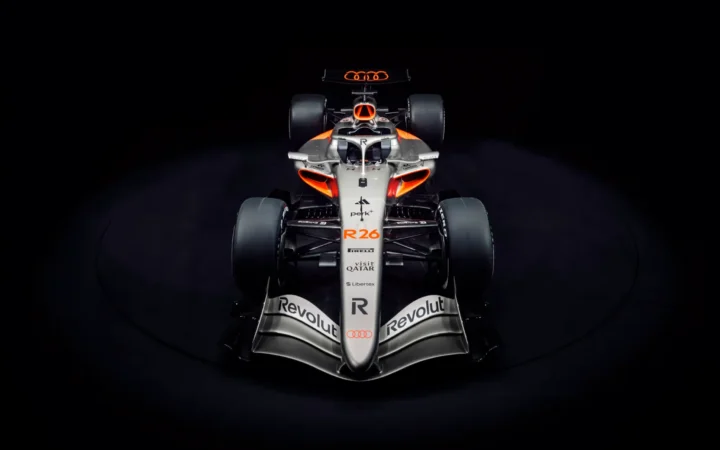



























A new era arrives in Formula 1 this season, with the introduction of an all-new power unit after twelve years of the current hybrid formula, alongside sweeping changes to chassis and aerodynamic regulations.
Since the original framework for these rules was unveiled, numerous refinements have been made. With that in mind, it’s worth stepping back and reassessing how the 2026 season is shaping up, and what it means for the cars we’ll soon see on track.
See also…



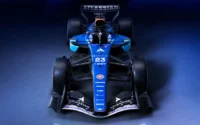
Designed to be more nimble
From the outset, the FIA made it clear that the philosophy behind the 2026 regulations was centred on agility. The intention was to move away from ever-larger cars and instead deliver machines that are more responsive and better suited to close racing.
That goal is reflected clearly in the dimensional changes. The maximum wheelbase has been reduced by at least 200mm, bringing the upper limit down to 3400mm. Overall width has also been trimmed, with cars now measuring 1900mm across, down from the previous 2000mm.
Weight has been addressed, too. The minimum mass drops by 30kg to 768kg. As was the case at the start of the 2022 regulation cycle, teams are likely to find that target challenging initially, but the direction of travel is unambiguous.
Tyres: smaller, narrower, rethought
The tyre package has also been revised for this new generation of cars. Both front and rear tyres are narrower than before, reduced by 25mm at the front and 30mm at the rear.
While the wheel rim diameter remains at 18 inches, the tyres themselves have been scaled down further, shrinking by 15mm at the front and 10mm at the rear. These changes are designed to complement the lower weight and reduced dimensions of the cars, contributing to the overall aim of improved agility.
Pirelli undertook an extensive testing programme throughout 2025 to arrive at the final specification. Working closely with the teams, which supplied mule cars for development running, the Italian manufacturer evaluated tyre constructions capable of operating effectively within the expected downforce and drag window of the 2026 regulations.
Early divergence is inevitable
As with every major rules reset, the early phase of the new cycle is likely to reveal significant variation across the grid. With 11 teams working largely in isolation, design decisions that appear logical within one organisation’s own development model may look entirely out of step once all cars are revealed.
History suggests that many of these differences can be addressed over the course of a season. If a rival uncovers a more effective solution in a particular area, teams can usually respond with updates to close the gap or even move ahead.
However, not all choices are so easily reversed.
The decisions that define a concept
Certain foundational design calls are effectively locked in from the outset. These tend to be tied to dimensional constraints, such as the cockpit position and the front axle line, which, in turn, influence other critical elements, including sidepod inlet placement and the length, height, and profile of the nose.
Once these parameters are set, the rest of the aerodynamic package must be developed around them, making wholesale changes extremely difficult without a fundamental redesign.
That makes the opening months of 2026 particularly intriguing. It will be fascinating to see how much variation exists in these core architectural choices, and how successfully each team integrates the remainder of its aerodynamic concept around them as Formula 1 embarks on its next regulatory chapter.
Seen in: