













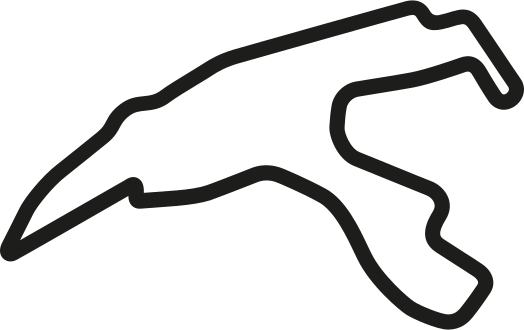
















Spa-Francorchamps is one of Formula 1’s great pilgrimages, a circuit of forests, elevation, weather, and mythology, where the challenge feels every bit as big as its reputation.
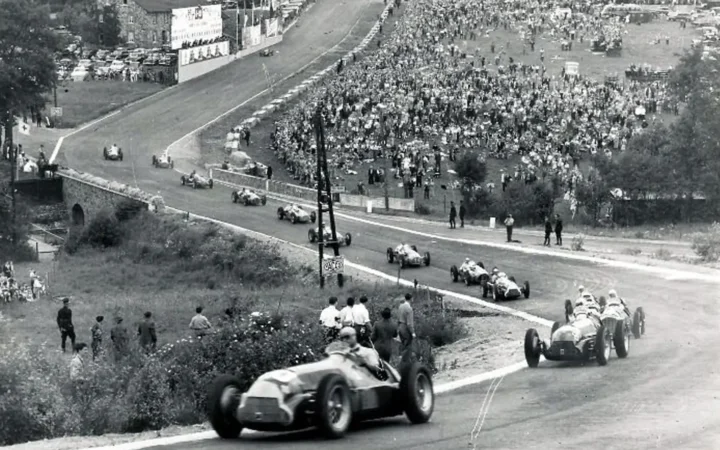
Set deep in the Ardennes near Circuit de Spa-Francorchamps, the Belgian Grand Prix is one of the most storied races on the Formula 1 calendar. First designed in 1920 using public roads linking Francorchamps, Malmedy, and Stavelot, Spa hosted its first non-championship Grand Prix in 1925 before becoming one of the seven venues that formed part of Formula 1’s inaugural World Championship season in 1950.
Belgium Grand Prix
Circuit de Spa-Francorchamps

Laps 44
First Grand Prix 1950
Circuit Length 7.004km
Race Distance 308.052 km
There have been plenty of layout changes over the decades, but the essence of Spa has never really changed. At 7.004km, it remains the longest circuit on the current Formula 1 calendar, a vast sweep of tarmac through woodland and over hills that has always demanded bravery, patience and respect.
Spa is not glamorous in the polished sense of Monaco or Abu Dhabi. It can be muddy, wet, windswept and physically demanding for spectators. But that is part of the point. This is a Grand Prix for people who love race tracks, not just race weekends, and it offers one of the purest motorsport atmospheres anywhere in the world.
Drivers consistently rank it among their favourites, and fans return again and again for the same reasons — the scale of the place, the constant sense of history, and the knowledge that even when the weather misbehaves, Spa is almost always memorable.
Belgian Grand Prix: What Makes Spa Special
Spa-Francorchamps feels different because it still carries the weight of old Formula 1. Even in its modern form, it has the scale and natural flow of a much earlier era, when Grand Prix circuits felt like part of the landscape rather than something imposed upon it.
See also…
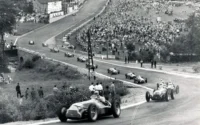
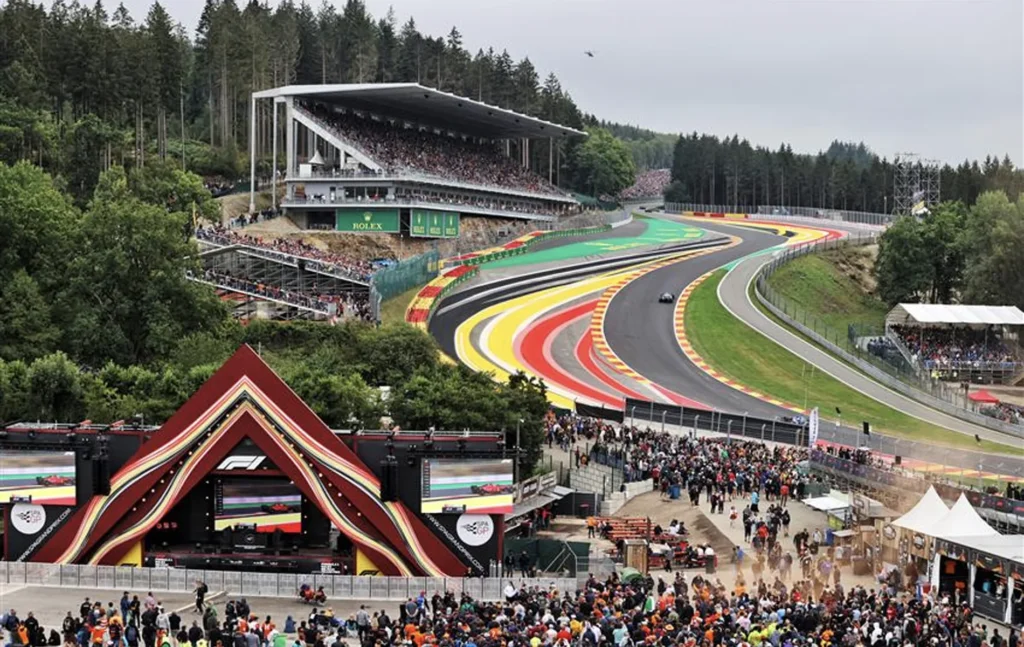
The circuit’s appeal is obvious to anyone who has ever watched a car climb from La Source down to Eau Rouge and up through Raidillon, or sweep through Pouhon at speed. Spa offers a variety of corners and viewpoints that reward exploration, and because of the track’s size, it feels less like a stadium and more like an adventure across the Ardennes.
It also has a unique atmosphere. Fans know they are not here for luxury. They come for the circuit itself, for the challenge of the terrain, for the drama of the weather, and because Spa has long been one of the bucket-list events in European motorsport.
And then there is the setting. Misty forests, steep roads, old villages and a strong local identity give the Belgian Grand Prix a mood unlike anywhere else on the calendar. Even before the engines start, it feels like somewhere special.
F1 Spectator Tips for Spa
- Wear proper walking shoes
Spa is hilly, grassy and spread over a huge area, so this is one race where comfortable, sturdy footwear really matters. - Pack layers and waterproofs
The weather can shift quickly and dramatically. It may be sunny on one part of the track and raining heavily on another. - Bring snacks and drinks with you
Stocking up in nearby villages such as Malmedy and Francorchamps can save money and make the day easier. - Keep loose change handy
Some toilet facilities are free, but others may charge a small fee. - Take time to explore
Spa rewards movement. From La Source to Pouhon to the views over Eau Rouge, this is one of the best tracks on the calendar for walking and discovering different angles.
Getting to Circuit de Spa-Francorchamps
Spa’s rural location is part of its charm, but it does mean the logistics take more planning than a city-based race.
- Nearest practical hub: Verviers
- Popular local bases: Verviers, Spa, Stavelot, Malmedy and Francorchamps
- Best immersive option: Camping close to the circuit
Accommodation right next to the circuit can be limited once teams, media and repeat visitors have booked early, so many fans stay a little further out. Verviers is a particularly practical base thanks to better hotel availability and train links from Brussels, plus regular buses to the track.
If you want to lean into the full Spa experience, camping remains one of the best options. The campsites around the circuit are well-established, lively and popular, and they put you close enough to hear the weather arrive before you even unzip the tent.
Things to Do Near Spa
Stavelot Abbey & the Circuit Museum
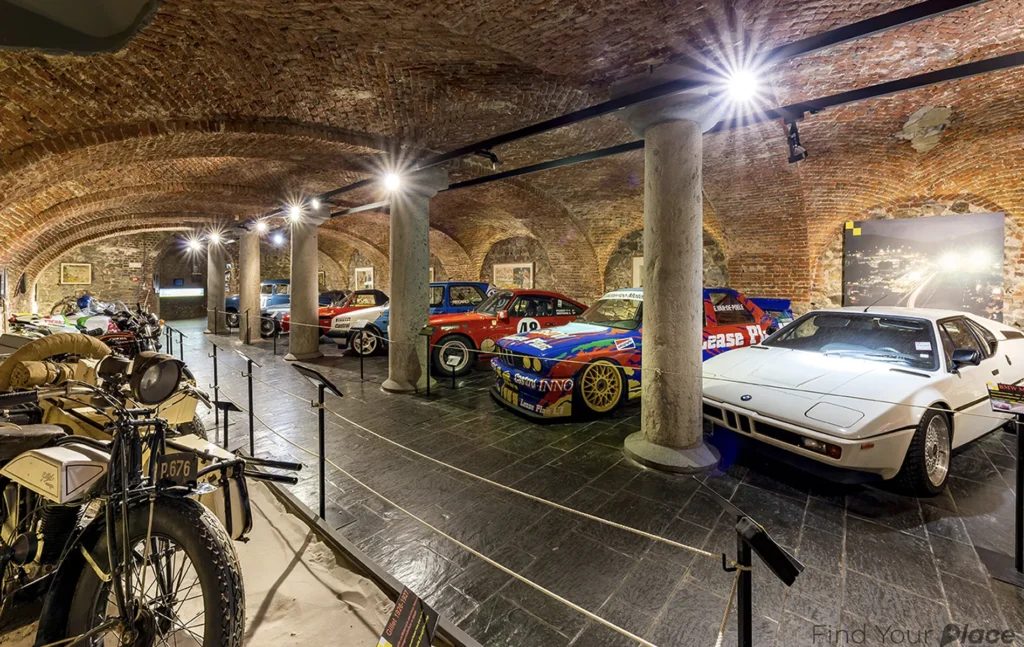
Stavelot is one of the most worthwhile places to visit away from the circuit. Housed in the vaults of the old abbey is the Musee du Circuit de Spa-Francorchamps, a compact but rewarding collection of historic cars, motorbikes and temporary exhibitions dedicated to the long history of the track.
Best for: Motorsport history, a quieter break from race crowds, and understanding how much the circuit has changed over the decades
The Old Spa Circuit Route
Driving or cycling the surviving roads of the original Spa circuit is one of the most fascinating experiences in the region. The old 15km triangular layout ran between Francorchamps, Malmedy and Stavelot, and even now, there is something sobering about travelling along these public roads knowing what once happened here at racing speed.
Best for: Motorsport pilgrims and anyone interested in the circuit’s darker, more dangerous past
RAVeL Cycling & the Ardennes
The Ardennes is ideal for exploring on two wheels. The RAVeL path network includes more than 1,400km of scenic disused railway lines, canal paths and low-gradient routes, making it an excellent way to experience the region without having to tackle punishing climbs.
The Spa–Stavelot route is one of the most appealing, stretching 22km through upland forest and even passing above the Formula 1 circuit along the way.
Best for: Easy cycling, forest scenery and seeing the area from a different angle
The Town of Spa, Thermal Baths & Chocolate
The town of Spa itself has been associated with healing waters since Roman times, which is why the word “spa” entered the wider language in the first place. Today, the modern thermal complex above the town offers panoramic views and a far calmer experience than anything happening trackside during Grand Prix weekend.
Nearby Verviers is also worth a stop for chocolate lovers. La Chocolaterie Darcis combines museum, shop and production space, giving visitors the chance to watch craftsmen at work, taste samples and dive into one of Belgium’s most famous culinary traditions.
Food & Drink
Belgium’s food culture is one of the underappreciated pleasures of the Belgian Grand Prix. Influenced by its neighbours but with a strong identity of its own, the country combines serious culinary quality with crowd-pleasing classics.
- Frites are essential — whatever the debate about origins, fries are a national treasure here. Eaten hot, in a cone, with mayonnaise, they are one of Belgium’s simplest and best pleasures. Friterie Sebastien in Stavelot is a strong local choice near the circuit.
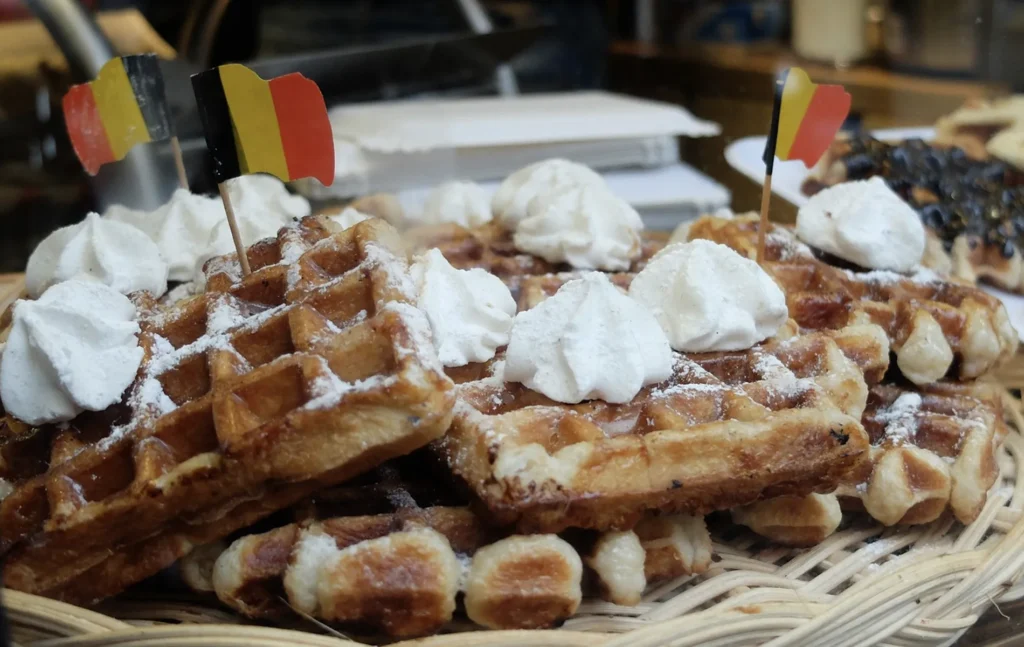
- Try a Liège waffle properly — richer and sweeter than the Brussels version, the Liège waffle is made from brioche-style dough studded with pearl sugar that caramelises during cooking. Une Gaufrette, Saperlipopette in Liège is often cited as one of the best places to try one warm and unadorned.
- Local beer culture matters — Belgium’s brewing heritage is everywhere, and places such as Les Brasserie des Bobelines in Spa combine good beer with a strong local setting and plenty of character.
- Belgian chocolate deserves time too — the country’s standards are famously high, with a law dating back to 1884 helping protect quality by requiring a minimum 35% cocoa content.
For those wanting something more modern and ingredient-led, Liège’s growing local food movement offers another side to Belgian dining, with restaurants focused on organic produce, sustainability and seasonal menus.
Weather & Climate
Spa’s weather is famous for a reason. The circuit sits in the Ardennes forest and has its own microclimate, which means conditions can vary not just across the weekend, but across different parts of the track at the same time.
- Typical conditions: Highly changeable
- Most famous feature: Rain can hit one sector while another stays dry
- Best advice: Use layers and bring proper waterproof clothing, even if the morning starts sunny
This is not a race for optimistic packing. At Spa, a clear sky is best treated as a temporary development rather than a promise.
Essential Travel Information
| Category | Details |
|---|---|
| Language | French / Dutch / German |
| Currency | Euro (EUR) |
| Time Zone | UTC +1 |
| Electricity | 230V/50Hz, European plugs |
| Population | ~11.6 million |
Final Thoughts
Spa-Francorchamps remains one of Formula 1’s essential journeys. The circuit has history, danger, beauty and a scale that modern tracks rarely match. The villages and forests around it give the weekend a distinct character, while the food, beer, chocolate and wider Ardennes setting make the trip far richer than just a race in the woods.
Whether you are going for Eau Rouge, the old-road history, the atmosphere at Pouhon, or simply to stand at one of the sport’s most revered venues, the Belgian Grand Prix is still one of the most rewarding experiences any Formula 1 fan can have.
Seen in: