


































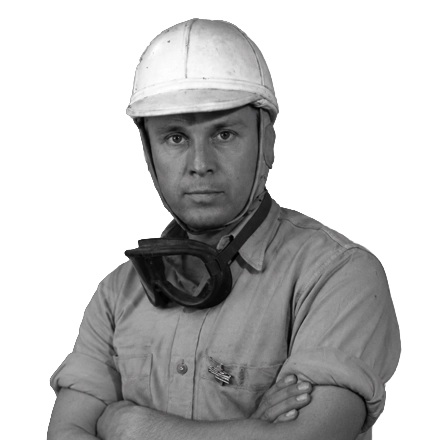
Bayliss Levrett (February 14, 1914 – March 13, 2002) was an American racing driver from Jacksonville, Florida, best remembered for his exploits in sprint cars and his appearances in the Indianapolis 500. Racing during an era when American open-wheel competition was spectacular, fast and frequently unforgiving, Levrett survived several serious accidents before a major practice crash finally brought his career to an end.
He later stepped away from driving and established a successful transmission business that remained in the hands of his family. His achievements on the track were recognised posthumously with induction into the National Sprint Car Hall of Fame.
Driver Bio
| Nationality | American |
| Birthplace | Jacksonville, Florida, USA |
| Born | 14 February 1913 |
| Died | 13 March 2002 |
| First Grand Prix | 1950 Indianapolis 500 |
| Last Grand Prix | 1952 Indianapolis 500 |
| Years Active | 1950–1952 |
| Current/Last Team | Adams |
Career
Levrett made his name primarily in sprint car racing, competing extensively on the West Coast of the United States during the early stages of his career. It was a notoriously dangerous period in American motorsport, with high speeds, limited protection and little margin for error.
Levrett experienced those dangers first-hand in 1947, when he was involved in a serious crash and suffered severe burns. Despite the extent of his injuries, the accident didn’t end his racing ambitions, and he was able to return to competition.
By 1949, Levrett had reached the AAA Championship Car series, then the highest level of American open-wheel racing. He competed during the 1949 season and recorded his best Championship Car result at Milwaukee, where he finished an impressive fourth.
That same year brought Levrett to the biggest stage in American motor racing.
He qualified for the 1949 Indianapolis 500, making his first appearance in the famous 500-mile race at Indianapolis Motor Speedway. His debut didn’t produce a finish, however, with Levrett forced to retire before reaching the chequered flag.
He returned to Indianapolis in 1950 for another attempt at the 500. Once again he successfully made the starting field, but his second appearance ended in much the same fashion as the first, with retirement preventing him from completing the race.
That 1950 appearance also gives Levrett a small but interesting place in Formula One history. Beginning that year, the Indianapolis 500 formed part of the Formula One World Championship, despite being run to different regulations and having little practical connection with the European Grand Prix stage of the season. As a result, competitors in the race were officially counted as World Championship participants.
Levrett therefore became one of a distinctive group of American Indianapolis racers whose names appear in Formula One’s early World Championship records, despite their careers being firmly rooted in American oval and sprint car competition.
He attempted to return to the Indianapolis 500 in 1951, but this time was unable to qualify for the starting field.
Levrett came back for another attempt in 1952, but his Indianapolis campaign ended before qualifying could even become the main concern. During practice, he suffered a severe crash, another reminder of just how little protection drivers of the period had when something went wrong.
This accident proved to be the decisive one. Having already survived the serious burns suffered in his 1947 crash, Levrett called time on his racing career following the 1952 incident.
Motor racing may have been behind him, but automobiles remained an important part of his life. In 1955, Levrett opened a transmission shop, establishing a family business that continued to operate under the stewardship of later generations.
Levrett eventually settled in Reno, Nevada, where he died on March 13, 2002, at the age of 88 following a long battle with Alzheimer’s disease.
Five years after his death, his contribution to American racing received lasting recognition. In 2007, Bayliss Levrett was inducted into the National Sprint Car Hall of Fame, honouring a driver whose career encompassed the rough-and-ready world of West Coast sprint cars, AAA Championship racing and two starts in America’s most famous motor race.
Grand Prix Stats
| Race Entries | 3 |
| Race Starts | 1 |
| Did Not Start | 1 |
| Best Race Start | 17th |
| Best Race Finish | 27th |
| Retirements | 0 |
| First-Lap Retirements | 0 |
| Not Classified | 0 |
| Disqualified | 0 |
| Did Not Qualify | 1 |
Qualifying
| Qualifying Sessions | 2 |
| Reached Q3 | 0 |
| Q2 Eliminations | 0 |
| Q1 Eliminations | 0 |
| Did Not Qualify | 1 |
Stats by Season
| Year | Constructor | Entries | Starts | Wins | Podiums | Poles | Fastest Laps | Front Rows | DNF | Best Start | Best Result | Pts Finishes | Points | Championship |
|---|---|---|---|---|---|---|---|---|---|---|---|---|---|---|
| 1950 | Adams | 1 | 1 | 0 | 0 | 0 | 0 | 0 | 0 | 17 | 27 | 0 | 0 | NC |