




































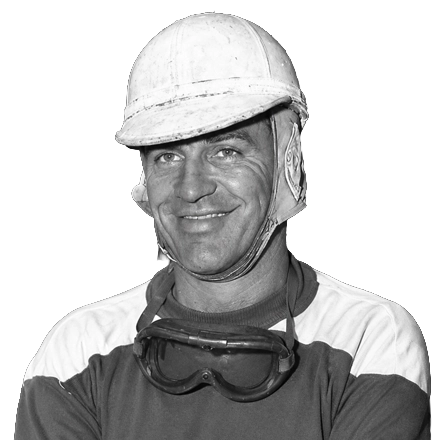
William Lawrence “Bill” Schindler was an American racing driver whose career combined enormous success, extraordinary determination and considerable bravery.
Driver Bio
| Nationality | American |
| Birthplace | Middletown, New York, USA |
| Born | 6 March 1909 |
| Died | 20 September 1952 |
| First Grand Prix | 1950 Indianapolis 500 |
| Last Grand Prix | 1952 Indianapolis 500 |
| Years Active | 1950–1952 |
| Current/Last Team | Stevens |
Born on March 6, 1909, Schindler began racing at a time when American motorsport was still raw, dangerous and rapidly evolving. He became one of the leading names in East Coast midget racing, won multiple championships, helped shape the organisation of the sport and eventually competed three times in the Indianapolis 500.
What makes that record even more remarkable is that Schindler achieved much of it after losing his left leg above the knee in a racing accident.
Rather than bringing his career to an end, the injury became just another obstacle for Schindler to overcome.
Career
Schindler’s racing career began in 1931 when he started competing in sprint cars. It was a demanding introduction to the sport. American sprint car racing offered plenty of speed but precious little protection, and drivers needed a combination of car control, mechanical sympathy and considerable courage to succeed.
When midget car racing began establishing itself on the East Coast of the United States in 1934, Schindler was there almost from the beginning.
He quickly became closely associated with the booming new discipline and would eventually develop into one of its most important competitors.
Schindler’s life and racing career changed dramatically in 1936.
While competing in a Championship Car race at Mineola on Long Island, New York, he suffered injuries so serious that his left leg had to be amputated above the knee.
For many drivers, particularly in the 1930s, such an injury would have meant the immediate end of a racing career.
Not for Bill Schindler.
He returned to competition using a prosthetic leg and continued racing at an exceptionally high level.
Schindler would eventually become one of only three drivers known to have competed in the Indianapolis 500 with a prosthetic leg. The other two were Al Miller and Cal Niday.
Schindler wasn’t only prepared to challenge convention behind the wheel. He also became an influential figure away from the cockpit. In 1937, he was part of a group of racers determined to resist the growing influence of the American Automobile Association on East Coast racing.
The independent competitors became known as an “outlaw” group, and Schindler was elected its president. His willingness to represent his fellow racers became an important part of his career and ultimately helped make him much more than simply another successful driver.
Schindler temporarily changed direction in 1940 when he switched to AAA-sanctioned competition. A move that quickly produced success.
That year he captured the Bronx Coliseum Indoor championship, adding another significant achievement to his growing racing record.
His stay within the AAA fold wouldn’t last, however. Schindler soon returned to the independent racing movement with which he had become so closely associated.
When the American Racing Drivers Club – better known as the ARDC – was established, Schindler was selected as the organisation’s first president.
It proved to be far more than a ceremonial position.
Schindler served as president throughout the ARDC’s first six years, helping establish the organisation during an important period in the development of midget racing in the northeastern United States.
At the same time, he continued doing plenty of winning himself. Schindler became one of the dominant figures in ARDC competition. He won the organisation’s championship in 1940 and then added further titles in 1945, 1946 and 1948. That gave him four ARDC championships across the decade.
His achievements were particularly impressive given that much of this success came after the accident that had cost him his left leg.
If his championship record wasn’t impressive enough, Schindler produced a remarkable run of victories during 1947 and 1948. Across those two seasons, he won 53 midget car feature races.
That extraordinary level of success helped increase the popularity of midget racing throughout the northeastern United States and cemented Schindler’s status as one of the leading American drivers in the discipline.
By this point, he had become both a successful competitor and an important figure in the growth of the sport itself but there was still one major ambition left to pursue. Indianapolis.
To compete in the Indianapolis 500, Schindler needed to return to AAA competition. He did exactly that and earned his opportunity at the Indianapolis Motor Speedway. Schindler competed in three consecutive editions of the Indy 500, starting in 1950 and returning in 1951 and 1952.
He would ultimately record a best Indianapolis 500 finishing position of 13th.
Death
Schindler’s third Indianapolis 500 appearance came in 1952. Sadly, it would also be the final year of his career. On September 20, 1952, Schindler was competing in a sprint car race at Allentown, Pennsylvania. He was leading the race on the third lap when events ahead of him triggered a sequence that would end in tragedy. Another competitor, Paul Becker, lost a wheel and skidded into the fence. Officials immediately displayed a “go slow” warning following Becker’s accident, but Schindler did not see the signal.
Still travelling at racing speed in his black Offenhauser-powered car, Schindler struck the detached wheel. The impact sent his car crashing through the fence and it then tumbled down a 20-foot embankment. Schindler was killed instantly. He was 43 years old.
Hall of Fame
Schindler’s achievements were recognised long after his death through induction into several major American motorsport halls of fame.
He was inducted into the National Midget Auto Racing Hall of Fame in 1985, recognising both his extraordinary record as a competitor and his importance to the development of midget racing.
In 1998, Schindler was inducted into the National Sprint Car Hall of Fame.
Further recognition followed in 2004 when he was inducted into the New England Auto Racers Hall of Fame.
Grand Prix Stats
| Race Entries | 3 |
| Race Starts | 3 |
| Did Not Start | 0 |
| Best Race Start | 15th |
| Best Race Finish | 14th |
| Retirements | 2 |
| First-Lap Retirements | 0 |
| Not Classified | 0 |
| Disqualified | 0 |
| Did Not Qualify | 0 |
Qualifying
| Qualifying Sessions | 3 |
| Reached Q3 | 0 |
| Q2 Eliminations | 0 |
| Q1 Eliminations | 0 |
| Did Not Qualify | 0 |
Stats by Season
| Year | Constructor | Entries | Starts | Wins | Podiums | Poles | Fastest Laps | Front Rows | DNF | Best Start | Best Result | Pts Finishes | Points | Championship |
|---|---|---|---|---|---|---|---|---|---|---|---|---|---|---|
| 1950 | Snowberger | 1 | 1 | 0 | 0 | 0 | 0 | 0 | 1 | – | DNF | 0 | 0 | NC |
| 1951 | Kurtis Kraft | 1 | 1 | 0 | 0 | 0 | 0 | 0 | 1 | – | DNF | 0 | 0 | NC |
| 1952 | Stevens | 1 | 1 | 0 | 0 | 0 | 0 | 0 | 0 | 15th | 14th | 0 | 0 | NC |
Stats by Constructor
| Constructor | Years | Entries | Starts | Wins | Podiums | Poles | Fastest Laps | Front Rows | DNF | Best Start | Best Result | Pts Finishes | Points |
|---|---|---|---|---|---|---|---|---|---|---|---|---|---|
| Snowberger | 1950 | 1 | 1 | 0 | 0 | 0 | 0 | 0 | 1 | – | DNF | 0 | 0 |
| Kurtis Kraft | 1951 | 1 | 1 | 0 | 0 | 0 | 0 | 0 | 1 | – | DNF | 0 | 0 |
| Stevens | 1952 | 1 | 1 | 0 | 0 | 0 | 0 | 0 | 0 | 15th | 14th | 0 | 0 |