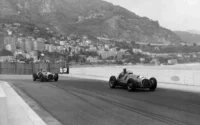







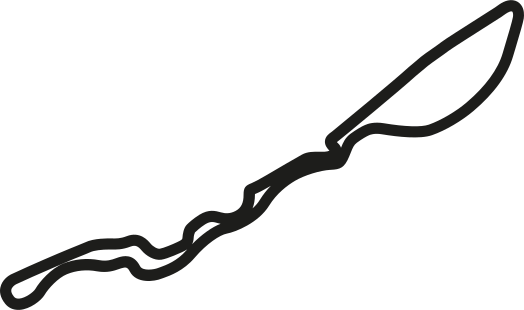





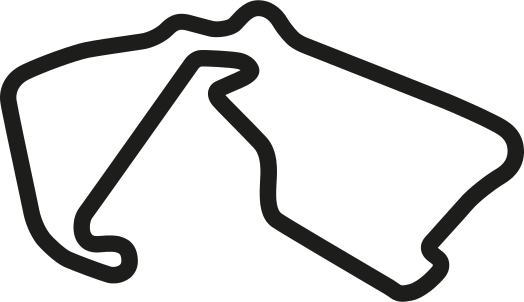

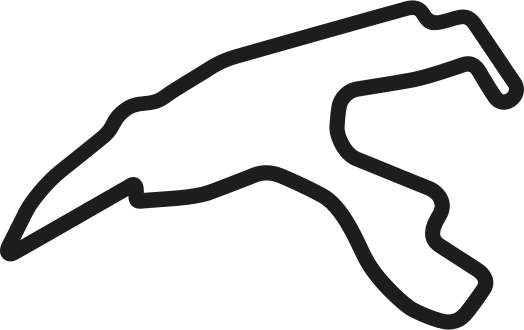

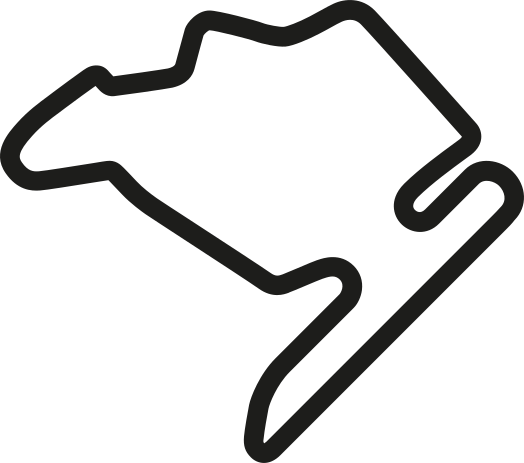

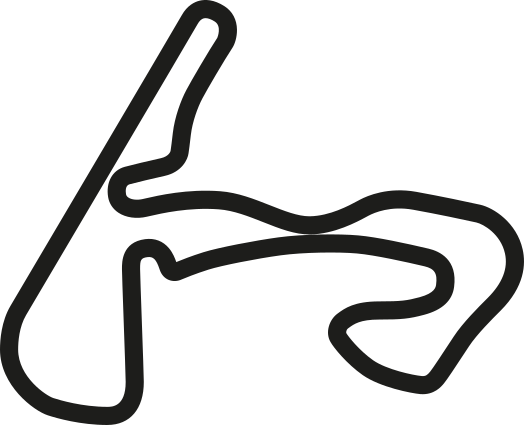






The Nürburgring hosted a world championship race for the first time with the 1951 German Grand Prix, where Alberto Ascari secured his first world championship win for Ferrari.
Race Guide
Season: 1951 F1 World Championship
Race date: Sunday, 29 July 1951
Race start time: Start time unconfirmed local time (UTC+01:00)
Circuit: Nürburgring
Laps: 20 laps
Circuit length: 22.810 km
Previous winner: None — no previous Formula 1 World Championship edition
Previous race: 1951 British Grand Prix
Next race: 1951 Italian Grand Prix
Ascari’s victory propelled him to second place in the 1951 Championship standings, ten points behind Juan Manuel Fangio who finished in second and extended his lead from the previous race. Following his second consecutive podium finish in third place, Jose Froilan Gonzalez moved up to third in the standings, tying on points with Farina and Luigi Villoresi.
| Pole position | ||
|---|---|---|
| Driver | Alberto Ascari | Ferrari |
| Time | 9:55.800 | |
| Fastest lap | ||
| Driver | Juan Manuel Fangio | Alfa Romeo |
| Time | 9:55.800 on lap 12 | |
| Podium | ||
| First | Alberto Ascari | Ferrari |
| Second | Juan Manuel Fangio | Alfa Romeo |
| Third | José Froilán González | Ferrari |
Weekend Schedule
| Date | Session | Local Time |
|---|---|---|
| 27 July 1951 | Friday timed practice | Time unconfirmed |
| 28 July 1951 | Saturday final qualifying | Time unconfirmed |
| 29 July 1951 | Race | Time unconfirmed |
Championship background
Juan Manuel Fangio arrived at round 6 leading the 1951 F1 World Championship on 21 points, with Nino Farina on 15.
Race entries
Pietsch joined Alfa Romeo for his home race, alongside Fangio, Farina and Bonetto. Ferrari added Taruffi to Ascari, Villoresi and recent winner González. The event brought Germany into the World Championship, with the Italian teams facing the challenge of the long Nordschleife.
Friday timed practice
Fangio had studied the unfamiliar circuit in a road car before official running. Ferrari nevertheless set the pace, with Ascari and González showing particular confidence. The length and complexity of the lap made circuit knowledge valuable, while the leading drivers worked towards times below ten minutes.
Saturday final qualifying
Fangio went off while trying to beat Ascari’s time, but recovered without outside help. Murray’s accident was more damaging: his Maserati was wrecked and could not start. Ascari secured pole ahead of González, giving Ferrari the first two positions, while Manzon impressed among the less powerful cars.
Qualifying Classification
Friday and Saturday timed practice established the grid. The race was Germany’s first World Championship round. Earlier German events and the meeting’s support races are not included as championship rounds.
| Pos. | No. | Driver | Team | Best Time |
|---|---|---|---|---|
| 1 | 71 | Alberto Ascari | Ferrari | 9:55.800 |
| 2 | 74 | José Froilán González | Ferrari | 9:57.5 |
| 3 | 75 | Juan Manuel Fangio | Alfa Romeo | 9:59.0 |
| 4 | 76 | Nino Farina | Alfa Romeo | 10:01.1 |
| 5 | 72 | Luigi Villoresi | Ferrari | 10:06.6 |
| 6 | 73 | Piero Taruffi | Ferrari | 10:12.9 |
| 7 | 78 | Paul Pietsch | Alfa Romeo | 10:15.7 |
| 8 | 91 | Rudi Fischer | Ferrari | 10:23.8 |
| 9 | 82 | Robert Manzon | Simca-Gordini | 10:28.9 |
| 10 | 77 | Felice Bonetto | Alfa Romeo | 10:46.1 |
| 11 | 87 | Yves Giraud-Cabantous | Talbot-Lago | 10:52.8 |
| 12 | 83 | André Simon | Simca-Gordini | 10:57.5 |
| 13 | 85 | Louis Chiron | Talbot-Lago | 11:00.2 |
| 14 | 81 | Maurice Trintignant | Simca-Gordini | 11:07.5 |
| 15 | 84 | Louis Rosier | Talbot-Lago | 11:08.2 |
| 16 | 79 | Toulo de Graffenried | Maserati | 11:25.6 |
| 17 | 92 | Toni Branca | Maserati | 11:26.7 |
| 18 | 94 | Johnny Claes | Talbot-Lago | 11:33.9 |
| 19 | 90 | Pierre Levegh | Talbot-Lago | 11:41.9 |
| 20 | 88 | Duncan Hamilton | Talbot-Lago | 11:49.3 |
| 21 | 86 | Philippe Étancelin | Talbot-Lago | 11:52.9 |
| 22 | 93 | Jacques Swaters | Talbot-Lago | 12:09.1 |
| 23 | 89 | David Murray | Maserati | No time |
What happened in the 1951 German Grand Prix?
Fangio led early before the pit-stop cycle brought Ascari to the front. Farina retired, leaving Fangio to carry Alfa Romeo‘s challenge. Ferrari‘s lower fuel consumption reduced the number of planned stops it required.
Fangio regained the lead temporarily when Ascari stopped, but could not build enough of an advantage before his own second visit. Gearbox and engine problems then reduced his ability to respond. Ascari needed an additional tyre stop but still retained control.
Ascari won from Fangio and González, with Villoresi fourth and Taruffi fifth. Fangio earned fastest lap, limiting the championship damage. Ascari moved into second in the standings as Ferrari‘s challenge gathered momentum.
After the race, Juan Manuel Fangio headed the drivers’ standings with 27 points, followed by Alberto Ascari on 17.
1951 German Grand Prix race results
The 1951 German Grand Prix was held on 29 July 1951.
| Pos. | No. | Driver | Team | Laps | Time / Retired | Pts. |
|---|---|---|---|---|---|---|
| 1 | 71 | Alberto Ascari | Ferrari | 20 | 3:23:03.3 | 8 |
| 2 | 75 | Juan Manuel Fangio | Alfa Romeo | 20 | +30.5 | 7 |
| 3 | 74 | José Froilán González | Ferrari | 20 | +4:39.0 | 4 |
| 4 | 72 | Luigi Villoresi | Ferrari | 20 | +5:50.2 | 3 |
| 5 | 73 | Piero Taruffi | Ferrari | 20 | +7:49.1 | 2 |
| 6 | 91 | Rudi Fischer | Ferrari | 19 | +1 lap | 0 |
| 7 | 82 | Robert Manzon | Simca-Gordini | 19 | +1 lap | 0 |
| 8 | 84 | Louis Rosier | Talbot-Lago | 19 | +1 lap | 0 |
| 9 | 90 | Pierre Levegh | Talbot-Lago | 18 | +2 laps | 0 |
| 10 | 93 | Jacques Swaters | Talbot-Lago | 18 | +2 laps | 0 |
| 11 | 94 | Johnny Claes | Talbot-Lago | 17 | +3 laps | 0 |
| Ret | 87 | Yves Giraud Cabantous | Talbot-Lago | 17 | Accident | 0 |
| Ret | 81 | Maurice Trintignant | Simca-Gordini | 13 | Engine | 0 |
| Ret | 77 | Felice Bonetto | Alfa Romeo | 12 | Magneto | 0 |
| Ret | 88 | Duncan Hamilton | Talbot-Lago | 12 | Oil pressure | 0 |
| Ret | 78 | Paul Pietsch | Alfa Romeo | 11 | Accident | 0 |
| Ret | 83 | André Simon | Simca-Gordini | 11 | Engine | 0 |
| Ret | 76 | Nino Farina | Alfa Romeo | 8 | Overheating | 0 |
| Ret | 86 | Philippe Étancelin | Talbot-Lago | 4 | Gearbox | 0 |
| Ret | 85 | Louis Chiron | Talbot-Lago | 3 | Ignition | 0 |
| Ret | 92 | Toni Branca | Maserati | 3 | Engine | 0 |
| Ret | 79 | Toulo de Graffenried | Maserati | 2 | Engine | 0 |
Includes 1 point for fastest lap
1951 German Grand Prix Fastest Laps
| Pos. | No. | Driver | Team | Lap | Time |
|---|---|---|---|---|---|
| 1 | 75 | Juan Manuel Fangio | Alfa Romeo | 12 | 9:55.800 |
Only drivers with a recorded lap time appear. One championship point was awarded for fastest lap, divided equally when shared.
1951 Post-Race F1 Championship Standings
Championship standings after the 1951 German Grand Prix.
1951 Post-Race F1 Drivers’ Championship Standings
There was no constructors’ championship in this season; the manufacturers’ competition began in 1958.
Drivers counted their best 4 results. The first five places earned 8–6–4–3–2 points, with one further point for fastest lap, shared equally when necessary. Points from shared drives were divided between the eligible drivers; individual allocations are shown in driver order.
1951 Formula 1 Race Calendar
Seen in: