


























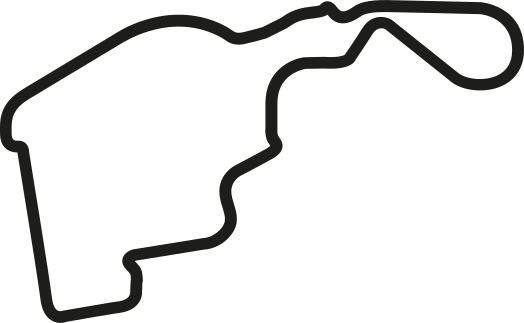

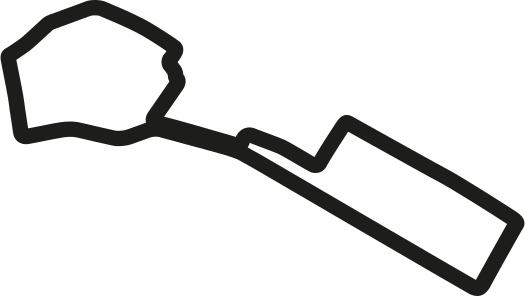

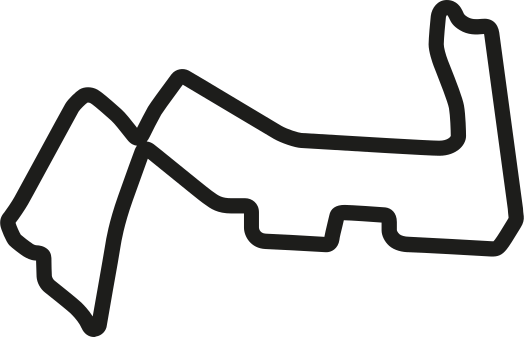











Located in the southern Buenos Aires barrio of Villa Riachuelo, the Autódromo Oscar y Juan Gálvez is one of South America’s most historic racing venues.
Home to the Argentine Grand Prix for much of the second half of the 20th century, the circuit has hosted a wide range of international and domestic motorsport categories. Unlike many modern circuits, the Autódromo features numerous layout variations designed to accommodate everything from Formula One and endurance racing to national touring car series. These multiple configurations have made the venue a flexible and enduring fixture of Argentine motorsport.
Set on flat land with expansive grandstands surrounding the circuit, spectators are treated to excellent views across large portions of the track. Historically, some layouts included long high-speed straights where Formula One cars would run flat-out for extended periods, delivering dramatic moments and pushing drivers to the limit.
See also…
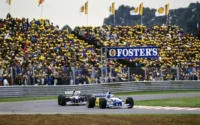
Autodromo Oscar y Juan Galvez Circuit
| First Grand Prix | 1953 Argentine Grand Prix |
| Number of Laps | 72 |
| Circuit Length | 4.259 km |
| Race Distance | 306.648 km |
| Lap Record | 1:27.981 Gerhard Berger (1997) |
Circuit
When was the Autodromo Oscar y Juan Galvez Circuit built?
The Autódromo was built in 1952 during the presidency of Juan Perón and was originally named Autódromo 17 de Octubre, commemorating Argentina’s Loyalty Day. Constructed on reclaimed swampland in the Villa Riachuelo district of Buenos Aires, the venue quickly became the country’s premier motorsport facility.
Following political changes in Argentina, the circuit was renamed several times before ultimately being dedicated to legendary Argentine racing brothers Juan Gálvez and Oscar Alfredo Gálvez. Both drivers were icons of Argentine motorsport, particularly in the Turismo Carretera championship.
From its opening, the circuit became central to the nation’s racing culture. The venue hosted numerous domestic championships alongside major international events, including the World Sportscar Championship and the Buenos Aires Grand Prix.
One of the defining characteristics of the Autódromo is its wide variety of configurations. Over the decades, organisers have used multiple layouts — each designed to suit different racing categories. Some versions bypass the tight infield section entirely, dramatically increasing average speeds and reducing lap times.
The circuit also hosted the 1000 km Buenos Aires endurance race, which, between 1954 and 1960, incorporated public highway sections near the circuit itself. Later editions of the race, held from 1970 to 1972, used only the permanent Autódromo layout.
The Autódromo remains one of the most significant motorsport venues in South America, regularly hosting national touring car championships such as Turismo Carretera, TC2000, and Top Race.
When was the first Argentine Grand Prix?
The first Argentine Grand Prix was held in 1953 at the Autódromo in Buenos Aires and marked Argentina’s debut on the Formula One World Championship calendar.
See also…
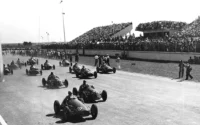
The race quickly became one of the most distinctive events in early Formula One history. With scorching summer temperatures often exceeding 30°C, the Argentine Grand Prix was famous for punishing both drivers and machinery.
Formula One raced at the circuit across several eras, using different configurations over time. Early races used the No.2 circuit during the 1950s, while later events utilised layouts such as the No.9 circuit and the extremely fast No.15 circuit in the late 1970s.
The No.15 layout became famous for its two long straights connected by a sweeping third corner that Formula One cars would take flat-out in top gear. Drivers could remain at full throttle for around 40 seconds through this section, reaching speeds close to 305 km/h while balancing on the edge of control.
Political tensions and economic issues periodically interrupted the race’s presence on the calendar. The event was removed in 1982 following Argentina’s invasion of the Falkland Islands, later returned in the 1990s, and dropped again after the 1998 race due to financial difficulties.
Autodromo Oscar y Juan Galvez Circuit lap record
The official Formula One lap record for the circuit’s No.6 configuration with the Senna S chicane is 1:27.981, set by Gerhard Berger driving the Benetton B197 during the 1997 Argentine Grand Prix.
Although Formula One has not returned since 1998, the circuit remains active today and continues to host major national championships. Plans are also underway for the facility’s redevelopment ahead of the planned return of the Argentine Motorcycle Grand Prix in 2027, which will include upgrades aimed at achieving FIA Grade 2 and potentially Grade 1 certification in the future.