




















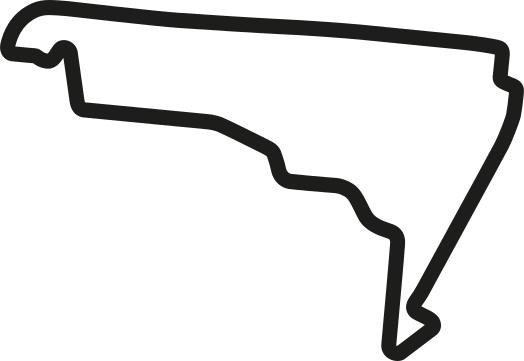
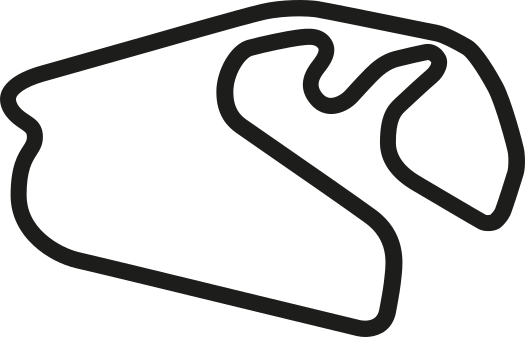







Nestled in the foothills of Mount Fuji in Shizuoka Prefecture, Fuji Speedway is one of Japan’s most famous racing circuits and one of the most dramatic venues ever used in Formula One.
Originally conceived as an American-style superspeedway before being reworked into a road course, Fuji has long been known for its long main straight, spectacular mountain backdrop and high-speed layout. It played a major role in bringing top-level international motorsport to Japan, hosting the country’s first Formula One World Championship race in 1976 and later returning to the calendar in the late 2000s.
See also…
Fuji Speedway
| First Grand Prix | 1976 Japanese Grand Prix |
| Number of Laps | 67 |
| Circuit Length | 4.563 km |
| Race Distance | 305.721 km |
| Lap Record | 1:18.426 Felipe Massa (2008) |
Circuit
When was the Fuji Speedway built?
Fuji Speedway opened in January 1966 after a turbulent development process.
The circuit was originally planned in 1963 by the Japan NASCAR Company as a high-banked superspeedway inspired by American oval racing. However, the steep terrain at the chosen site near Mount Fuji made that idea unsuitable. Former Formula One driver Stirling Moss was brought in as a consultant and argued that a European-style road course would be far more appropriate.
The final result was a road circuit that retained traces of the original superspeedway concept, most notably the fearsome 30-degree-banked first turn. That banking quickly became notorious for major accidents and great danger, especially as cars approached it over a blind crest at very high speed.
After a series of serious incidents, including a fatal accident in 1974, the circuit was heavily revised. The banking was removed from competition use, and the track was reshaped into a safer road course.
What makes Fuji Speedway special?
Fuji Speedway is best known for its extraordinary main straight, which at 1.475 km is one of the longest in motorsport.
That straight has always defined the circuit. It places a huge premium on power, braking stability and overtaking into the first corner, while the rest of the lap mixes medium- and high-speed corners with a technical final sector.
The venue is also famous for its setting. On clear days, cars race with Mount Fuji towering in the background, making it one of the most visually recognisable circuits in the world.
Over the decades, Fuji has been used for everything from Formula One and the World Endurance Championship to Super GT, Super Formula, and major domestic Japanese events.
When was the first Japanese Grand Prix at Fuji?
Fuji Speedway hosted the first Formula One race ever held in Japan in 1976.
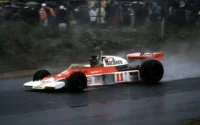
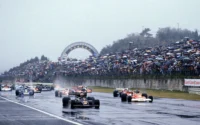
That race became one of the most famous title deciders in Formula One history. Held in torrential rain, it saw James Hunt and Niki Lauda arrive with the championship on the line. Lauda withdrew after just two laps, believing the conditions were too dangerous, while Hunt recovered from a late puncture and finished third — enough to win the World Championship by a single point.
See also…
Formula One returned to Fuji in 1977, but that race was overshadowed by a tragic accident involving Gilles Villeneuve, which killed two spectators. Formula One then left the circuit, with the Japanese Grand Prix later moving to Suzuka.
After a major reconstruction under Toyota ownership, Fuji returned to the Formula One calendar in 2007 and 2008. Both races were heavily affected by rain, echoing the circuit’s notorious history of weather-related issues.
Why did Formula One stop racing at Fuji again?
Although Fuji returned to Formula One in 2007, its comeback was short-lived.
The 2007 Japanese Grand Prix was criticised for poor organisation, especially transport problems, limited viewing from some seats and high food prices. Although improvements were made for 2008, poor ticket sales and continued weather disruption damaged the event’s long-term viability.
After 2008, the Japanese Grand Prix returned to Suzuka, where it has remained since.
Fuji Speedway lap record
The official Formula One race lap record for the current circuit layout is 1:18.426, set by Felipe Massa driving the Ferrari F2008 during the 2008 Japanese Grand Prix.
Fuji Speedway remains one of Japan’s landmark circuits — a venue that combines rich motorsport history, ultra-high-speed characteristics and one of the most iconic natural backdrops in world racing.