








































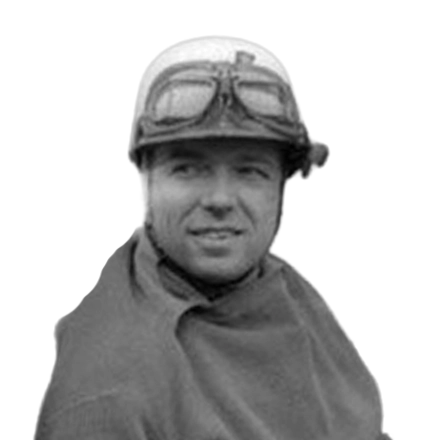
Alain Carpentier de Changy was a Belgian racing driver whose career was built more on endurance, versatility, and sports-car success than on Formula One statistics. Though his official World Championship Formula One record amounts to a single failed qualifying attempt, de Changy was a respected figure in post-war European motorsport and found greater success in long-distance racing.
Driver Bio
| Nationality | Belgian |
| Birthplace | Brussels, Belgium |
| Born | 5 February 1922 |
| Died | 5 August 1994 |
| First Grand Prix | 1959 Monaco Grand Prix |
| Last Grand Prix | 1959 Monaco Grand Prix |
| Years Active | 1959 |
| Current/Last Team | Cooper |
Born in Belgium, he belonged to the generation of drivers who raced across categories rather than specialising in one discipline. In the 1950s, especially, many competitors moved between Grand Prix machinery, sports cars, hill climbs, and endurance events depending on opportunity and equipment. De Changy was very much part of that tradition.
Formula One attempt
De Changy’s sole World Championship Formula One entry came at the 1959 Monaco Grand Prix.
He entered the event in a Cooper run by Écurie Nationale Belge, one of several national privateer outfits attempting to challenge the established factory teams of the era.
Monaco, with its tight streets, unforgiving barriers, and fiercely competitive qualifying sessions, was one of the hardest places imaginable to make a Grand Prix debut. De Changy was unable to qualify for the race, meaning his Formula One World Championship career officially ended before it began.
Sports car racing success
Where de Changy truly made his mark was in sports car racing.
Endurance and GT competition in the 1950s demanded a different skillset from Grand Prix racing: mechanical sympathy, consistency, stamina, and the ability to preserve both tyres and machinery over long distances. These qualities suited de Changy well.
He achieved stronger results in sports cars than in single-seaters and became known as a dependable, capable competitor in that arena. For many drivers of the time, sports car racing offered more opportunities, deeper grids, and often a better chance of success than Formula One, and de Changy’s career followed that path.
A gentleman racer of his era
De Changy also represented a classic post-war European motorsport archetype: the gentleman racer. Drivers from established families often funded or supported their own campaigns, entered prestigious events across the continent, and raced for the challenge as much as for professional reward.
That spirit was central to motorsport in the 1950s, when the line between amateur enthusiast and elite competitor was far thinner than it is today.
Grand Prix Stats
| Race Entries | 1 |
| Race Starts | 0 |
| Did Not Start | 0 |
| Best Race Start | DNQ |
| Best Race Finish | DNQ |
| Retirements | 0 |
| First-Lap Retirements | 0 |
| Not Classified | 0 |
| Disqualified | 0 |
| Did Not Qualify | 1 |
Qualifying
| Qualifying Sessions | 1 |
| Reached Q3 | 0 |
| Q2 Eliminations | 0 |
| Q1 Eliminations | 0 |
| Did Not Qualify | 1 |
Stats by Season
| Year | Constructor | Entries | Starts | Wins | Podiums | Poles | Fastest Laps | Front Rows | DNF | Best Start | Best Result | Pts Finishes | Points | Championship |
|---|---|---|---|---|---|---|---|---|---|---|---|---|---|---|
| 1959 | Écurie Nationale Belge | 1 | 0 | 0 | 0 | 0 | 0 | 0 | 0 | DNQ | DNQ | 0 | 0 | NC |
Stats by Constructor
| Constructor | Years | Entries | Starts | Wins | Podiums | Poles | Fastest Laps | Front Rows | DNF | Best Start | Best Result | Pts Finishes | Points |
|---|---|---|---|---|---|---|---|---|---|---|---|---|---|
| Écurie Nationale Belge | 1959 | 1 | 0 | 0 | 0 | 0 | 0 | 0 | 0 | DNQ | DNQ | 0 | 0 |
Teammates & Qualifying Head-to-Head
| Teammate | Years | Races | Qualifying H2H |
|---|---|---|---|
| Lucien Bianchi | 1959 | 1 | – |