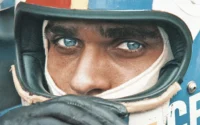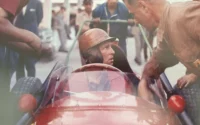























Carlos Pace was a Brazilian racing driver who competed in Formula One between 1972 and 1977. Best remembered for his victory at the 1975 Brazilian Grand Prix driving for Brabham, Pace became one of Brazil’s most admired racing talents of the 1970s.
| Nationality | Brazilian |
|---|---|
| Born | José Carlos Pace 6 October 1944 São Paulo, Brazil |
| Died | 18 March 1977 (aged 32) Mairiporã, São Paulo, Brazil |
Born in São Paulo, Pace raced in Formula One for Williams, Surtees and Brabham. His strongest season came in 1975 when he finished sixth in the World Drivers’ Championship.
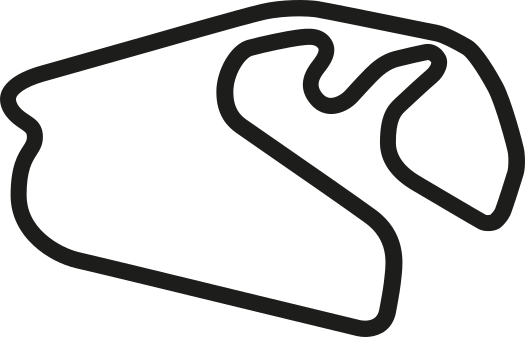
Pace’s life was cut short in March 1977 when he died in a light aircraft accident in Mairiporã, Brazil. In tribute, São Paulo’s famous Interlagos circuit — host of the Brazilian Grand Prix since 1972 and the site of his only Formula One victory — was renamed the Autódromo José Carlos Pace. In 2024, nearly five decades after his death, Pace’s remains were moved to the circuit, making it both a memorial and his final resting place.
Racing career
Like the Fittipaldi brothers, Pace began racing in Brazil during the late 1960s before heading to Europe to pursue a professional career. In 1970, he competed in British Formula 3 and quickly impressed, winning the Forward Trust Championship driving a Lotus.
The following year, he stepped up to Formula Two with Frank Williams’ team. Results were modest — six races without scoring a point — but his speed was enough to attract attention and open the door to Formula One.
Williams: 1972
Pace entered Formula One in 1972 with a March entered by Williams. During his rookie season, he scored championship points twice and finished 18th in the Drivers’ Championship.
His strongest performance of the year came in the non-championship Victory Race, where he finished second. Alongside his F1 programme, he also competed in additional Formula Two and Can-Am events.
Surtees & sportscars: 1973–1974
In 1973, Pace moved to the Surtees team. His second season in Formula One proved far more competitive. He finished fourth at the German Grand Prix and achieved his first championship podium with third place in Austria. In both races, he also set the fastest lap.
He ended the year 11th in the World Drivers’ Championship.
Away from Formula One, Pace enjoyed significant success in endurance racing. Driving for Ferrari’s works team in the World Sportscar Championship, he partnered Arturo Merzario in the Ferrari 312PB. The pair finished second at both the Nürburgring and the 24 Hours of Le Mans — where they had started from pole position — and later claimed third place at Watkins Glen.
Pace remained with Surtees for 1974 and scored a fourth-place finish at his home race in Brazil. However, tensions developed between the driver and team founder John Surtees, and midway through the season, they parted ways.
After briefly attempting to qualify a privately entered Brabham for Goldie Hexagon Racing at the French Grand Prix — unsuccessfully — Pace joined the factory Brabham team for the following race alongside fellow South American Carlos Reutemann.
Early races with the team were challenging, but Pace soon adapted. At Monza, he finished fifth and set the fastest lap. Later in the season, he delivered an even stronger result at Watkins Glen, finishing second behind Reutemann to secure a dominant Brabham 1-2 finish.
Brabham: 1975
The 1975 season marked the high point of Pace’s Formula One career. Brabham’s BT44B chassis proved competitive throughout the year, allowing Pace and teammate Reutemann to regularly challenge near the front of the grid.
At the 1975 Brazilian Grand Prix, Pace delivered the defining moment of his career by winning in front of his home crowd at Interlagos — his first and ultimately only Formula One victory.
Momentum carried over to the following race in South Africa, where he secured his first career pole position. Additional podium finishes followed at Monaco and the British Grand Prix at Silverstone.
By the end of the season, Pace had finished sixth in the Drivers’ Championship, while Brabham secured second place in the Constructors’ Championship behind Ferrari.
Alfa Romeo engines: 1976
Pace remained at Brabham in 1976, but the team’s fortunes declined following a switch from the Ford-Cosworth V8 engine to Alfa Romeo’s flat-12 power unit.
The new engine was larger, heavier and less reliable than the Cosworth it replaced, and it also consumed more fuel — all factors that made the car harder to race competitively.
As a result, Pace endured a frustrating season and finished 14th in the championship. His teammate Reutemann departed the team before the year’s end.
Final season: 1977
For the 1977 season, Brabham continued developing the Alfa Romeo engine, which had become more competitive and reliable. Pace was joined in the team by new teammate John Watson.
The improvement was immediately visible. At the opening race of the season in Argentina, Pace finished second, hinting that a strong campaign could lie ahead.
He showed promising pace in the following two Grands Prix, but mechanical problems prevented him from capitalising on the improved performance. Tragically, he would never have the chance to build on that progress.
Personal life
Pace married his long-time girlfriend, Elda d’Andrea, in 1968 after a decade-long relationship.
In 1972, his father, Angelo, took his own life following serious business difficulties. Pace was not informed until after he had scored his first Formula One points, with a sixth-place finish at the Spanish Grand Prix. Close friend Carlo Gancia later recalled that Pace “loved his father more than anything.”
Known for his warmth and kindness, Pace was well-liked throughout the Formula One paddock. His wife, Elda, later remembered how deeply he was affected by accidents involving fellow drivers.
After the 1977 South African Grand Prix, in which driver Tom Pryce was killed, Pace returned to Brazil deeply shaken. Elda recalled that although many drivers tried to remain emotionally detached, Pace often struggled with the loss of colleagues.
“He was very upset,” she said. “Most drivers were cool — they needed to be — but I saw him crying after accidents four or five times.”
When Pace died shortly afterwards, his friend and Brabham team owner Bernie Ecclestone helped Elda manage the family’s financial affairs to ensure she and their children were cared for.
Death
José Carlos Pace died on 18 March 1977 in a private light aircraft accident near São Paulo. His death came only thirteen days after the tragic accident that claimed the lives of Formula One driver Tom Pryce and marshal Frederik Jansen van Vuuren at the South African Grand Prix.
Following his death, the Interlagos circuit — where he had won the Brazilian Grand Prix in 1975 — was renamed Autódromo José Carlos Pace in his honour.
He was originally buried in São Paulo’s Araçá Cemetery.
Reburial at Interlagos
In 2024, Pace’s story took an unusual and emotional new chapter. After his mausoleum at Araçá Cemetery was vandalised, officials from Brazil’s motorsport governing body organised an effort to move his remains to the Interlagos circuit itself.
The project was led by Paulo “Loco” Figueiredo, president of the Confederação Brasileira de Automobilismo (CBA), and journalist Ricardo Caruso, head of the National Classic Car Commission. Once informed about the vandalism, they began navigating the complex bureaucracy required to relocate Pace’s remains — meeting municipal authorities, making numerous trips to the cemetery and gathering official documentation.
Pace’s family, who had been unaware of the damage to the grave, immediately supported the plan.
On 23 August 2024, Pace’s remains arrived at Interlagos for a deeply emotional ceremony attended by his widow Elda, children Patrícia and Rodrigo, grandchildren, friends, fellow drivers, journalists and fans.
As a final tribute, his son Rodrigo drove a 1967 racing Karmann-Ghia once used by Pace during his early career with the Dacon team — the same team in which he had raced alongside Emerson and Wilson Fittipaldi. Riding alongside Rodrigo was Maurício Marx, the car’s current owner, carrying the urn containing Pace’s remains.
Together they completed one final lap of the circuit before the ashes were laid to rest beside the bust erected in Pace’s honour.
With that ceremony, José Carlos Pace became the first racing driver ever to be buried at a race circuit.
Damage to the memorial
In December 2025, Pace’s bust at Interlagos was damaged during an altercation between intoxicated fans following a Stock Car Brasil event. The government of the state of São Paulo subsequently issued a statement confirming that a new memorial bust would be created to replace the damaged one.
Carlos Pace Formula One World Championship Career
| F1 Career | 1972–1977 |
|---|---|
| Teams | Frank Williams, Surtees, Hexagon, Brabham |
| Entries | 73 (72 starts) |
| Championships | 0 |
| Wins | 1 |
| Podiums | 6 |
| Career points | 58 |
| Pole positions | 1 |
| Fastest laps | 5 |
| First entry | 1972 South African Grand Prix |
| First win | 1975 Brazilian Grand Prix |
| Last win | 1975 Brazilian Grand Prix |
| Last entry | 1977 South African Grand Prix |
Carlos Pace Wins
| Win No. | Grand Prix |
|---|---|
| 1 | 1975 Brazilian Grand Prix |
Carlos Pace Teammates
| 9 drivers | Involvement | First Year | Last Year |
|---|---|---|---|
| Henri Pescarolo | 12 | 1971 | 1972 |
| Giancarlo Gagliardi | 1 | 1972 | |
| Mike Hailwood | 15 | 1973 | |
| John Surtees | 2 | 1973 | |
| Jochen Mass | 8 | 1974 | |
| John Watson | 4 | 1974 | 1977 |
| Carlos Reutemann | 32 | 1974 | 1976 |
| Rolf Stommelen | 2 | 1976 | |
| Larry Perkins | 3 | 1976 |
Carlos Pace Complete Formula One Results
| Year | Entrant | Chassis | Engine | 1 | 2 | 3 | 4 | 5 | 6 | 7 | 8 | 9 | 10 | 11 | 12 | 13 | 14 | 15 | 16 | 17 | WDC | Points |
|---|---|---|---|---|---|---|---|---|---|---|---|---|---|---|---|---|---|---|---|---|---|---|
| 1972 | Team Williams Motul | March 711 | Cosworth V8 | ARG | RSA 17 | ESP 6 | MON 17 | BEL 5 | FRA Ret | GBR Ret | GER NC | AUT NC | ITA Ret | CAN 9 | USA Ret | 18th | 3 | |||||
| 1973 | Brooke Bond Oxo Team Surtees | Surtees TS14A | Cosworth V8 | ARG Ret | BRA Ret | RSA Ret | ESP Ret | BEL 8 | MON Ret | SWE 10 | FRA 13 | GBR Ret | NED 7 | GER 4 | AUT 3 | ITA Ret | CAN 18 | USA Ret | 11th | 7 | ||
| 1974 | Team Surtees | Surtees TS16 | Cosworth V8 | ARG Ret | BRA 4 | 12th | 11 | |||||||||||||||
| Bang & Olufsen Team Surtees | Surtees TS16 | Cosworth V8 | RSA 11 | ESP 13 | BEL Ret | MON Ret | SWE Ret | NED | ||||||||||||||
| Goldie Hexagon Racing | Brabham BT42 | Cosworth V8 | FRA DNQ | |||||||||||||||||||
| Motor Racing Developments | Brabham BT44 | Cosworth V8 | GBR 9 | GER 12 | AUT Ret | ITA 5 | CAN 8 | USA 2 | ||||||||||||||
| 1975 | Martini Racing | Brabham BT44B | Cosworth V8 | ARG Ret | BRA 1 | RSA 4 | ESP Ret | MON 3 | BEL 8 | SWE Ret | NED 5 | FRA Ret | GBR 2 | GER Ret | AUT Ret | ITA Ret | USA Ret | 6th | 24 | |||
| 1976 | Martini Racing | Brabham BT45 | Alfa Romeo Flat-12 | BRA 10 | RSA Ret | USW 9 | ESP 6 | BEL Ret | MON 9 | SWE 8 | FRA 4 | GBR 8 | GER 4 | AUT Ret | NED Ret | ITA Ret | CAN 7 | USA Ret | JPN Ret | 14th | 7 | |
| 1977 | Martini Racing | Brabham BT45 | Alfa Romeo Flat-12 | ARG 2 | BRA Ret | 15th | 6 | |||||||||||||||
| Brabham BT45B | Alfa Romeo Flat-12 | RSA 13 | USW | ESP | MON | BEL | SWE | FRA | GBR | GER | AUT | NED | ITA | USA | CAN | JPN |