
























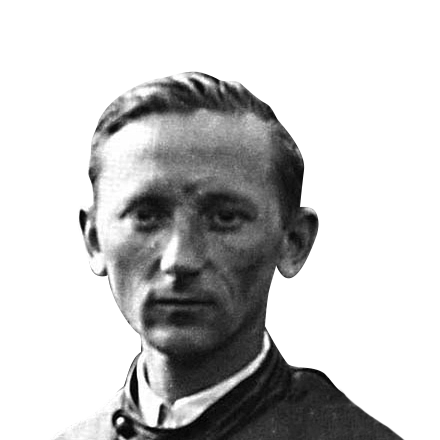
Kurt Kuhnke was a German racing driver and engineer-entrant whose motorsport life was defined by persistence, creativity, and a love of competition. Although he achieved greater success on two wheels than four, Kuhnke remains a memorable figure from Formula One’s privateer era, when individuals could still build unusual machinery in workshops and attempt to take on the world’s best.
Driver Bio
| Nationality | German |
| Birthplace | Stettin, Germany (now Szczecin, Poland) |
| Born | 30 April 1910 |
| Died | 8 February 1969 |
| First Grand Prix | 1963 German Grand Prix |
| Last Grand Prix | 1963 German Grand Prix |
| Years Active | 1963 |
| Current/Last Team | Privateer: Lotus |
Born in Germany in 1910, Kuhnke came from the generation whose early adulthood was shaped by economic hardship and war. Like many post-war competitors, he first made his name in motorcycle racing before turning to cars later in life. His willingness to switch disciplines and continue competing well into middle age reflected a deep and enduring passion for speed.
Motorcycle racing career
Before moving into car racing, Kuhnke was a capable motorcycle racer during the late 1940s. In the years immediately after the Second World War, motorcycle competition was one of the most accessible forms of motorsport in Europe, and many future car racers sharpened their skills there.
Kuhnke’s experience on two wheels helped build the racecraft, courage, and mechanical sympathy that later served him well in lightweight formula cars.
Car racing career
Formula Three and junior categories
Kuhnke transitioned to car racing with a Cooper 500, one of the most influential small racing machines of the era. Throughout the 1950s, he competed regularly in Formula Three, collecting several victories and numerous strong finishes.
The Cooper 500 was agile, simple, and highly competitive, making it an ideal platform for determined private entrants. Kuhnke’s success in the category showed he possessed genuine pace and the ability to prepare and maintain his own machinery.
He later expanded into Formula Junior and Formula Two events, continuing to chase stronger competition as European motorsport evolved.
Formula One attempts
Kuhnke eventually set his sights on Formula One. In 1962, he attempted to qualify Wolfgang Seidel’s Lotus 18 for the non-championship Pau Grand Prix, but did not make the grid. Later that season, he entered the same car at the Solitude Grand Prix, retiring due to engine failure.
Kuhnke then pursued a more ambitious project: fitting a Borgward sports car engine into a Lotus chassis. Delays in preparing the twin-cam, fuel-injected engine meant he missed several races he had intended to contest in late 1962. It was a classic privateer gamble—innovative, brave, and financially risky.
The BKL Lotus
In 1963, Kuhnke’s hybrid machine emerged under the name BKL Lotus, the initials standing for Borgward Kuhnke Lotus. Although based on a standard Lotus chassis, the car was modified by Kuhnke to house the unusual German power unit.
He failed to qualify the BKL Lotus for the Rome Grand Prix, while team-mate Ernst Maring also missed the grid. Both cars later retired from the Solitude Grand Prix with engine trouble.
Kuhnke’s sole World Championship Formula One attempt came at the 1963 German Grand Prix, where he failed to qualify by a substantial margin. Though the result was disappointing, merely entering a self-developed special against professional factory teams captured the heroic independent spirit of the age.
Later that season, he retired from the Kanonloppet at the Karlskoga Circuit due to further fuel injection problems. Soon afterwards, he stepped back from Formula One as a driver.
Team owner and constructor
Kuhnke did not leave Grand Prix racing entirely. In 1964, he entered two BKL Lotus cars in the Solitude Grand Prix for Ernst Maring and Joachim Diel.
Diel crashed out in wet conditions on the opening lap as part of a multi-car elimination, but Maring nursed the surviving car home in tenth place—last of the classified finishers and four laps behind the winner. It was the only time one of Kuhnke’s creations officially finished a Formula One race.
For a small private operation working with limited means, even that modest result represented a moment of triumph.
Death
Kurt Kuhnke died on 8 February 1969 at the age of 58.
Grand Prix Stats
| Race Entries | 1 |
| Race Starts | 0 |
| Did Not Start | 0 |
| Best Race Start | DNQ |
| Best Race Finish | DNQ |
| Retirements | 0 |
| First-Lap Retirements | 0 |
| Not Classified | 0 |
| Disqualified | 0 |
| Did Not Qualify | 1 |
Qualifying
| Qualifying Sessions | 1 |
| Reached Q3 | 0 |
| Q2 Eliminations | 0 |
| Q1 Eliminations | 0 |
| Did Not Qualify | 1 |
Stats by Season
| Year | Constructor | Entries | Starts | Wins | Podiums | Poles | Fastest Laps | Front Rows | DNF | Best Start | Best Result | Pts Finishes | Points | Championship |
|---|---|---|---|---|---|---|---|---|---|---|---|---|---|---|
| 1963 | Privateer: Lotus | 1 | 0 | 0 | 0 | 0 | 0 | 0 | 0 | DNQ | DNQ | 0 | 0 | NC |