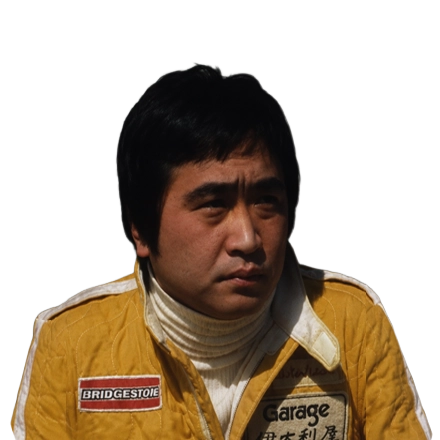
Noritake Takahara (高原 敬武), born on 6 June 1951, stands as one of the pioneering figures of Japanese motorsport — a driver whose success at home helped open the door for Japan’s future in Formula One. Calm, fast and relentlessly competitive, Takahara built an impressive reputation during the golden era of domestic Japanese racing before stepping onto the world championship stage in the mid-1970s.
He made his Formula One World Championship debut on 24 October 1976, competing in two Grands Prix during his career. Although championship points never came his way, Takahara’s significance in F1 history goes far beyond the record books. Alongside fellow Japanese racers Masahiro Hasemi and Kazuyoshi Hoshino, he became one of the first drivers from Japan ever to start a Formula One Grand Prix — a landmark moment for the country’s growing motorsport ambitions.
Long before his Formula One appearances, Takahara had already established himself as one of Japan’s standout racing talents. He was a dominant force in Japanese Formula 2000 competition, capturing the championship title twice, in 1974 and again in 1976. Consistency was one of his greatest strengths: he also finished runner-up in 1975 after taking third place in the standings in 1973, making him a fixture at the sharp end of the grid throughout the decade.
Takahara was equally formidable in the hugely popular Fuji Grand Champion Series, where his aggressive yet controlled driving style made him a fan favourite. He secured the championship three times — in 1973, 1975 and 1976 — while narrowly missing out on another title with a runner-up finish in 1974. Across the series, he amassed an impressive 17 victories and 30 podium finishes, underlining his status as one of the defining Japanese drivers of the era.
While his Formula One career was brief, Takahara’s wider impact on Japanese racing was enormous. At a time when international opportunities for Japanese drivers were still rare, he helped prove that homegrown talent could compete on motorsport’s biggest stage, inspiring the generations that followed.