











































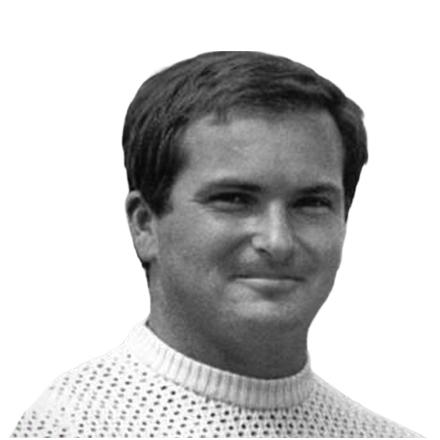
William “Willie” Ferguson was a South African racing driver who carved out a career in the fiercely competitive world of Formula One’s fringe and non-championship events. Though he never officially started a World Championship Grand Prix, Ferguson was very much part of the era’s gritty, opportunistic racing scene—where talent, timing, and machinery didn’t always align.
Driver Bio
| Nationality | South African |
| Birthplace | Johannesburg, South Africa |
| Born | 6 March 1940 |
| Died | 19 May 2007 |
| First Grand Prix | 1972 South African Grand Prix |
| Last Grand Prix | 1972 South African Grand Prix |
| Years Active | 1972 |
| Current/Last Team | Privateer: Brabham |
Racing career
Born in Johannesburg, Ferguson emerged from South Africa’s vibrant local motorsport scene, which in the 1960s and early 1970s regularly attracted international attention. Like many drivers of his time, he built his reputation in domestic and regional races before stepping onto the broader Formula One stage.
His one official World Championship entry came at the 1972 South African Grand Prix, where he was entered by Team Gunston. He was set to drive a Brabham BT33—an established and capable car of the period—but his weekend came to an abrupt halt when the engine failed during practice, preventing him from starting the race.
Ferguson had also been lined up to drive a Surtees TS9 for the same team, highlighting the fluid and often uncertain nature of privateer entries at the time. In the end, that car was handed instead to fellow South African John Love, leaving Ferguson without a second opportunity to compete.
Beyond the championship
While his World Championship record shows no race starts, Ferguson was far from inactive. He competed extensively in non-championship Formula One races—events that, during that era, offered valuable track time and competitive fields without counting toward the official standings. These races were a proving ground for many drivers and teams operating outside the sport’s top tier.
Legacy
Willie Ferguson’s career reflects a distinctive chapter in Formula One history—when privateers and regional entrants could still take on the world’s best, even if only occasionally. His story is one of persistence in a sport where opportunity was often fleeting, and success depended as much on machinery as on skill.
Grand Prix Stats
| Race Entries | 1 |
| Race Starts | 0 |
| Did Not Start | 1 |
| Best Race Start | – |
| Best Race Finish | – |
| Retirements | 0 |
| First-Lap Retirements | 0 |
| Not Classified | 0 |
| Disqualified | 0 |
| Did Not Qualify | 0 |
Qualifying
| Qualifying Sessions | 1 |
| Reached Q3 | 0 |
| Q2 Eliminations | 0 |
| Q1 Eliminations | 0 |
| Did Not Qualify | 0 |
Stats by Season
| Year | Constructor | Entries | Starts | Wins | Podiums | Poles | Fastest Laps | Front Rows | DNF | Best Start | Best Result | Pts Finishes | Points | Championship |
|---|---|---|---|---|---|---|---|---|---|---|---|---|---|---|
| 1972 | Privateer: Brabham | 1 | 0 | 0 | 0 | 0 | 0 | 0 | 0 | 0 | DNS | 0 | 0 | Never classified |
Stats by Constructor
| Constructor | Years | Entries | Starts | Wins | Podiums | Poles | Fastest Laps | Front Rows | DNF | Best Start | Best Result | Pts Finishes | Points |
|---|---|---|---|---|---|---|---|---|---|---|---|---|---|
| Privateer: Brabham | 1972 | 1 | 0 | 0 | 0 | 0 | 0 | 0 | 0 | 0 | DNS | 0 | 0 |
