





































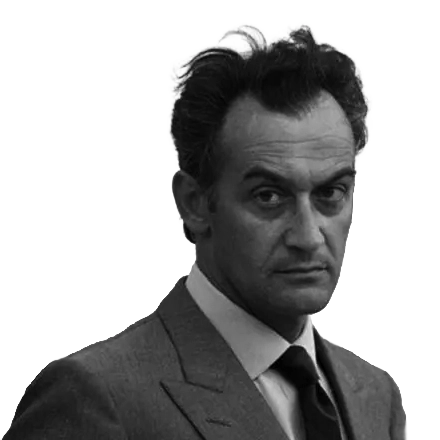
Alejandro de Tomaso was an Argentine-born racing driver turned industrialist whose influence on European performance cars far outlasted his brief Formula One career. Sometimes referred to by the Italianised name Alessandro de Tomaso, he competed in two Formula One World Championship Grands Prix before going on to found De Tomaso Automobili—a marque that would become synonymous with bold design and transatlantic engineering.
Driver Bio
| Nationality | Argentine |
| Birthplace | Buenos Aires, Argentina |
| Born | 10 July 1928 |
| Died | 21 May 2003 |
| First Grand Prix | 1957 Argentine Grand Prix |
| Last Grand Prix | 1959 United States Grand Prix |
| Years Active | 1957, 1959 |
| Current/Last Team | OSCA |
Early life and exile
Born into a politically prominent family in Argentina, de Tomaso’s life took a dramatic turn in 1955. After becoming entangled in a plot to overthrow President Juan Perón, he fled the country and settled in Italy.
He made his home in Modena—then the beating heart of Italian motorsport—and married American heiress Isabelle Haskell, securing both personal and financial footing for his next chapter.
Racing career
De Tomaso’s entry into the automotive world began behind the wheel. In 1957, he raced in Formula One with Scuderia Centro Sud, one of the era’s notable independent outfits.
He made his World Championship debut at the 1957 Argentine Grand Prix, driving a Ferrari 500 and finishing ninth. Though he did not contest further championship rounds that year, he remained active in other events. Just weeks later, he competed in the Buenos Aires Grand Prix (a Formula Libre race), sharing a Maserati 250F effort with Luigi Piotti—again finishing ninth.
Later in 1957, he entered the BRDC International Trophy for Automobili O.S.C.A., but his race ended in a crash during the preliminary heat.
His final Formula One appearance came in 1959 at the United States Grand Prix. Driving a Cooper T43 for O.S.C.A., his race ended prematurely when brake failure forced his retirement after 13 laps.
While his driving career yielded modest results, it placed him firmly within the inner circles of European motorsport—connections that would prove invaluable.
Building an automotive empire
In 1959, de Tomaso shifted gears and founded De Tomaso Automobili in Modena. What began as a small operation soon grew into a significant player in the world of high-performance cars.
The company initially built prototypes and racing machines, including a Formula One car supplied to Frank Williams Racing Cars in 1970. But it was road cars that defined the brand’s identity.
From 1963 onward, De Tomaso produced a series of striking sports cars, many built around a distinctive aluminium backbone chassis. Notable models included:
- Vallelunga (1963)
- Mangusta (1966)
- Pantera (1971)
- Guarà (1993)
The Pantera, in particular, became an icon—blending Italian styling with American V8 power.
De Tomaso also ventured into luxury saloons, producing the Deauville (1971) and Longchamp (1972), further expanding the company’s reach.
Industrial ambitions
De Tomaso was more than a car maker—he was an ambitious industrialist. During the 1960s and 1970s, he assembled a portfolio of Italian automotive and motorcycle brands, including:
- Ghia and Vignale
- Benelli and Moto Guzzi
- Innocenti
- And, most significantly, Maserati, which he helped rescue from bankruptcy in 1975 with support from the Italian government
However, maintaining such a wide-ranging empire proved difficult. Over time, many of these companies were sold—Ghia to Ford Motor Company in 1973, and both Innocenti and Maserati to Fiat in 1993.
Later years
In 1993, de Tomaso suffered a stroke, prompting him to step down from leadership of his company. His son Santiago took over day-to-day control, though Alejandro remained involved in design work.
Even in semi-retirement, his influence persisted. He contributed to the development of the sporty version of the Daihatsu Charade, released in 1994 as the “De Tomaso” edition—an unexpected but telling example of his enduring engineering input.
Death and legacy
Alejandro de Tomaso died in Modena on 21 May 2003.
Legacy
Though his Formula One career was brief, de Tomaso’s real impact came off the track. He combined racing insight, entrepreneurial ambition, and a flair for bold design to create a brand that stood apart in a crowded field.
From rescuing historic marques to building cars that fused Italian elegance with raw performance, Alejandro de Tomaso left a legacy defined not by race results—but by vision, risk-taking, and unmistakable style.
Grand Prix Stats
| Race Entries | 2 |
| Race Starts | 2 |
| Did Not Start | 0 |
| Best Race Start | 12th |
| Best Race Finish | 9th |
| Retirements | 1 |
| First-Lap Retirements | 0 |
| Not Classified | 0 |
| Disqualified | 0 |
| Did Not Qualify | 0 |
Qualifying
| Qualifying Sessions | 2 |
| Reached Q3 | 0 |
| Q2 Eliminations | 0 |
| Q1 Eliminations | 0 |
| Did Not Qualify | 0 |
Stats by Season
| Year | Constructor | Entries | Starts | Wins | Podiums | Poles | Fastest Laps | Front Rows | DNF | Best Start | Best Result | Pts Finishes | Points | Championship |
|---|---|---|---|---|---|---|---|---|---|---|---|---|---|---|
| 1957 | Privateer: Ferrari | 1 | 1 | 0 | 0 | 0 | 0 | 0 | 0 | 12 | 9 | 0 | 0 | NC |
| 1959 | OSCA: Cooper | 1 | 1 | 0 | 0 | 0 | 0 | 0 | 1 | 14 | – | 0 | 0 | NC |
Stats by Constructor
| Constructor | Years | Entries | Starts | Wins | Podiums | Poles | Fastest Laps | Front Rows | DNF | Best Start | Best Result | Pts Finishes | Points |
|---|---|---|---|---|---|---|---|---|---|---|---|---|---|
| Privateer: Ferrari | 1957 | 1 | 1 | 0 | 0 | 0 | 0 | 0 | 0 | 12 | 9 | 0 | 0 |
| OSCA: Cooper | 1959 | 1 | 1 | 0 | 0 | 0 | 0 | 0 | 1 | 14 | – | 0 | 0 |
Teammates & Qualifying Head-to-Head
| Teammate | Years | Races | Qualifying H2H |
|---|---|---|---|
| Jo Bonnier | 1957 | 1 | – |