





























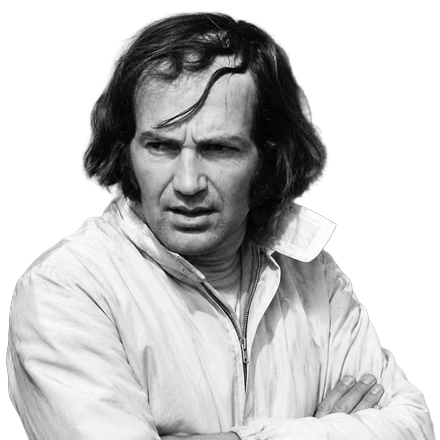
John Barry Nicholson (6 October 1941 – 19 September 2017) was a New Zealand racing driver, engine builder and engineer from Auckland whose career combined considerable success behind the wheel with serious technical ability away from it. A double British Formula Atlantic champion, Nicholson reached Formula One as a privateer and participated in two World Championship Grands Prix, making his first appearance on 20 July 1974. He never scored a World Championship point, but his brief Grand Prix record tells only a small part of a fascinating career.
Driver Bio
| Nationality | New Zealander |
| Birthplace | Auckland, New Zealand |
| Born | 6 October 1941 |
| Died | 19 September 2017 |
| First Grand Prix | 1974 British Grand Prix |
| Last Grand Prix | 1975 British Grand Prix |
| Current/Last Team | Lyncar |
Nicholson was unusual even by the wonderfully independent standards of 1970s motor racing. He wasn’t simply a driver looking for somebody to provide him with a car: he understood what was happening behind his head as well as in front of the steering wheel. While building his reputation as a racer, his “day job” was building engines for McLaren, and his technical career would also involve some of the biggest names in British motorsport.
He worked for Cosworth, Lotus and Embassy Hill, as well as McLaren, developing a reputation as an accomplished engine builder. Much later, his engineering work would even include preparing a Saab engine for installation in a Reynard Formula Three car. Nicholson was, in other words, as comfortable with the mechanical side of the sport as he was with the business of actually racing the machinery.
His driving career really gathered momentum in Formula Atlantic, one of the most competitive and important single-seater categories of the period. Racing a Lyncar, Nicholson won the British Formula Atlantic Championship in both 1973 and 1974. Two consecutive titles provided convincing evidence that the New Zealander possessed the speed required to aim considerably higher.
And Nicholson’s response was suitably ambitious: he decided to have a Formula One car built for himself.
Following his Formula Atlantic success, Nicholson commissioned Martin Slater of Lyncar to construct a Formula One machine. It was a thoroughly privateer approach to Grand Prix racing, belonging to an era when an accomplished driver with sufficient determination, engineering knowledge and financial backing could still contemplate entering Formula One under his own steam.
There was, however, a complication. By this stage Nicholson had established his own engine-building business, and running that operation demanded much of his time. Committing himself to an entire Formula One World Championship season simply wasn’t practical. Rather than chasing every Grand Prix on the calendar, he concentrated largely on the various non-championship Formula One races that were still a significant part of the sport during the 1970s.
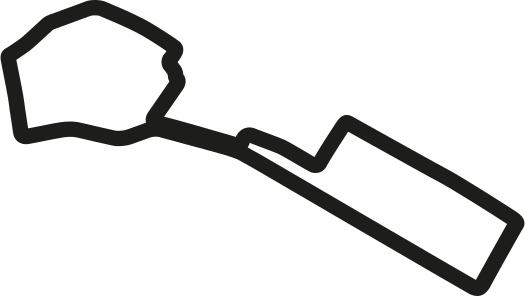
His first World Championship opportunity came at the 1974 British Grand Prix, held at Brands Hatch. Nicholson entered the Lyncar but failed to qualify for the race. That officially put him into the Formula One record books, although he would have to wait another year before getting his car onto a World Championship starting grid.
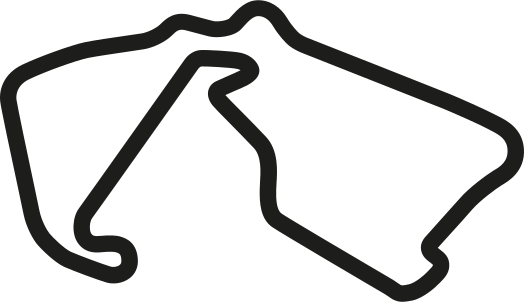
He returned for the 1975 British Grand Prix, this time at Silverstone, and successfully qualified. For a small private operation competing against established Formula One constructors, simply making the field represented a significant achievement.
The race itself became one of the most chaotic British Grands Prix of the decade. A violent rainstorm struck the circuit late in proceedings, catching out numerous drivers as conditions rapidly deteriorated. Nicholson was among those who crashed during the storm, but he had completed enough of the distance to be officially classified.
He was credited with 17th place, five laps behind the winner, giving Nicholson both his only Formula One World Championship race start and his only classified Grand Prix finish. No championship points followed, but for a driver effectively balancing Formula One with the demands of running an engine business, reaching the grid at all was no small feat.
Nicholson had not abandoned the idea of taking his Grand Prix career further. After campaigning the Lyncar, he began planning a more serious Formula One effort built around one of the best cars available to a private entrant: the McLaren M23.
The M23 had already established itself as a front-line Grand Prix machine, and acquiring one would have represented a substantial step forward from Nicholson’s home-grown Lyncar operation. He intended to purchase a chassis and mount a stronger privateer attack on Formula One.
Unfortunately, the deal fell through.
The planned McLaren purchase never materialised, effectively removing Nicholson’s best opportunity to turn his occasional Formula One appearances into something more substantial. In an era when private entrants could still find their way onto Grand Prix grids, he had come tantalisingly close to obtaining genuinely competitive equipment.
Rather than immediately walking away from racing, Nicholson broadened his programme. During 1976, he continued competing in both Formula Two and Formula 5000, two categories that demanded plenty of commitment in their own right. Formula 5000 in particular offered enormous power and spectacular racing, while Formula Two remained an important international single-seater championship immediately below Formula One.
Nicholson’s racing travels eventually brought him back home. In January 1977, he competed in his native New Zealand, bringing the driving side of a career that had taken him from Auckland to the heart of the British and European motor-racing scene towards its conclusion.
And when Nicholson finally did retire from motor racing, he didn’t exactly choose a quiet sporting alternative.
Instead, he turned his attention to powerboat racing, swapping racing circuits for water while continuing to pursue his various business interests. It was a fitting next chapter for someone whose competitive instincts and enthusiasm for powerful machinery clearly hadn’t disappeared when he stopped racing cars.
Nicholson died in 2017 at the age of 75.
Grand Prix Stats
| Race Entries | 2 |
| Race Starts | 1 |
| Did Not Start | 0 |
| Best Race Start | 26th |
| Best Race Finish | 17th |
| Retirements | 1 |
| First-Lap Retirements | 0 |
| Not Classified | 0 |
| Disqualified | 0 |
| Did Not Qualify | 1 |
Qualifying
| Qualifying Sessions | 0 |
| Reached Q3 | 0 |
| Q2 Eliminations | 0 |
| Q1 Eliminations | 0 |
| Did Not Qualify | 1 |