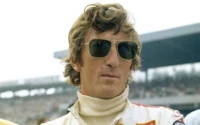


























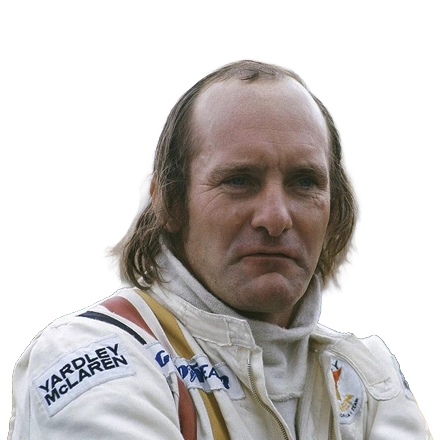
Mike Hailwood wasn’t just a racer—he was a phenomenon. Known universally as “Mike the Bike,” he built a legacy that stretched across two of motorsport’s most demanding series: Grand Prix motorcycle racing and Formula One. Few have ever come close to matching his versatility, and even fewer have matched his sheer natural talent.
| Nationality | British |
|---|---|
| Born | Stanley Michael Bailey Hailwood 2 April 1940 Great Milton, Oxfordshire, England |
| Died | 23 March 1981 (aged 40) Birmingham, West Midlands, England |
Across a blistering motorcycle career from 1958 to 1967, Hailwood claimed nine Grand Prix World Championships—four of them in the prestigious 500cc class with MV Agusta—and racked up an astonishing 76 Grand Prix victories. Add to that 14 wins at the Isle of Man TT, and you begin to understand the scale of his dominance.
Yet Hailwood wasn’t content to be the best on two wheels. After stepping away from motorcycle racing, he switched disciplines and competed in Formula One between 1963 and 1974—becoming one of the rare athletes to reach elite Grand Prix level in both cars and bikes. In one of motorsport’s most remarkable comebacks, he returned to motorcycle racing at 38 and won the 1978 Isle of Man TT, defying both age and expectation.
Tragically, his life was cut short in 1981 following a road accident in Warwickshire, England.
Early Life: Speed in His Blood
Hailwood was born into comfort—and engines. Raised at Langsmeade House in Oxfordshire, he was the son of a wealthy businessman who ran a successful car dealership and motorcycle business, and who had himself raced before the Second World War.
From an early age, Hailwood was immersed in the world of machines. He learned to ride a minibike as a small boy in a nearby field, and by the time he was ten, he was already attending races with his father. His first visit to the Isle of Man TT in 1956 left a lasting impression.
Although he attended preparatory school and later Pangbourne Nautical College—complete with naval cadet uniform—academia clearly wasn’t his path. He left early, spent a short time in the family business, and was then sent to work at Triumph motorcycles. It proved to be a far more fitting education.
Motorcycle Racing: A Decade of Dominance
Hailwood’s competitive debut came in April 1957 at Oulton Park, where he finished 11th. Within a year, he had already made his mark—winning multiple classes in the ACU Stars championship and earning the prestigious Pinhard Prize for young riders.
By 1961, he was riding for Honda, then an emerging force in Grand Prix racing. That year, he made history at the Isle of Man TT by becoming the first rider ever to win three races in a single week (125cc, 250cc, and 500cc). He also secured the 250cc World Championship.
A move to MV Agusta in 1962 elevated him even further. There, Hailwood achieved something extraordinary: four consecutive 500cc World Championships, cementing his place among the all-time greats.
He wasn’t just fast—he was relentlessly competitive. In 1964, he broke the one-hour speed record at Daytona, averaging 144.8 mph, and then casually went on to win the Grand Prix race later that same day.
Even in domestic racing, he shone. His victory in the rain-soaked 1965 Hutchinson 100 at Silverstone—on a production-based BSA Lightning—demonstrated not just skill, but adaptability in brutal conditions.
Returning to Honda in 1966 and 1967, he added four more world titles in the 250cc and 350cc categories. By then, his supremacy was unquestioned.
The Legendary 1967 TT
If one race defines Hailwood’s career, it’s the 1967 Senior TT. In a now-mythical duel with Giacomo Agostini, Hailwood delivered a performance for the ages—setting a lap record of 108.77 mph and claiming victory in what many still regard as the greatest TT race ever run.
By the end of that year, he had won 12 TT races. But the landscape of motorcycle racing was shifting.
A Turning Point—and a Pause
After Honda withdrew from Grand Prix racing in 1968, Hailwood faced an unusual situation: he was effectively paid £50,000 not to ride for anyone else. Rather than chase uncertain opportunities, he stepped back from full-time motorcycle competition.
He still appeared in selected non-championship events, often riding Hondas in European street races, but his focus was beginning to shift. With few teams capable of challenging MV Agusta’s dominance, Hailwood made a bold decision—he would pursue car racing instead.
Four Wheels: A Different Challenge
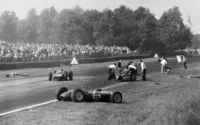
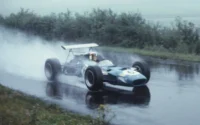
Hailwood’s move into car racing was ambitious, but not without success. He competed in 50 Formula One Grand Prix, achieving two podium finishes and 29 championship points.
He also proved competitive in endurance racing, finishing third at the 1969 24 Hours of Le Mans in a Ford GT40.
One of his most notable Formula One performances came at the 1971 Italian Grand Prix, where he finished fourth in one of the closest finishes in F1 history—the top five cars separated by just 0.61 seconds.
In 1972, he won the Formula Two European Championship, further underlining his adaptability.
But perhaps his most enduring moment in Formula One came in 1973. After a collision with Clay Regazzoni at the South African Grand Prix, Hailwood ran back into danger to pull his rival from a burning car—an act of courage that earned him the George Medal.
His Formula One career ended in 1974 after a serious crash at the Nürburgring.
The Comeback Nobody Expected
By the late 1970s, Hailwood had stepped away from top-level competition. But in 1978, at the age of 38, he returned to the Isle of Man TT.
Few believed he could still compete. Many expected a respectable showing at best.
Instead, riding a Ducati 900SS, Hailwood delivered one of the greatest comeback victories in sporting history—winning the Formula One TT race after an 11-year absence.
He followed it up in 1979 with another triumph, this time in the Senior TT on a Suzuki RG 500, before retiring for good at 39.
Final Years and Tragedy
After retiring, Hailwood settled into business life, opening a motorcycle dealership in Birmingham with fellow racer Rodney Gould.
On 21 March 1981, tragedy struck. While driving with his children, his car collided with a lorry making an illegal manoeuvre. His nine-year-old daughter, Michelle, was killed instantly. Hailwood died two days later from his injuries. He was just 40 years old.
A Racer Like No Other
Hailwood’s statistics alone are staggering. 9 World Championships, 76 Grand Prix wins, 112 podiums and 14 Isle of Man TT victories. But numbers only tell part of the story.
He was awarded the Segrave Trophy in 1979, later named a Grand Prix Legend by the FIM, and inducted into multiple halls of fame. Ducati even produced a Mike Hailwood Replica in his honour—one of the most iconic tribute motorcycles ever built.
Sections of the Isle of Man TT course now bear his name, and his legacy continues to inspire riders across generations.
Beyond the Helmet
Off the track, Hailwood lived life at full throttle. A globe-trotting, high-earning star, he embraced a jet-set lifestyle long before it became common in motorsport. He co-authored The Art of Motorcycle Racing in 1964 and remained a charismatic, larger-than-life figure throughout his career.
He married Pauline in 1975, with whom he had two children, Michelle and David.
Mike Hailwood Formula One World Championship career
| F1 Career | 1963–1965, 1971–1974 |
|---|---|
| Teams | Parnell, Surtees, McLaren |
| Entries | 50 |
| Championships | 0 |
| Wins | 0 |
| Podiums | 2 |
| Career points | 29 |
| Pole positions | 0 |
| Fastest laps | 1 |
| First entry | 1963 British Grand Prix |
| Last entry | 1974 German Grand Prix |
Mike Hailwood Teammates
| 10 drivers | Involvement | First Year | Last Year |
|---|---|---|---|
| Chris Amon | 12 | 1963 | 1964 |
| Masten Gregory | 1 | 1963 | |
| Peter Revson | 1 | 1964 | |
| Richard Attwood | 2 | 1965 | |
| Innes Ireland | 1 | 1965 | |
| Gijs van Lennep | 1 | 1971 | |
| Sam Posey | 1 | 1971 | |
| Tim Schenken | 2 | 1972 | |
| John Surtees | 3 | 1972 | 1973 |
| Carlos Pace | 15 | 1973 |
Mike Hailwood Complete Formula One Results
| Year | Entrant | Chassis | Engine | 1 | 2 | 3 | 4 | 5 | 6 | 7 | 8 | 9 | 10 | 11 | 12 | 13 | 14 | 15 | WDC | Pts |
|---|---|---|---|---|---|---|---|---|---|---|---|---|---|---|---|---|---|---|---|---|
| 1963 | Reg Parnell Racing | Lotus 24 | Climax FWMV 1.5 V8 | MON | BEL | NED | FRA | GBR 8 | GER | NC | 0 | |||||||||
| Lola Mk4 | Climax FWMV 1.5 V8 | ITA 10 | USA | MEX | RSA | |||||||||||||||
| 1964 | Reg Parnell Racing | Lotus 25 | BRM P56 1.5 V8 | MON 6 | NED 12 | BEL | FRA 8 | GBR Ret | GER Ret | AUT 8 | ITA Ret | USA 8 | MEX Ret | 21st | 1 | |||||
| 1965 | Reg Parnell Racing | Lotus 25 | BRM P56 1.5 V8 | RSA | MON Ret | BEL | FRA | GBR | NED | GER | ITA | USA | MEX | NC | 0 | |||||
| 1971 | Team Surtees | Surtees TS9 | Ford Cosworth DFV 3.0 V8 | RSA | ESP | MON | NED | FRA | GBR | GER | AUT | ITA 4 | CAN | USA 15 | 18th | 3 | ||||
| 1972 | Brooke Bond Oxo – Rob Walker Team Surtees | Surtees TS9B | Ford Cosworth DFV 3.0 V8 | ARG | RSA Ret | ESP Ret | MON Ret | BEL 4 | FRA 6 | GBR Ret | GER Ret | AUT 4 | ITA 2 | CAN | USA 17 | 8th | 13 | |||
| 1973 | Brooke Bond Oxo – Rob Walker Team Surtees | Surtees TS14A | Ford Cosworth DFV 3.0 V8 | ARG Ret | BRA Ret | RSA Ret | ESP Ret | BEL Ret | MON 8 | SWE Ret | FRA Ret | GBR Ret | NED Ret | GER 14 | AUT 10 | ITA 7 | CAN 9 | USA Ret | NC | 0 |
| 1974 | Yardley Team McLaren | McLaren M23B | Ford Cosworth DFV 3.0 V8 | ARG 4 | BRA 5 | RSA 3 | ESP 9 | BEL 7 | MON Ret | SWE Ret | NED 4 | FRA 7 | GBR Ret | GER 15 | AUT | ITA | CAN | USA | 11th | 12 |