

























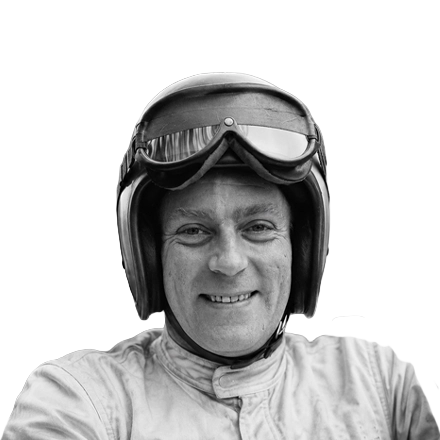
Peter John Arundell was a gifted British racing driver whose Formula One career with Lotus showed flashes of enormous promise before being cruelly interrupted by a devastating accident.
Driver Bio
| Nationality | British |
| Birthplace | Ilford, Essex, England |
| Born | 8 November 1933 |
| Died | 16 June 2009 |
| First Grand Prix | 1964 Monaco Grand Prix |
| Last Grand Prix | 1966 Mexican Grand Prix |
| Years Active | 1963–1964, 1966 |
| Current/Last Team | Lotus |
Born in Ilford, Essex, Arundell emerged during one of the golden eras of British motorsport, a period when young talent was rapidly transforming Formula One into a sport dominated by fearless, technically gifted drivers from the UK. Calm, intelligent, and naturally quick, he became widely respected as one of the brightest prospects of the early 1960s.
Before making his mark in Formula One, Arundell built an outstanding reputation in Formula Junior — the proving ground for future Grand Prix stars. After completing his service in the Royal Air Force, he turned professional and began racing Elva and Lotus machinery with immediate success. One of his earliest major victories came at the famous Boxing Day meeting at Brands Hatch in 1959, where he won the John Davy Trophy driving an Elva-D.K.W.
Arundell quickly became one of Formula Junior’s dominant figures. He won the prestigious Monaco Formula Junior race in both 1961 and 1962, confirming his ability to perform on one of motorsport’s most demanding circuits. In 1962 he captured the British Formula Junior Championship driving a Lotus 22, then successfully defended the title in 1963 with the newer Lotus 27. That same year, he also won the final Formula Junior race ever held in England — the Anglo-European Formula Junior Trophy at Brands Hatch — bringing an era of junior single-seater racing to a fitting close.
Formula One
His performances earned him a coveted place at Team Lotus, then the powerhouse of Formula One under the visionary Colin Chapman. Arundell made his Formula One World Championship debut at the 1963 French Grand Prix and soon established himself as an important part of the Lotus squad alongside reigning World Champion Jim Clark.
The 1964 season proved to be the high point of his Formula One career. Arundell scored two podium finishes for Lotus, taking third place at both the Monaco Grand Prix and the Dutch Grand Prix. Against the strongest field in world motorsport, he showed speed, composure, and tactical maturity, leading many inside the paddock to believe he had the potential to become one of Britain’s next Grand Prix stars. He was also regarded as the ideal supporting driver for Clark — fast, dependable, and technically astute.
But just as his career was gathering momentum, disaster struck.
Later in 1964, while competing in a Formula Two race at the fearsome Reims-Gueux circuit in France, Arundell spun and was hit at high speed by Richie Ginther. The impact was catastrophic, throwing Arundell from the car and leaving him with severe injuries. The accident forced him to miss almost the entire 1965 Formula One season and dramatically altered the course of his career.
In a gesture that reflected how highly he was regarded, Lotus boss Colin Chapman kept Arundell’s place in the team open for his return in 1966. On his comeback, Arundell immediately showed remarkable resolve by finishing third in the non-championship South African Grand Prix at East London on New Year’s Day 1966. Despite the brave return, however, he was never quite able to recapture the momentum he had before the Reims accident.
At the end of the 1966 season, Arundell stepped away from Formula One after starting 11 World Championship races and competing in 13 Grands Prix overall. Though his Formula One career was relatively short, he left behind the sense of a talent that might have achieved far more had fate not intervened at a crucial moment.
Arundell retired from racing completely in 1969 and later moved to Florida, where he successfully moved into business by founding a software company — a very different challenge from the world of Grand Prix racing.
Grand Prix Stats
| Race Entries | 13 |
| Race Starts | 11 |
| Did Not Start | 2 |
| Best Race Start | 4 |
| Best Race Finish | 3rd |
| Retirements | 4 |
| First-Lap Retirements | 0 |
| Not Classified | 0 |
| Disqualified | 0 |
| Did Not Qualify | 0 |
Podiums
| Podiums | 2 |
| First Podium | 1964 Monaco Grand Prix |
| Last Podium | 1964 Dutch Grand Prix |
| 1st Place | 0 |
| 2nd Place | 0 |
| 3rd Place | 2 |
| Most Consecutive Podiums | 2 |
| Most Podiums in a Single Season | 2 (1964) |
| Seasons with Podiums | 1 |
Qualifying
| Qualifying Sessions | 11 |
| Reached Q3 | 0 |
| Q2 Eliminations | 0 |
| Q1 Eliminations | 0 |
| Did Not Qualify | 0 |
Points
| Points Scored | 12 |
| Points Finishes | 4 |
| Most Points in a Single Season | 11 (1964) |
| Seasons with Points | 2 |
Stats by Season
| Year | Constructor | Entries | Starts | Wins | Podiums | Poles | Fastest Laps | Front Rows | DNF | Best Start | Best Result | Pts Finishes | Points | Championship |
|---|---|---|---|---|---|---|---|---|---|---|---|---|---|---|
| 1963 | Lotus | 1 | 0 | 0 | 0 | 0 | 0 | 0 | 0 | – | – | 0 | 0 | NC |
| 1964 | Lotus | 4 | 4 | 0 | 2 | 0 | 0 | 0 | 0 | 4 | 3 | 3 | 11 | 8th |
| 1966 | Lotus | 8 | 7 | 0 | 0 | 0 | 0 | 0 | 4 | 13 | 6 | 1 | 1 | 17th |
Stats by Constructor
| Constructor | Years | Entries | Starts | Wins | Podiums | Poles | Fastest Laps | Front Rows | DNF | Best Start | Best Result | Pts Finishes | Points |
|---|---|---|---|---|---|---|---|---|---|---|---|---|---|
| Lotus | 1963–1964, 1966 | 13 | 11 | 0 | 2 | 0 | 0 | 0 | 4 | 4 | 3 | 4 | 12 |
Teammates & Qualifying Head-to-Head
| Teammate | Years | Races | Qualifying H2H |
|---|---|---|---|
| Trevor Taylor | 1962, 1963 | 1 | – |
| Jim Clark | 1962 | 13 | – |
| Pedro Rodriguez | 1966 | 4 | – |
| Piers Courage | 1966 | 1 | – |
| Gerhard Mitter | 1966 | 1 | – |
| Geki | 1966 | 1 | – |