




































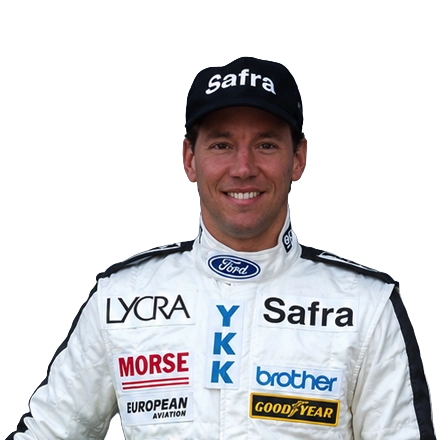
Ricardo Rosset (born 27 July 1968) is a Brazilian former racing driver who finished runner-up in the 1995 International Formula 3000 Championship before progressing to Formula One. Between 1996 and 1998, he entered 33 Formula One Grands Prix, making his World Championship debut at the 1996 Australian Grand Prix. Although he never scored a championship point, Rosset later enjoyed success in GT racing after stepping away from Formula One and building a successful sportswear business in Brazil.
Driver Bio
| Nationality | Brazilian |
| Birthplace | São Paulo, Brazil |
| Born | 27 July 1968 |
| First Grand Prix | 1996 Australian Grand Prix |
| Last Grand Prix | 1998 Japanese Grand Prix |
| Years Active | 1996–1998 |
| Current/Last Team | Tyrrell |
Career
Formula Three
After graduating from the Formula Opel Euroseries, Rosset moved into the highly competitive British Formula Three Championship in 1993 with Alan Docking Racing. In his rookie campaign, he finished joint sixth in the standings alongside Pedro de la Rosa, with a runner-up finish at Silverstone standing as his best result of the season.
Rosset switched to the AJS team for 1994 and continued his progression, ending the year fifth in the championship despite the season being dominated by eventual title winner Jan Magnussen. He also claimed his maiden British Formula Three victory at Snetterton, benefiting after Magnussen retired from the race.
Formula 3000
Rosset stepped up to International Formula 3000 in 1995, joining the highly regarded Super Nova Racing team alongside the experienced Vincenzo Sospiri.
The season proved to be the breakthrough Rosset needed. He won two races—including victory on his Formula 3000 debut—and consistently challenged at the front throughout the year. Although teammate Sospiri ultimately secured the championship, Rosset finished an impressive second in the final standings, establishing himself as one of the category’s leading young drivers.
Formula One
Footwork (1996)
Rosset’s Formula 3000 performances attracted Formula One interest, and although Minardi offered him an opportunity, he signed with Footwork for the 1996 season alongside Jos Verstappen.
His rookie campaign proved difficult. Verstappen outqualified him at every Grand Prix, while the team itself was undergoing major changes following Tom Walkinshaw’s takeover. Development of the FA17 slowed considerably, and Rosset later argued that limited finances meant the team could not maintain two equally competitive cars. With spare parts in short supply, resources were often directed towards Verstappen’s side of the garage.
Lola (1997)
For 1997, Rosset joined the new MasterCard Lola team, reuniting with former Formula 3000 teammate Vincenzo Sospiri.
The project unravelled almost immediately. The underdeveloped Lola T97/30 proved hopelessly uncompetitive, and both drivers failed to qualify for the season-opening Australian Grand Prix. Following the collapse of MasterCard’s backing, Lola withdrew from Formula One after just a single race weekend, leaving Rosset without a drive for the remainder of the season.
Tyrrell (1998)
Rosset returned to the Formula One grid in 1998 after being selected by Craig Pollock to race for Tyrrell alongside Japanese driver Toranosuke Takagi. The appointment proved controversial, with team founder Ken Tyrrell reportedly preferring another driver. Rosset later suggested that Norberto Fontana had actually been Tyrrell’s first choice. Pollock, who was preparing the team for its transformation into BAR, viewed Rosset’s sponsorship backing as an important contribution to the team’s finances—a decision that ultimately contributed to Ken Tyrrell’s departure during the season.
The campaign became one of the toughest of Rosset’s career and attracted significant criticism from sections of the media. His Monaco Grand Prix weekend proved particularly difficult. After failing to qualify, he spun late in the session and became stranded on a kerb while attempting to turn the car around, prompting one of Formula One’s most memorable television exchanges when commentator Martin Brundle responded to Murray Walker’s question over Rosset’s Formula One credentials by remarking that it was “a fairly short debate.”
Rosset has consistently defended his performance, insisting the incident was caused by a worn clutch rather than driver error. He has also argued that some journalists preferred portraying him negatively instead of examining the circumstances surrounding his performances.
The difficult atmosphere extended into the Tyrrell garage. After colliding with Jacques Villeneuve at Monaco and receiving a warning from the stewards, Rosset later acknowledged reports that mechanics had rearranged the lettering on his paddock scooter to spell an insulting nickname, although he said he never personally noticed it at the time.
Despite the criticism, Rosset showed flashes of competitiveness. He finished eighth at the Canadian Grand Prix, which matched Tyrrell’s best result of the season, while speculation grew that Danish driver Tom Kristensen could replace him. During a test at Magny-Cours, Rosset and Takagi recorded almost identical lap times, with Kristensen slightly slower despite using an older engine. Rosset later maintained that Kristensen had driven the same chassis with only minor adjustments. He also outqualified Takagi for the French Grand Prix at the same circuit.
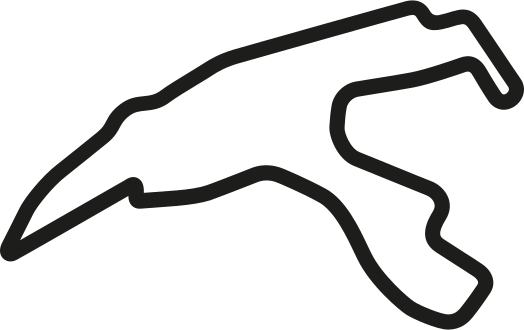
The remainder of the season continued to present setbacks. Rosset narrowly missed qualifying for the Spanish Grand Prix by just 0.06 seconds, then suffered an injury during practice at Hockenheim that ruled him out of qualifying for the German Grand Prix. At Spa-Francorchamps he became an innocent victim of the infamous 14-car first-lap pile-up after being unsighted by heavy spray and was unable to take the restart. His Formula One career came to an end at Suzuka, where another practice accident left him with a neck injury and he again failed to qualify.
Looking back on the season, Rosset said he believed Tyrrell focused much of its attention on Takagi because of the team’s relationship with Honda, leaving him feeling that he was never fully supported within the organisation.
After Formula One
Rosset retired from full-time racing at the end of the 1998 season to concentrate on developing his sportswear business in Brazil.
A decade later he returned to competition in the 2008 Brazilian GT3 Championship, sharing a Ford GT with acclaimed Brazilian filmmaker Walter Salles. The partnership enjoyed an impressive season, winning four races and finishing second in the overall championship.
Inspired by his return to racing, Rosset purchased the Footwork FA17 chassis he had driven during his Formula One debut season with the intention of competing in a historic Formula One series in 2009, although those plans never came to fruition. He later added his 1998 Tyrrell 026 to his collection after buying it on eBay, and today keeps both Formula One cars at his home.
Reflecting on his Formula One career, Rosset has expressed gratitude for the opportunity to compete at the highest level, stating that he always gave everything he could behind the wheel and has never been overly concerned by the criticism that followed his time in the sport.
Rosset went on to build an impressive record in Brazilian GT competition, winning the Porsche GT3 Cup Brasil championship three times—in 2010, 2013 and 2015—adding significant success to his racing career long after leaving Formula One.
Grand Prix Stats
| Race Entries | 33 |
| Race Starts | 26 |
| Did Not Start | 1 |
| Best Race Start | 17th |
| Best Race Finish | 8th |
| Retirements | 14 |
| First-Lap Retirements | 1 |
| Not Classified | 0 |
| Disqualified | 0 |
| Did Not Qualify | 6 |
Qualifying
| Qualifying Sessions | 33 |
| Reached Q3 | 0 |
| Q2 Eliminations | 0 |
| Q1 Eliminations | 0 |
| Did Not Qualify | 6 |
Stats by Season
| Year | Constructor | Entries | Starts | Wins | Podiums | Poles | Fastest Laps | Front Rows | DNF | Best Start | Best Result | Pts Finishes | Points | Championship |
|---|---|---|---|---|---|---|---|---|---|---|---|---|---|---|
| 1996 | Footwork | 16 | 16 | 0 | 0 | 0 | 0 | 0 | 8 | 17 | 8 | 0 | 0 | NC |
| 1997 | Lola | 1 | 0 | 0 | 0 | 0 | 0 | 0 | 0 | – | – | 0 | 0 | NC |
| 1998 | Tyrrell | 16 | 10 | 0 | 0 | 0 | 0 | 0 | 6 | 18 | 8 | 0 | 0 | NC |
Stats by Constructor
| Constructor | Years | Entries | Starts | Wins | Podiums | Poles | Fastest Laps | Front Rows | DNF | Best Start | Best Result | Pts Finishes | Points |
|---|---|---|---|---|---|---|---|---|---|---|---|---|---|
| Footwork | 1996 | 16 | 16 | 0 | 0 | 0 | 0 | 0 | 8 | 17 | 8 | 0 | 0 |
| Lola | 1997 | 1 | 0 | 0 | 0 | 0 | 0 | 0 | 0 | – | – | 0 | 0 |
| Tyrrell | 1998 | 16 | 10 | 0 | 0 | 0 | 0 | 0 | 6 | 18 | 8 | 0 | 0 |
Teammates & Qualifying Head-to-Head
| Teammate | Years | Races | Qualifying H2H |
|---|---|---|---|
| Jos Verstappen | 1996 | 16 | 0-16 |
| Vincenzo Sospiri | 1997 | 1 | 0-1 |
| Toranosuke Takagi | 1998 | 16 | 0-16 |