





















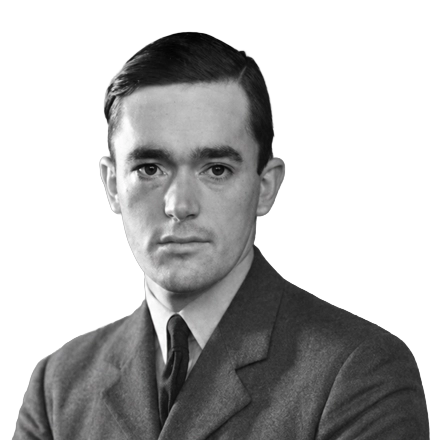
Frederick Anthony Owen Gaze, DFC and Two Bars, OAM (3 February 1920 – 29 July 2013) was an Australian fighter ace, racing driver and pioneering motorsport figure. A decorated Royal Air Force pilot during the Second World War, Gaze was credited with 12.5 aerial victories and became one of only 47 servicemen to receive the Distinguished Flying Cross three times. After the war, he successfully moved into motor racing, competing in Formula One, sports cars and endurance events, while becoming the first Australian to start a Formula One World Championship Grand Prix.
Driver Bio
| Nationality | Australian |
| Birthplace | Prahran, Victoria, Australia |
| Born | 3 February 1920 |
| Died | 29 July 2013 |
| First Grand Prix | 1952 Belgian Grand Prix |
| Last Grand Prix | 1952 Italian Grand Prix |
| Current/Last Team | Privateer: Tony Gaze HWM |
Early life
Gaze was born in Melbourne, Victoria, the son of Irvine Gaze, who had been a member of the Ross Sea Party supporting Sir Ernest Shackleton’s Antarctic expedition. He was educated at Geelong Grammar School before continuing his studies at Queens’ College, Cambridge. His university education was interrupted by the outbreak of the Second World War in 1939, leading him to join the Royal Air Force the following year.
Military service
Becoming a fighter ace
After completing his flight training, Gaze joined No. 610 Squadron RAF in March 1941, flying Supermarine Spitfires on offensive operations across the English Channel. He claimed his first aerial victory in June 1941 by shooting down a Messerschmitt Bf 109 and added several further victories during the following weeks. His early combat success earned him the Distinguished Flying Cross.
Tragedy struck the family that same year when his brother, Pilot Officer Scott Gaze, was killed while serving with the same squadron. Later in 1941, Gaze became a flying instructor before returning to front-line service in 1942 with No. 616 Squadron RAF.
Flying the high-altitude Spitfire Mk VI, Gaze took part in the Dieppe Raid in August 1942, where further combat success led to the award of a second Distinguished Flying Cross. Soon afterwards he was promoted to command No. 64 Squadron RAF, flying the new Spitfire Mk IX.
Shot down behind enemy lines
In September 1942, Gaze led a fighter wing supporting a bombing raid over occupied France. After heavy losses suffered by an accompanying Eagle Squadron, he was unfairly blamed for the mission’s outcome and removed from command. Later investigations concluded that poor weather and inexperienced pilots had been the primary causes of the losses.
Returning to operational flying in 1943 with No. 66 Squadron RAF, Gaze was shot down over northern France after claiming a Focke-Wulf Fw 190. Forced to crash-land behind enemy lines, he escaped capture with the assistance of the French Resistance before eventually making his way to neutral Spain and returning safely to Britain.
Final wartime service
Back on active duty in 1944, Gaze joined the Air Fighting Development Unit before returning to combat in Europe with No. 610 Squadron. During the closing months of the war, he achieved another notable milestone by becoming the first Australian credited with destroying a Messerschmitt Me 262 jet fighter. He also shared in the destruction of an Arado Ar 234 jet bomber, earning a rare third Distinguished Flying Cross for his achievements.
In the final days of the war, Gaze joined No. 616 Squadron, becoming one of the first Australians to fly the pioneering Gloster Meteor jet in combat.
Across 488 operational missions, Gaze recorded 12.5 confirmed aerial victories, four probable victories and five damaged enemy aircraft, placing him among Australia’s highest-scoring fighter aces of the Second World War. During his service he also flew alongside legendary figures including Douglas Bader, Johnnie Johnson and future Enola Gay commander Paul Tibbets.
Racing career
A pioneer of Australian Formula One
Following the war, Gaze played an important role in British motorsport by suggesting that the former RAF Westhampnett airfield should be converted into a permanent racing circuit. The idea was embraced by the Duke of Richmond, leading to the creation of the Goodwood Circuit, one of Britain’s most iconic venues.
After returning briefly to Australia, Gaze began racing an Alta before heading back to Europe to pursue an international career. He competed in Formula 2 during 1951 before switching to an HWM–Alta for the 1952 season.
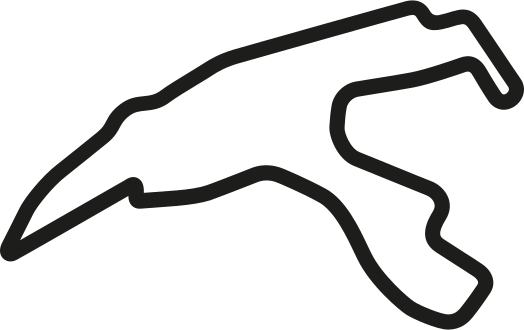
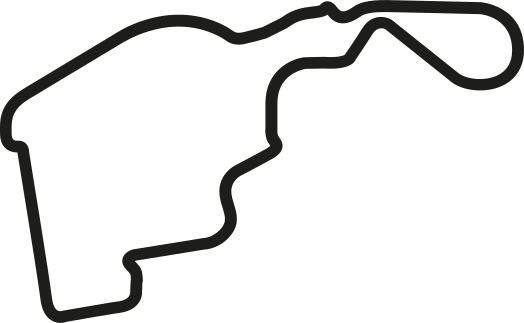
When the Formula One World Championship adopted Formula 2 regulations in 1952, Gaze suddenly found himself eligible to contest World Championship events. He first competed in several non-championship races before making history at the 1952 Belgian Grand Prix at Spa-Francorchamps, where he qualified 16th and finished 15th. In doing so, he became the first Australian driver ever to start a Formula One World Championship race.
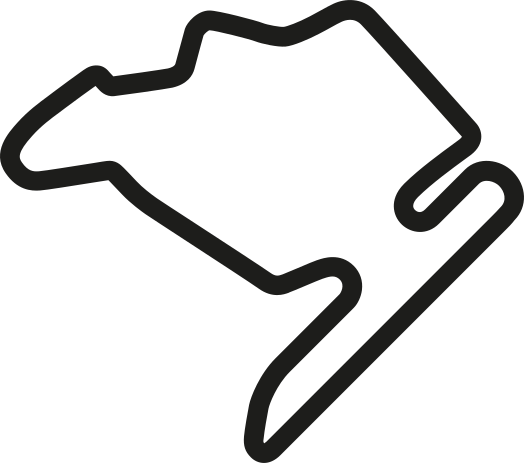
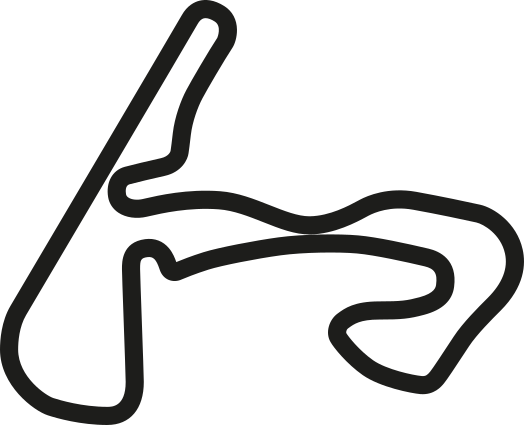
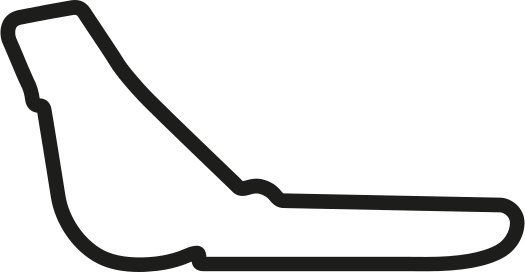
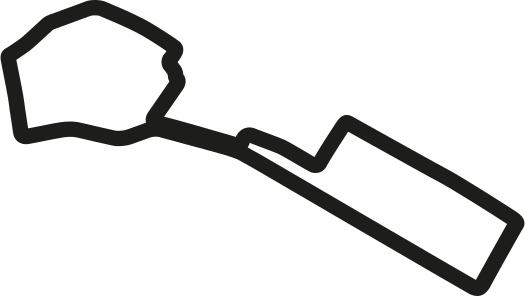
Gaze went on to compete in the British and German Grands Prix later that season, although he failed to qualify for the Italian Grand Prix. In total, he entered four World Championship events, starting three of them. He did not score championship points but secured his place as an important pioneer for future Australian Formula One drivers.
World Championship
The 1952 Formula One World Championship was contested under Formula 2 regulations, allowing drivers such as Gaze to compete with Formula 2 machinery. Across four World Championship entries, he qualified for three Grands Prix, recording a best finish of 15th place at the Belgian Grand Prix. He never started from pole position, won a race, set a fastest lap or finished on the podium, ending his World Championship career without scoring any points.
Sports cars and the Kangaroo Stable
Gaze remained active in international motorsport after his Formula One campaign. In 1953, he joined Lex Davison and Stan Jones in the first all-Australian crew to contest the Rallye Monte Carlo in a Holden FX. The trio briefly ran inside the top ten before eventually finishing 64th.
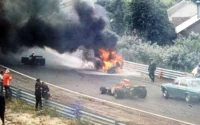
He also raced an Aston Martin DB3 in European sports car events and survived a spectacular accident at the Grande Prémio de Portugal after colliding with a Ferrari. Thrown clear as his Aston Martin overturned and burst into flames, Gaze escaped with only minor injuries thanks to the quick help of spectators.
During 1954 and 1955, Gaze campaigned the ex-Alberto Ascari Ferrari 500 Formula 2 car in non-championship events across Europe, Australia and New Zealand. He also established the Kangaroo Stable, recognised as the first Australian international racing team. Among its drivers was a young Jack Brabham, who would later become a three-time Formula One World Champion. Although the team showed promise, the cancellation of numerous races following the 1955 Le Mans disaster led to its closure at the end of the season.
Gaze continued racing into 1956, including an appearance at the 24 Hours of Le Mans with Frazer Nash, before eventually retiring from competitive motorsport. His legacy extends far beyond his race results, as both a wartime hero and a trailblazer who helped pave the way for generations of Australian drivers on the world stage.
Grand Prix Stats
| Race Entries | 4 |
| Race Starts | 3 |
| Did Not Start | 0 |
| Best Race Start | 14th |
| Best Race Finish | 15th |
| Retirements | 2 |
| First-Lap Retirements | 0 |
| Not Classified | 0 |
| Disqualified | 0 |
| Did Not Qualify | 1 |
Qualifying
| Qualifying Sessions | 4 |
| Reached Q3 | 0 |
| Q2 Eliminations | 0 |
| Q1 Eliminations | 0 |
| Did Not Qualify | 1 |