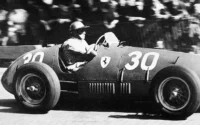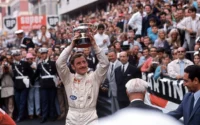
























Few names are as woven into the fabric of British motorsport as HWM – Hersham and Walton Motors. Founded in 1938 by talented engineer and racing driver John Heath, the Walton-on-Thames-based company would go on to become one of post-war Britain’s most influential independent racing teams, helping to launch the careers of some of motorsport’s greatest names while establishing a legacy that continues to this day.
| Nationality | British |
| Years Active | 1951–1955 |
| First Race | 1951 Swiss Grand Prix |
| Last Race | 1954 French Grand Prix |
| Race Entries | 16 |
| Race Starts | 14 |
| Wins | 0 |
| Podiums | 0 |
| Pole Positions | 0 |
| Fastest Laps | 0 |
| Points | 0 |
| Constructors’ Championships | 0 |
| Drivers’ Championships | 0 |
| Best Start | 6th |
| Best Finish | 5th |
| Did Not Start | 1 |
| Did Not Qualify | 4 |
| Retirements | 24 |
Following the Second World War, Heath was joined by George Abecassis, and together they transformed HWM from a local motor business into a racing operation with international ambitions. Working from modest premises in Walton-on-Thames, often with limited resources and a shoestring budget, the pair began building and developing their own competition cars. What started with a modified Alta-based sports racer in 1948 quickly evolved into a series of increasingly competitive machines that would earn HWM recognition across Europe.
By 1950, HWM had established itself as one of Britain’s leading Formula Two teams. At a time when continental manufacturers dominated international racing, HWM became the first British team to achieve sustained success on the European stage after the war. Their cars may have lacked the outright power of rivals, but clever engineering, excellent chassis design and determined teamwork frequently allowed them to outperform expectations.
Perhaps HWM’s greatest strength was its eye for talent. Over the years, an extraordinary roster of drivers passed through the team, including Duncan Hamilton, Peter Collins, Harry Schell, Lance Macklin, Paul Frère and, most famously, Stirling Moss. HWM gave Moss his first professional racing opportunity, and the future World Championship star quickly rewarded the team with a string of remarkable performances against far better-funded opposition.
During the early 1950s, HWM became renowned for punching above its weight. The team battled through mechanical failures, transport breakdowns and financial constraints while competing across Britain and mainland Europe. Yet despite these challenges, HWM built a reputation for resilience and competitiveness that earned widespread respect throughout the paddock.
Between 1951 and 1954, HWM also competed in the Formula One World Championship. The team entered 14 Grands Prix, making its World Championship debut at the 1951 Swiss Grand Prix and scoring two championship points during its time at the sport’s highest level. Powered by Alta engines, HWM never claimed a Grand Prix victory, pole position or fastest lap, but its presence helped establish Britain’s growing influence in international motor racing. The team’s final Formula One appearance came at the 1954 French Grand Prix.
Alongside its single-seater programme, HWM enjoyed considerable success in sports car racing. Jaguar-powered HWM sports racers became respected competitors throughout Britain and Europe, occasionally defeating factory-backed rivals from Aston Martin and Jaguar themselves. The team’s competitive spirit remained strong until tragedy struck in 1956 when founder John Heath lost his life while competing in the Mille Miglia in Italy. Although George Abecassis continued the racing programme for a short period, the works team’s competitive chapter gradually came to an end.
Away from the circuit, however, HWM’s story was only just beginning. George Abecassis had forged a strong relationship with Aston Martin after winning his class at Le Mans in an Aston Martin DB2 in 1950. As a result, HWM was awarded an Aston Martin franchise in 1951—a partnership that has endured ever since.
Today, HWM holds a unique place in automotive history as the world’s longest-established Aston Martin business and the oldest Aston Martin dealership still operating. Owned by the Harting family and Guy Jenner, the company continues to trade as HWM Aston Martin and HWM Sports Cars, carrying forward a legacy that spans racing success, engineering innovation and more than eight decades of British motoring heritage.
From a small garage in Walton-on-Thames to Formula One grids and Le Mans success, HWM’s story is one of ambition, ingenuity and determination—an often-overlooked but important chapter in the rise of British motorsport.
HWM Stats by Season
| Year | Engine | Drivers | Entries | Starts | Wins | Podiums | Poles | Fastest Laps | Front Rows | DNF | Best Start | Best Result | Points | Championship |
|---|---|---|---|---|---|---|---|---|---|---|---|---|---|---|
| 1951 | Alta | George Abecassis, Stirling Moss | 1 | 1 | – | – | – | – | – | 1 | 14 | 8 | – | – |
| 1952 | Alta | Paul Frere, Peter Collins, Lance Macklin, Tony Gaze, Duncan Hamilton, George Abecassis, Stirling Moss, Roger Laurent, Yves Giraud-Cabantous, Johnny Claes, Dries van der Lof | 7 | 6 | – | – | – | – | – | 10 | 6 | 5 | – | – |
| 1953 | Alta | Lance Macklin, Peter Collins, Paul Frere, Yves Giraud-Cabantous, Jack Fairman, Duncan Hamilton, Albert Scherrer, John Fitch | 6 | 6 | – | – | – | – | – | 12 | 11 | 8 | – | – |
| 1954 | Alta | Lance Macklin | 1 | 1 | – | – | – | – | – | 1 | 15 | – | – | – |
| 1955 | Alta | Ted Whiteaway | 1 | – | – | – | – | – | – | – | – | – | – | – |