































Formula 1 chiefs have confirmed a new package of regulatory changes for the 2026 season, with updates set to be introduced at the Miami Grand Prix in a bid to improve safety and address driver concerns.
What to know
- F1 has confirmed rule changes ahead of the Miami Grand Prix The FIA approved a package of 2026 regulation tweaks after the opening three races, with the updates set to debut at Miami on May 1-3.
- Changes aim to create more flat-out driving in qualifying and races Energy harvesting and deployment limits have been revised to reduce lift-and-coast driving and allow drivers to push harder for longer.
- Safety has been a major focus of the updates New measures include reduced power deployment in corners, improved wet-weather visibility systems and a low-power start detection system for stalled launches.
- The tweaks follow criticism of the new 2026 regulations Drivers raised concerns over energy management and safety, while Max Verstappen was among those openly critical of the new racing format.
The changes were agreed upon during a meeting on Monday, attended by Formula 1, the FIA, team principals, and power unit manufacturers. Several adjustments were signed off following the opening three rounds of the season.
The focus of the changes is to improve performance, reduce excessive energy management and allow drivers to race closer to full pace, with officials hoping to create more “flat-out driving”.
Measures have also been introduced to improve safety at race starts, in corners and during wet-weather running.
Why changes have been made
The 2026 season introduced one of the biggest technical overhauls in Formula 1 history, combining brand-new chassis rules with a new generation of power units.
The updated engines feature a 50-50 split between electrical power and internal combustion energy, dramatically increasing the importance of battery deployment and harvesting.
While the new rules were designed to modernise the sport and improve efficiency, concerns quickly emerged from drivers over the amount of lifting and coasting required, along with the impact on racing quality and safety.
An FIA statement said: “A number of refinements to the 2026 FIA Formula One World Championship regulations were agreed today during an online meeting between the FIA, Team Principals, CEOs of Power Unit Manufacturers and FOM.
“The final proposals presented during today’s meeting were the result of a series of consultations over the past few weeks between the FIA, technical representatives and extensive input from F1 drivers.
“Discussions around potential adjustments were based on data gathered from the first three events of the 2026 season.”
There had always been plans to review the new rules after the opening races, but attention on the regulations intensified after driver feedback and the extended break in the calendar caused by the cancellation of the Bahrain and Saudi Arabian Grands Prix due to conflict in the Middle East.
Driver concerns over safety and racing
Safety concerns were highlighted at the Japanese Grand Prix when Haas driver Oliver Bearman suffered a major crash amid a large speed difference with the car ahead as drivers managed their energy systems differently.
Meanwhile, four-time world champion Max Verstappen has been one of the most vocal critics of the new regulations and the style of racing they have created.
Other drivers have offered more balanced views, especially around qualifying and safety concerns, while several have praised the close wheel-to-wheel racing seen so far.
Seven-time world champion Lewis Hamilton even suggested he has never enjoyed racing in Formula 1 more than under the current rules.
What has changed for qualifying?
The FIA has introduced several revisions to qualifying regulations to reduce excessive harvesting and encourage more consistent flat-out laps.
- Maximum permitted recharge reduced from 8MJ to 7MJ
- Maximum superclip duration cut to around 2-4 seconds per lap
- Peak superclip power increased from 250kW to 350kW
- Number of events using alternative lower energy limits increased from 8 to 12 races
These changes are intended to reduce time spent recharging batteries and lower driver workload when managing energy during qualifying laps.
What has changed for races?
Race regulations have also been adjusted to reduce sudden speed differences while preserving overtaking opportunities.
- Maximum Boost power capped at +150kW, or the car’s current power level if higher when activated
- MGU-K deployment remains at 350kW in major acceleration zones, including overtaking areas
- MGU-K power reduced to 250kW in other parts of the lap
The FIA says these measures should reduce excessive closing speeds while maintaining strong overall performance.
New race start safety measures
A revised start procedure will be trialled in Miami to reduce the danger posed by slow-starting cars on the grid.
- A new low power start detection system can identify cars accelerating abnormally slowly after clutch release
- Automatic MGU-K deployment will activate to provide a minimum level of acceleration
- Rear and side flashing warning lights will alert following drivers
- The energy counter will reset at the start of the formation lap to fix a previous system inconsistency
The FIA says the system is designed purely for safety and will not create a sporting advantage.
Wet-weather rule changes
Additional tweaks have also been introduced for wet conditions after driver feedback.
- Tyre blanket temperatures for intermediate tyres increased to improve initial grip
- Maximum ERS deployment reduced to improve control in low-grip conditions
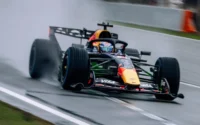
- Rear light systems simplified with clearer visual signals in poor visibility
When do the changes begin?
All updates are expected to receive final approval from the World Motor Sport Council, which is viewed as a formality, before coming into effect at the Miami Grand Prix.
Formula 1 returns with a Sprint weekend in Miami from 1 May to 3 May, where the revised rules will receive their first real test.
Seen in: