





















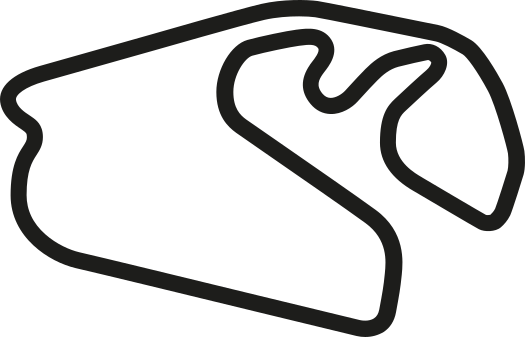

Ferrari driver Alberto Ascari won the 1951 Italian Grand Prix, beating championship contender and Alfa Romeo driver Juan Manuel Fangio, who retired on lap 39 due to engine issues. This victory cut Fangio’s lead in the 1951 Drivers’ Championship to two points.
Race Guide
Season: 1951 F1 World Championship
Race date: Sunday, 16 September 1951
Race start time: Start time unconfirmed local time (UTC+01:00)
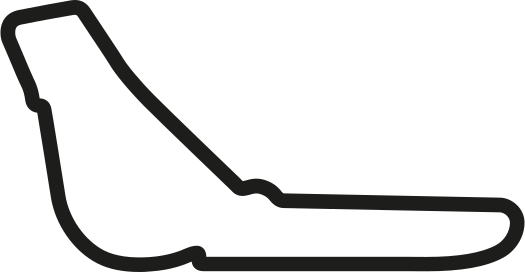
Circuit: Autodromo Nazionale di Monza
Laps: 80 laps
Circuit length: 6.300 km
1950 winner: Nino Farina
Previous race: 1951 German Grand Prix
Next race: 1951 Spanish Grand Prix
Ascari faced a setback when his car caught fire during a pit stop, but the fire was quickly extinguished, allowing him to continue. Fangio eventually secured the first of his five world titles at the season finale in Spain. Ascari’s teammate Jose Froilan Gonzalez finished second, while Alfa Romeo driven by both Felice Bonetto and Nino Farina secured third.
It was the first Ferrari 1-2 finish.
| Pole position | ||
|---|---|---|
| Driver | Juan Manuel Fangio | Alfa Romeo |
| Time | 1:53.200 | |
| Fastest lap | ||
| Driver | Nino Farina | Alfa Romeo |
| Time | 1:56.500 on lap 64 | |
| Podium | ||
| First | Alberto Ascari | Ferrari |
| Second | José Froilán González | Ferrari |
| Third | Felice Bonetto | Alfa Romeo |
Weekend Schedule
| Date | Session | Local Time |
|---|---|---|
| Before the race; individual dates unconfirmed | Timed practice and qualifying | Time unconfirmed |
| Sunday, 16 September 1951 | Race | Time unconfirmed |
Championship background
Juan Manuel Fangio arrived at round 7 leading the 1951 F1 World Championship on 27 points, with Alberto Ascari on 17.
Race entries
Alfa Romeo brought revised cars, but Sanesi suffered burns during refuelling preparations and de Graffenried joined the line-up. Ferrari retained its four leading drivers, while Landi made his championship debut. BRM arrived with Parnell and Richardson, and Rol drove the new OSCA. Behra substituted unofficially for the unwell Trintignant in the Gordini; the primary results identify the drivers separately.
First timed-practice session
Ferrari had already tested extensively and began official running strongly, with Ascari and González setting the pace. Both leading teams introduced revised machinery. Alfa Romeo‘s preparations were disrupted by Sanesi’s refuelling fire, while the smaller teams struggled to approach the Italian leaders.
Second timed-practice session
Rain prevented a major reshuffle at the front. Ascari remained quickest in the session, while the Gordinis showed well in the wet. Their improved relative position illustrated how conditions could reduce the advantage of the more powerful cars, even if the dry grid order was unlikely to change.
Final qualifying session
Fangio and Farina finally extracted the speed of the revised Alfas and claimed the first two positions. Fangio’s lap exceeded 200 km/h on average. Richardson was refused permission to race because he lacked the necessary international licence, and BRM considered Stuck as a replacement, but mechanical problems ultimately prevented either BRM starting.
Qualifying Classification
Three timed-practice sessions are documented. Their individual dates are not established consistently in the consulted accounts, so the schedule preserves their order without inventing calendar dates. The circuit used the road course, without the later combined banking layout.
| Pos. | No. | Driver | Team | Best Time |
|---|---|---|---|---|
| 1 | 38 | Juan Manuel Fangio | Alfa Romeo | 1:53.200 |
| 2 | 34 | Nino Farina | Alfa Romeo | 1:53.9 |
| 3 | 2 | Alberto Ascari | Ferrari | 1:55.1 |
| 4 | 6 | José Froilán González | Ferrari | 1:55.9 |
| 5 | 4 | Luigi Villoresi | Ferrari | 1:57.9 |
| 6 | 8 | Piero Taruffi | Ferrari | 1:58.2 |
| 7 | 40 | Felice Bonetto | Alfa Romeo | 1:58.3 |
| 8 | 30 | Reg Parnell | BRM | 2:02.2 |
| 9 | 36 | Toulo de Graffenried | Alfa Romeo | 2:05.2 |
| 10 | 32 | Ken Richardson | BRM | 2:05.6 |
| 11 | 48 | André Simon | Simca-Gordini | 2:08.0 |
| 12 | 50 | Maurice Trintignant | Simca-Gordini | 2:08.9 |
| 13 | 46 | Robert Manzon | Simca-Gordini | 2:09.0 |
| 14 | 24 | Yves Giraud-Cabantous | Talbot-Lago | 2:09.3 |
| 15 | 18 | Louis Rosier | Talbot-Lago | 2:10.8 |
| 16 | 12 | Chico Landi | Ferrari | 2:11.2 |
| 17 | 20 | Louis Chiron | Talbot-Lago | 2:12.1 |
| 18 | 44 | Franco Rol | OSCA | 2:13.4 |
| 19 | 16 | Peter Whitehead | Ferrari | 2:16.2 |
| 20 | 22 | Pierre Levegh | Talbot-Lago | 2:16.5 |
| 21 | 26 | Johnny Claes | Talbot-Lago | 2:18.6 |
| 22 | 28 | Jacques Swaters | Talbot-Lago | 2:18.8 |
| 23 | 14 | Rudi Fischer | Ferrari | No time |
| 24 | 32 | Hans Stuck | BRM | No time |
What happened in the 1951 Italian Grand Prix?
Ascari and Fangio contested the lead, but tyre trouble interrupted Fangio’s challenge. Farina and de Graffenried retired early, and Fangio eventually stopped with engine trouble. Ferrari‘s leading pair were left in a strong position.
Farina took over Bonetto’s Alfa Romeo and pursued González energetically. Further fuel stops and a leaking tank prevented him converting that pace into second place. Ascari continued steadily at the front.
Ascari won from González. Bonetto and Farina shared third, followed by Villoresi and Taruffi. Farina earned the fastest-lap point. Ascari’s second consecutive win brought him within two points of Fangio before the final round.
After the race, Juan Manuel Fangio headed the drivers’ standings with 27 points, followed by Alberto Ascari on 25.
1951 Italian Grand Prix race results
The 1951 Italian Grand Prix was held on 16 September 1951.
Includes 1 point for fastest lap
1951 Italian Grand Prix Fastest Laps
| Pos. | No. | Driver | Team | Lap | Time |
|---|---|---|---|---|---|
| 1 | 40 | Nino Farina | Alfa Romeo | 64 | 1:56.500 |
Only drivers with a recorded lap time appear. One championship point was awarded for fastest lap, divided equally when shared.
1951 Post-Race F1 Championship Standings
Championship standings after the 1951 Italian Grand Prix.
1951 Post-Race F1 Drivers’ Championship Standings
There was no constructors’ championship in this season; the manufacturers’ competition began in 1958.
Drivers counted their best 4 results. The first five places earned 8–6–4–3–2 points, with one further point for fastest lap, shared equally when necessary. Points from shared drives were divided between the eligible drivers; individual allocations are shown in driver order.
1951 Formula 1 Race Calendar
Seen in: