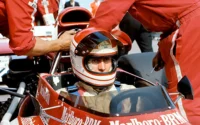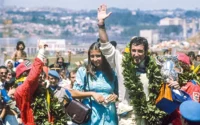




























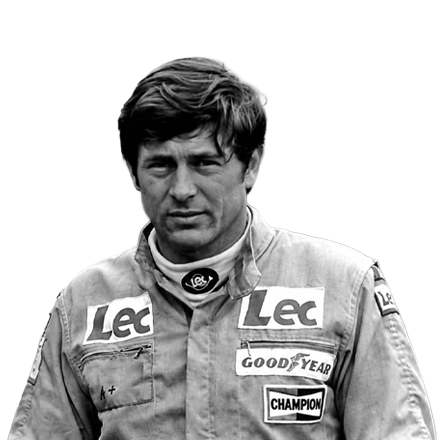
David Purley was one of British motorsport’s most courageous and remarkable figures. Born in Bognor Regis, West Sussex, Purley competed in 11 Formula One World Championship Grands Prix, making his debut at Monaco in 1973. While he never scored a championship point, his legacy extends far beyond race results.
Driver Bio
| Nationality | British |
| Born | 26 January 1945 Bognor Regis, Sussex, United Kingdom |
|---|---|
| Died | 2 July 1985 (aged 40) English Channel, close to Bognor Regis, United Kingdom |
| Nationality | British |
| Active years | 1973–1974, 1977 |
| Teams | LEC, Token Non-works March |
| Entries | 11 (7 starts) |
| Championships | 0 |
| Wins | 0 |
| Podiums | 0 |
| Career points | 0 |
| Pole positions | 0 |
| Fastest laps | 0 |
| First entry | 1973 Monaco Grand Prix |
| Last entry | 1977 British Grand Prix |
A former Parachute Regiment officer who served in Aden, Purley seemed destined for adventure. His racing career was marked by determination, resilience, and an extraordinary willingness to put others before himself. Before reaching Formula One, he enjoyed success in Formula Three, winning three times at the demanding Chimay circuit, and later claimed the 1976 British Formula 5000 Championship.
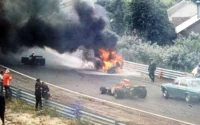
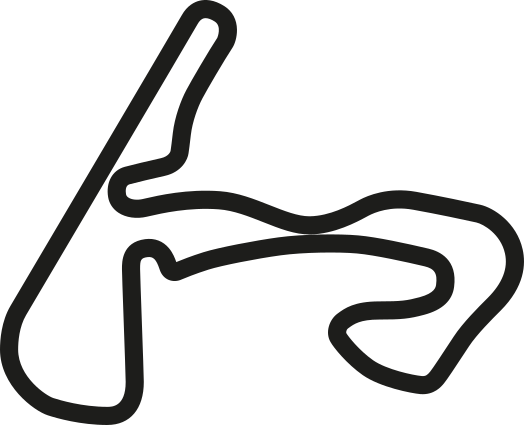
Purley became internationally known during the 1973 Dutch Grand Prix after witnessing fellow driver Roger Williamson crash and become trapped in an overturned, burning car. Without hesitation, Purley stopped his own race, climbed from his car, and rushed to Williamson’s aid. Alone and without meaningful assistance from marshals or fellow competitors, he battled desperately to free his friend from the wreckage. Despite his heroic efforts, Williamson tragically died in the fire. Purley’s courage in the face of extreme danger earned him the George Medal, one of Britain’s highest civilian honours for bravery.
His Formula One journey included appearances with Token and, most notably, his own family-backed LEC team. In 1977, driving the Mike Pilbeam-designed LEC CRP1, Purley survived one of the most violent crashes in motorsport history. During practice for the British Grand Prix, a stuck throttle sent his car into a wall at high speed. The impact brought him from 108 mph (173 km/h) to a standstill in just 26 inches (66 cm), generating an estimated 180g of deceleration—one of the highest crash forces ever survived by a human.
The accident left him with multiple fractures and life-changing injuries, yet true to character, Purley fought his way back to racing. Following innovative corrective surgery and a lengthy rehabilitation, he returned to competition, continuing to race in Britain’s Aurora Formula One series before eventually retiring from motorsport.
Never one to seek a quiet life, Purley channelled his passion for speed and precision into competitive aerobatics after leaving racing. Tragically, on 2 July 1985, he was killed when his Pitts Special aerobatic aircraft crashed into the English Channel off the coast of his hometown of Bognor Regis. He was 40 years old.
Today, David Purley is remembered not only as a racing driver, soldier and champion, but as a symbol of selfless bravery. His heroic actions at Zandvoort remain one of motorsport’s defining moments, and his story continues to inspire generations of racers and fans alike. A memorial in Bognor Regis commemorates his life, bearing words that capture the spirit of a man whose courage and character left a lasting mark both on the track and beyond it.
Complete Formula One World Championship results
| Year | Entrant | Chassis | Engine | 1 | 2 | 3 | 4 | 5 | 6 | 7 | 8 | 9 | 10 | 11 | 12 | 13 | 14 | 15 | 16 | 17 | WDC | Pts |
|---|---|---|---|---|---|---|---|---|---|---|---|---|---|---|---|---|---|---|---|---|---|---|
| 1973 | LEC Refrigeration Racing | March 731 | Ford Cosworth DFV 3.0 V8 | ARG | BRA | RSA | ESP | BEL | MON Ret | SWE | FRA | GBR DNS | NED Ret | GER 15 | AUT | ITA 9 | CAN | USA | NC | 0 | ||
| 1974 | Token Racing | Token RJ02 | Ford Cosworth DFV 3.0 V8 | ARG | BRA | RSA | ESP | BEL | MON | SWE | NED | FRA | GBR DNQ | GER | AUT | ITA | CAN | USA | NC | 0 | ||
| 1977 | LEC Refrigeration Racing | LEC CRP1 | Ford Cosworth DFV 3.0 V8 | ARG | BRA | RSA | USW | ESP DNQ | MON | BEL 13 | SWE 14 | FRA Ret | GBR DNPQ | GER | AUT | NED | ITA | USA | CAN | JPN | NC | 0 |