






























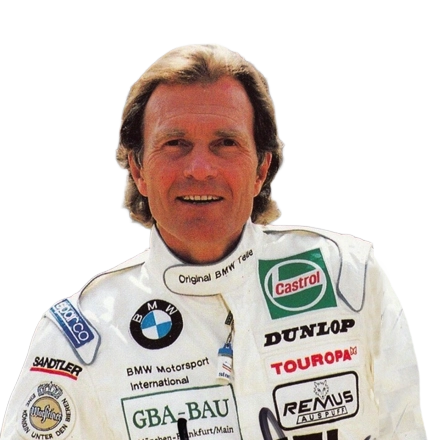
Dietrich Erwin Quester is one of Austria’s most enduring and versatile racing drivers, a competitor whose career stretched across multiple generations of motorsport and an astonishing variety of disciplines.
Driver Bio
| Nationality | Austrian |
| Birthplace | Vienna, Austria |
| Born | 30 May 1939 |
| First Grand Prix | 1969 German Grand Prix |
| Last Grand Prix | 1974 Austrian Grand Prix |
| Years Active | 1969–1974 |
| Current/Last Team | Surtees |
From Formula One and Formula Two to touring cars, endurance racing, and 24-hour events, Quester built a reputation as a tough, adaptable racer capable of succeeding almost anywhere. Remarkably, his racing career lasted well into his late seventies, making him one of the longest-serving drivers in modern motorsport history.
Born in Austria in 1939, Quester’s earliest competitive experiences did not even come on four wheels. During the 1950s, he began racing motorboats before eventually transitioning into circuit racing, where his natural speed and technical understanding quickly became apparent.
Joining BMW and the Tragedy at the Nürburgring
Quester’s rise through European motorsport brought him into BMW’s Formula Two programme during the late 1960s, a crucial period in the company’s racing development.
In 1969, BMW planned to enter the German Grand Prix at the Nürburgring with its Formula Two-based BMW 269, taking advantage of Formula One regulations at the time that allowed F2 machinery onto the grid for certain races.
However, tragedy struck during practice when Quester’s teammate Gerhard Mitter was killed in a devastating crash at the Nürburgring. Suspicions of suspension or steering failure immediately raised concerns about the safety of the cars.
In the aftermath, BMW withdrew its remaining entries, with both Quester and Hubert Hahne stepping away from the event. Porsche driver Hans Herrmann also withdrew following the accident.
The incident became one of the defining tragedies of the Nürburgring’s notoriously dangerous era and left a lasting impact on many involved.
Formula One Appearance
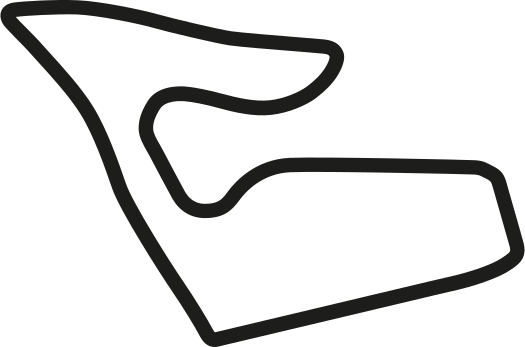
Although Quester never pursued a full-time Formula One career, he did make a memorable World Championship appearance at his home race, the 1974 Austrian Grand Prix.
Driving for Surtees at the Österreichring, Quester impressed immediately by out-qualifying all three of his teammates — a significant achievement considering the competitiveness of the grid and the unpredictable nature of the Surtees machinery.
In the race itself, he delivered a composed and highly respectable performance to finish ninth, ahead of future Formula One winner Hans-Joachim Stuck and double World Champion Graham Hill.
While only the top finishers scored championship points under the rules at the time, Quester’s performance earned widespread respect and demonstrated that he belonged comfortably among Grand Prix-level drivers.
It would ultimately be his only Formula One World Championship start.
Touring Cars and Endurance Success
Following his Formula One appearance, Quester shifted his focus back toward touring cars and endurance racing, categories in which he would achieve far greater success.
Driving for Schnitzer Motorsport in the European Touring Car Championship, he became closely associated with BMW’s legendary touring machinery, particularly the iconic BMW 3.0 CSL.
One of his biggest victories came at the 1973 Spa 24 Hours, one of Europe’s most demanding endurance races. Quester’s combination of speed, consistency, and mechanical sympathy made him ideally suited to long-distance competition.
Later, during his time competing in the Deutsche Tourenwagen Meisterschaft (DTM), Quester became part of one of the series’ most memorable moments. In a dramatic finish at the fearsome AVUS circuit, his BMW M3 slid across the start-finish line upside down on its roof, yet still secured third place.
The image became one of the defining visual moments of touring car racing in the era.
Racing Into His Seventies
Unlike many drivers who fade away after their prime years, Quester continued racing competitively deep into his seventies.
Supported by Red Bull, he remained active in endurance racing and continued to collect victories decades after his Formula One debut. His longevity became one of the most remarkable aspects of his career.
In January 2006, at the age of 66, Quester won the 24 Hours of Dubai driving a BMW M3 alongside Hans-Joachim Stuck, Philipp Peter, and future Formula One team executive Toto Wolff.
That same year, Quester and Stuck returned to compete in the 24 Hours Nürburgring, although their race ended dramatically when their BMW was destroyed in a massive nighttime crash triggered by an oil spill involving seven cars.
Quester’s endurance success continued later in 2006 when he won the Britcar 24 Hours at Silverstone driving a Duller Motorsport BMW Z4 M Roadster. He repeated the feat in Dubai in 2007 and again triumphed at Silverstone later that same year, with Duller Motorsport winning by an astonishing margin of 30 laps.
By this point, Quester had become something truly unique in motorsport — a driver still winning major endurance races at an age when most competitors had long since retired.
Final Racing Years
Quester’s final competitive appearance came at the HSR Classic Daytona event in November 2018.
At 79 years old, he was still climbing into race cars and competing wheel-to-wheel, bringing to a close one of the longest and most diverse careers in international motorsport.
Over decades of competition, Quester participated in an incredible 53 24-hour races, a statistic that perfectly reflects both his endurance-racing pedigree and extraordinary longevity.
Grand Prix Stats
| Race Entries | 2 |
| Race Starts | 1 |
| Did Not Start | 1 |
| Best Race Start | 25th |
| Best Race Finish | 9th |
| Retirements | 0 |
| First-Lap Retirements | 0 |
| Not Classified | 0 |
| Disqualified | 0 |
| Did Not Qualify | 0 |
Qualifying
| Qualifying Sessions | 1 |
| Reached Q3 | 0 |
| Q2 Eliminations | 0 |
| Q1 Eliminations | 0 |
| Did Not Qualify | 0 |