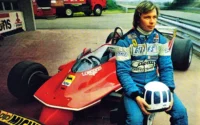























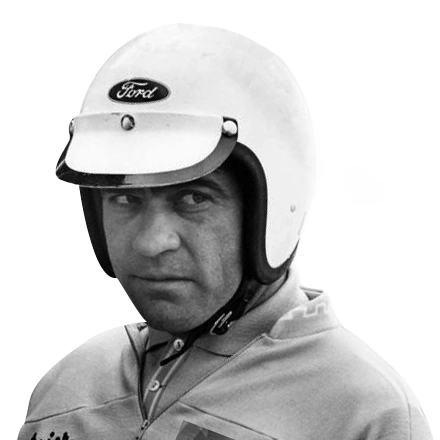
Guy Ligier was one of the great self-made figures of French motorsport: a racing driver, constructor and team owner whose life story ranged far beyond the confines of the pit lane. Over the course of his career, he was, at various times, a champion athlete, butcher, construction magnate, Grand Prix driver and Formula One team boss. Few figures in motor racing combined such breadth of experience with such relentless ambition. He was also the father of Philippe and Pascale Ligier, and the grandfather of Étienne Ligier, himself once a promising French motorsport prospect.
| Nationality | French |
|---|---|
| Born | Guy Camille Ligier 12 July 1930 Vichy, Allier, France |
| Died | 23 August 2015 (aged 85) Nevers, Nièvre, France |
Born into a farming family, Ligier’s childhood was characterised by hardship. Orphaned at the age of seven, he left school in his mid-teens and began working as a butcher’s assistant in his home town of Vichy. It was a practical trade, but even then Ligier was already driven by competition and self-improvement.
A gifted all-round athlete, he became French rowing champion in 1947. Rugby was another passion, and one he pursued at a high level: during his national service he played for the French Army team and earned selection for France’s national “B” side. Serious injuries ultimately ended his rugby career, but not his appetite for physical challenge or success.
Determined to build something of his own, Ligier saved every franc he earned as a butcher. In 1960 he rented a backhoe, soon bought a bulldozer, and entered the construction business. With the support of Vichy’s mayor, Pierre Coulon, he founded Ligier Travaux Publics. The timing could not have been better. France’s motorway boom allowed the company to expand rapidly: by 1961 Ligier employed 1,200 people, operated 500 machines, and had diversified into bridges, dams and urban development.
This period also introduced him to influential political figures, notably François Mitterrand and Pierre Bérégovoy—relationships that would later play a significant role in his motorsport career.
Two wheels before four
When rugby ended, competition did not. Ligier turned to motorcycle racing and proved immediately successful. Riding a Norton Manx “LA”, he won the French 500cc motorcycle championship twice, in 1959 and again in 1960. Only after conquering two wheels did he seriously turn his attention to cars.
From late starter to Grand Prix driver
Ligier’s first taste of car racing came in 1957 at Montlhéry, driving a Simca 1300 in the Parisian Salon Cups. In 1960, he stepped into single-seaters, competing in Formula Junior with an Elva-DKW at Monaco and Montlhéry. It was only the beginning.
By 1964, at an age when many drivers were already established, Ligier’s “real” racing career finally gathered momentum. He joined Auguste Veuillet’s Porsche team, racing first a 356 and then a 904 Carrera GTS. Alongside Robert Buchet, he finished seventh at the 1964 24 Hours of Le Mans.
That same year Ford France signed him to drive in Formula 2 with a Brabham BT6, later upgraded to a BT10. His teammate was Jo Schlesser, a partnership that would shape Ligier’s life both on and off the track. Ligier finished fifth on his Formula 2 debut at Enna-Pergusa, announcing himself as a serious competitor at 34 years old.
Success followed quickly. In 1965 he won the Grand Prix d’Albi in a Ford GT40 and took a Shelby Mustang GT350 to second place in the Rallye des Routes du Nord. In 1966 he entered Formula One as a privateer, running his own Cooper–Maserati T81, including an appearance at the Monaco Grand Prix. Results were modest, but the experience invaluable.
That year also saw Ligier and Schlesser become the exclusive importers of Ford-Shelby cars in France. On track, they shared a Ford GT40 to fifth place in the Nürburgring 1000 km. Ligier’s season nearly ended in disaster when he broke his knee while practising for the German Grand Prix; amputation was seriously considered before Schlesser intervened, saving his leg.
In 1967, Ligier entered another privately run Formula One car, a Brabham-Repco BT20. At the German Grand Prix, he finished sixth on the road, earning the only championship point of his Formula One career. He and Schlesser also won the 12 Hours of Reims in a GT40 Mk IIB.
Tragedy and transition
In 1968, Ligier raced a Ford Escort TC in the Coupes de Vitesse while also co-founding Écurie InterSport with Schlesser and José Behra, fielding McLaren Formula 2 cars. That same year, tragedy struck: Schlesser was killed during his Formula One debut at the 1968 French Grand Prix while driving Honda’s magnesium-bodied RA302.
The loss of his closest friend and partner profoundly affected Ligier. He stepped away from front-line racing, making only a single competitive appearance in 1969 before returning in 1970 at Le Mans with a car bearing his own name: the Ligier JS1. He continued to race his own cars in endurance events until 1974.
Across his driving career Ligier contested 13 Formula One Grand Prix, scoring one championship point, and amassed a long list of class wins and endurance successes in GT and prototype racing.
Builder of cars, builder of teams
In 1968 Ligier founded Ligier Automobiles, determined to fulfil a shared dream with Schlesser: to build a truly “good car”. Designer Michel Têtu was recruited, and the JS1 prototype—its initials a tribute to Jo Schlesser—marked the beginning of a lineage. Only three JS1s were built before the JS2 replaced it, with the JS3 appearing briefly in between.
After limited success in sports car racing, Ligier turned his attention to Formula One. He purchased the assets of Équipe Matra Sports and, with designer Gérard Ducarouge and the Matra V12 engine, launched Équipe Ligier in 1976.
The team flourished in the late 1970s and early 1980s with drivers such as Jacques Laffite, Patrick Depailler and Didier Pironi. Political connections again played a role when François Mitterrand became President of France in 1981. During financial difficulties in 1983, state-backed companies including Elf, Gitanes and Loto were instructed to support the team. Renault engines followed, albeit often year-old units due to exclusivity agreements with Lotus and Williams.
The Ligier–Mitterrand–Bérégovoy alliance reached its height in the early 1990s with the redevelopment of Magny-Cours as both the team’s base and host of the French Grand Prix.
Ligier’s final Formula One victory came at Monaco in 1996, when Olivier Panis triumphed in one of the sport’s most dramatic races. By then, Équipe Ligier had competed in 326 Grands Prix, achieved 50 podiums, scored nine wins, finished second in the 1980 World Championship, and built more than 20 Formula One cars.
Life beyond Formula One
Ligier never stood still. In the late 1970s he acquired the remaining assets of the defunct Monica marque. In the 1980s he diversified again, this time into tractor cabs and then into voitures sans permis—license-free microcars—launching the Ligier JS4 in 1980.
In 1992, anticipating political change, Ligier sold his Formula One team to Cyril de Rouvre, and later watched it pass to Flavio Briatore and eventually Alain Prost. He reinvested his wealth into natural fertiliser production in central France, successfully building yet another business empire.
In 2004 he returned to car manufacturing by acquiring a majority stake in Automobiles Martini, reviving the Ligier JS naming tradition. A decade later the Ligier name returned to international racing through Onroak Automotive, whose Ligier prototypes competed in the FIA World Endurance Championship and at Le Mans.
Death
Guy Ligier died on 23 August 2015 in Nevers. His funeral was held five days later at Saint-Blaise Church in Vichy. He was survived by his wife, his son Philippe and his daughter Pascale.
Guy Ligier Formula One World Championship career
| F1 Career | 1966 – 1967 |
|---|---|
| Teams | privateer Cooper, privateer Brabham |
| Entries | 13 (12 starts) |
| Championships | 0 |
| Wins | 0 |
| Podiums | 0 |
| Career points | 1 |
| Pole positions | 0 |
| Fastest laps | 0 |
| First entry | 1966 Monaco Grand Prix |
| Last entry | 1967 Mexican Grand Prix |