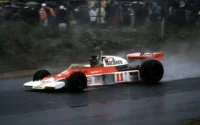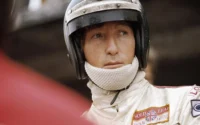



















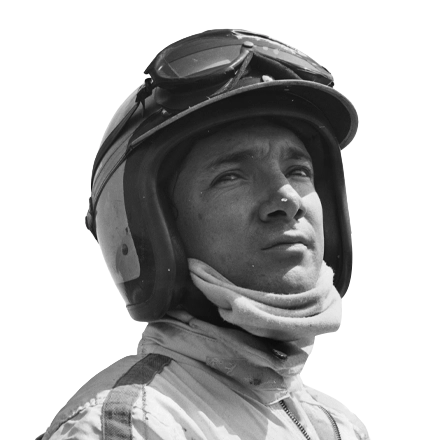
Pedro Rodríguez remains one of motor racing’s most complete and fearless competitors—a driver equally at home in Formula One, endurance racing, stock cars, and virtually anything with wheels. Racing internationally from the late 1950s until his death in 1971, Rodríguez competed in Formula One from 1963 to 1971, winning two Grand Prix across nine seasons. Beyond F1, his legacy was cemented by victory at the 1968 24 Hours of Le Mans with Ford, two wins at the 24 Hours of Daytona with Porsche, and a dominant run in sports car racing with the Porsche 917.
| Nationality | Mexican |
|---|---|
| Born | Pedro Rodríguez de la Vega 18 January 1940 Mexico City, Mexico |
| Died | 11 July 1971 (aged 31) Norisring, Nuremberg, West Germany |
Early life
Born and raised in Mexico City, Pedro was the eldest son of Pedro Natalio Rodríguez and Concepción de la Vega. He grew up in a close-knit family alongside his sister Conchita and younger brothers Ricardo, Federico (who died in infancy), and Alejandro. Racing was a family obsession from an early age. Pedro and Ricardo began competing on bicycles and motorcycles as children, and by the early 1950s both were already Mexican national motorcycle champions.
At just eight years old, Pedro was racing competitively. By his mid-teens he had mastered motorcycles—winning national titles in 1952 and 1954 on a 125 cc Adler—before turning his attention fully to cars. His father sent him to the Western Military Academy in Illinois at age 15, partly to learn English, partly to instill discipline, but racing never left his focus.
Pedro made his international debut in cars in 1957 at Nassau, driving a Ferrari, and by the end of that year he and Ricardo were already attracting attention for their speed—and aggression—on the global stage.
Early international racing and endurance
Rodríguez’s early career unfolded across Europe and the Americas, largely in sports cars. In 1958 he competed at Le Mans for the first time, sharing a Ferrari 500 TR entered by Luigi Chinetti’s North American Racing Team. Although the car retired due to a radiator failure, it marked the beginning of a lifelong relationship with the world’s greatest endurance race—one he would contest fourteen times.
Throughout the late 1950s and early 1960s, Rodríguez raced Ferraris, Porsches, and OSCAs at events such as Sebring, the Nürburgring 1000 km, the Targa Florio, Reims, Nassau, and the Paris 1000 km. Results were often compromised by mechanical failures, but his speed was unquestioned. In 1961, he and Ricardo scored a major breakthrough by winning the Paris 1000 km in a Ferrari 250 GT—Pedro’s first major international victory.
That same year, Enzo Ferrari took notice after the brothers ran the works Ferraris close at Le Mans before engine failure intervened late in the race. Ferrari offered both brothers Formula One drives. Pedro declined, citing business commitments in Mexico—one of several times his career took a different path from what seemed inevitable.
Tragedy and resolve
In 1962, tragedy struck. During practice for the inaugural Mexican Grand Prix, Ricardo Rodríguez was killed in a horrific accident. Pedro withdrew from the event and briefly considered walking away from racing altogether. Instead, he chose to continue, carrying both the burden and motivation of his brother’s legacy.
The decision proved decisive. In 1963, Pedro won the Daytona Continental in a Ferrari 250 GTO and finished third at Sebring alongside Graham Hill. That year also marked his Formula One debut, with appearances for Lotus at Watkins Glen and in Mexico City—both ending in retirement, but signalling his arrival on the F1 stage.
Formula One
Rodríguez’s Formula One career was defined less by dominant machinery and more by perseverance, adaptability, and opportunism. He raced sporadically through the mid-1960s for Lotus, Ferrari, and privateer teams, often juggling F1 with an extensive sports car schedule. Points finishes were rare, but his reputation grew steadily.
The breakthrough came in 1967. Driving for Cooper, Rodríguez won the 1967 South African Grand Prix at Kyalami—his ninth Formula One start and the first Grand Prix victory ever achieved by a Mexican driver. Calm, precise, and relentless, he capitalised on pit stops and mechanical attrition to secure a historic win. Throughout the season, he played the supporting role to Jochen Rindt, gaining valuable experience in outdated machinery while delivering consistently solid performances.
In 1968, Rodríguez joined BRM. The team’s P133 was underpowered, but Rodríguez excelled in difficult conditions, particularly in the wet. He set his only Formula One fastest lap at the 1968 French Grand Prix and finished second at the 1968 Belgian Grand Prix at Spa-Francorchamps. Despite strong drives, internal politics, and declining team form, he was released at season’s end.
After a brief and frustrating stint with the Reg Parnell team in 1969, Rodríguez rejoined Ferrari for the latter half of the season. Although the Ferrari 312 was uncompetitive, Rodríguez consistently matched teammate Chris Amon and scored respectable finishes, including running in American NART colours at North American races.
1970 Season
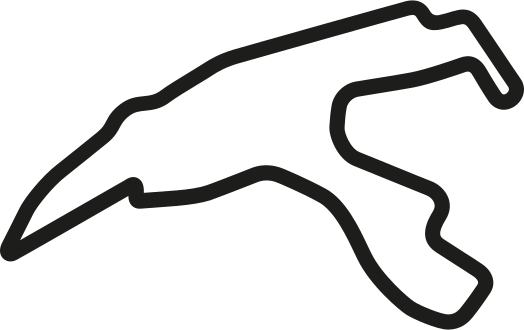
Rodríguez returned to BRM in 1970 following John Surtees’ sudden departure. Despite being clearly treated as a secondary driver, Rodríguez delivered one of the defining performances of his career. At the 1970 Belgian Grand Prix at Spa-Francorchamps, he drove the BRM P153 to victory, narrowly defeating Chris Amon’s March by just over a second at an average speed of nearly 150 mph—then the fastest Grand Prix in F1 history.
The BRM V12 proved ideally suited to high-speed circuits, and Rodríguez was a constant threat. He finished fourth at Mont-Tremblant and was only denied victory at Watkins Glen by a late fuel stop. By now, he was universally regarded as one of the most complete drivers in the sport.
Sports cars
While Formula One brought visibility, sports car racing was where Rodríguez truly flourished. After years of success with Ferrari and Ford—including victory at the 1968 24 Hours of Le Mans in a Ford GT40 shared with Lucien Bianchi—Rodríguez joined JW-Gulf-Porsche in 1970.
Driving the Porsche 917, he became one of the car’s greatest exponents, winning eight races across 1970 and 1971 and playing a key role in Porsche’s World Sportscar Championship titles. His ability to extract speed while preserving machinery made him invaluable in endurance racing.
Rodríguez’s versatility was extraordinary. He competed successfully in Can-Am, NASCAR, rallying, ice racing (becoming North American Ice Racing Champion in 1970), and even the Indianapolis 500 qualifying attempt. In NASCAR, he scored a best finish of fifth in the 1965 World 600 and raced the Daytona 500 in 1971.
Final season and death
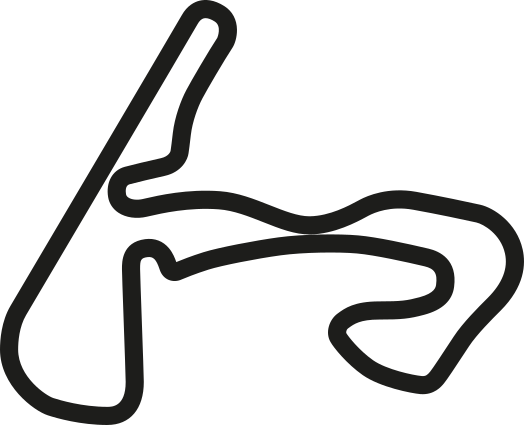
The 1971 Formula One season promised even more. BRM’s new P160 showed real potential, and Rodríguez was widely considered a title contender. He came close to victory in torrential rain at the 1971 Dutch Grand Prix, duelling Jacky Ickx to the finish.
On 11 July 1971, while competing in an Interserie sports car race at the Norisring in West Germany, Rodríguez was killed driving a Ferrari 512 M. A tyre failure under heavy braking sent the car into the barriers, where it rebounded and caught fire. He died shortly after being pulled from the wreckage.
Pedro Rodríguez left behind no children, but his legacy endures; few drivers have ever been so universally respected across so many forms of motorsport. Pedro Rodríguez was one of them.
Pedro Rodriguez Formula One World Championship career
| F1 Career | 1962–1971 |
|---|---|
| Teams | Lotus, Ferrari, Cooper, BRM, Privateer: Reg Parnell Racing |
| Entries | 55 |
| Championships | 0 |
| Wins | 2 |
| Podiums | 7 |
| Career points | 71 |
| Pole positions | 0 |
| Fastest laps | 1 |
| First entry | 1963 United States Grand Prix |
| First win | 1967 South African Grand Prix |
| Last win | 1970 Belgian Grand Prix |
| Last entry | 1971 French Grand Prix |
Pedro Rodriguez Wins
| Win No. | Grand Prix |
|---|---|
| 1 | 1967 South African Grand Prix |
| 2 | 1970 Belgian Grand Prix |
Pedro Rodriguez Teammates
| 22 drivers | Involvement | First Year | Last Year |
|---|---|---|---|
| Phil Hill | 1 | 1961 | |
| Richie Ginther | 1 | 1961 | |
| Jim Clark | 5 | 1963 | 1966 |
| Trevor Taylor | 2 | 1963 | |
| Lorenzo Bandini | 1 | 1964 | |
| John Surtees | 1 | 1964 | |
| Mike Spence | 3 | 1965 | 1968 |
| Bob Bondurant | 1 | 1965 | |
| Peter Arundell | 3 | 1966 | |
| Jochen Rindt | 8 | 1967 | |
| Alan Rees | 1 | 1967 | |
| Chris Irwin | 1 | 1968 | |
| Richard Attwood | 6 | 1968 | |
| Tony Lanfranchi | 1 | 1968 | |
| Bobby Unser | 3 | 1968 | |
| Chris Amon | 6 | 1969 | |
| Tino Brambilla | 1 | 1969 | |
| Jackie Oliver | 13 | 1970 | |
| George Eaton | 12 | 1970 | |
| Peter Westbury | 1 | 1970 | |
| Jo Siffert | 6 | 1971 | |
| Howden Ganley | 6 | 1971 |
Pedro Rodriguez Complete Formula One Results
| Year | Entrant | Chassis | Engine | 1 | 2 | 3 | 4 | 5 | 6 | 7 | 8 | 9 | 10 | 11 | 12 | 13 | WDC | Pts. |
|---|---|---|---|---|---|---|---|---|---|---|---|---|---|---|---|---|---|---|
| 1963 | Team Lotus | Lotus 25 | Climax FWMV 1.5 V8 | MON | BEL | NED | FRA | GBR | GER | ITA | USA Ret | MEX Ret | RSA | NC | 0 | |||
| 1964 | North American Racing Team | Ferrari 156 Aero | Ferrari 178 1.5 V6 | MON | NED | BEL | FRA | GBR | GER | AUT | ITA | USA | MEX 6 | 22nd | 1 | |||
| 1965 | North American Racing Team | Ferrari 1512 | Ferrari 207 1.5 V12 | RSA | MON | BEL | FRA | GBR | NED | GER | ITA | USA 5 | MEX 7 | 14th | 2 | |||
| 1966 | Team Lotus | Lotus 33 | Climax FWMV 2.0 V8 | MON | BEL | FRA Ret | GBR | NED | MEX Ret | NC | 0 | |||||||
| Lotus 33 | BRM P60 2.0 V8 | USA Ret | NC | 0 | ||||||||||||||
| Lotus 44 (F2) | Ford Cosworth SCA 1.0 L4 | GER Ret 1 | ITA | NC | 0 | |||||||||||||
| 1967 | Cooper Car Company | Cooper T81 | Maserati 9/F1 3.0 V12 | RSA 1 | MON 5 | NED Ret | BEL 9 | FRA 6 | GBR 5 | GER 8 | CAN | ITA | USA | MEX 6 | 6th | 15 | ||
| 1968 | Owen Racing Organisation | BRM P126 | BRM P101 3.0 V12 | RSA Ret | 6th | 18 | ||||||||||||
| BRM P133 | ESP Ret | MON Ret | BEL 2 | NED 3 | FRA NC | GBR Ret | GER 6 | CAN 3 | USA Ret | MEX 4 | 6th | 18 | ||||||
| BRM P138 | ITA Ret | 6th | 18 | |||||||||||||||
| 1969 | Reg Parnell Racing | BRM P126 | BRM P101 3.0 V12 | RSA Ret | ESP Ret | MON Ret | 14th | 3 | ||||||||||
| Scuderia Ferrari SpA SEFAC | Ferrari 312/69 | Ferrari 255C 3.0 V12 | NED DNA | FRA | GBR Ret | GER | ITA 6 | 14th | 3 | |||||||||
| North American Racing Team | Ferrari 312/69 | Ferrari 255C 3.0 V12 | CAN Ret | USA 5 | MEX 7 | 14th | 3 | |||||||||||
| 1970 | Owen Racing Organisation | BRM P153 | BRM P142 3.0 V12 | RSA 9 | 7th | 23 | ||||||||||||
| Yardley Team BRM | BRM P153 | BRM P142 3.0 V12 | ESP Ret | MON 6 | BEL 1 | NED 10 | FRA Ret | GBR Ret | GER Ret | AUT 4 | ITA Ret | CAN 4 | USA 2 | MEX 6 | 7th | 23 | ||
| 1971 | Yardley Team BRM | BRM P160 | BRM P142 3.0 V12 | RSA Ret | ESP 4 | MON 9 | NED 2 | FRA Ret | GBR | GER | AUT | ITA | CAN | USA | 10th | 9 |