




















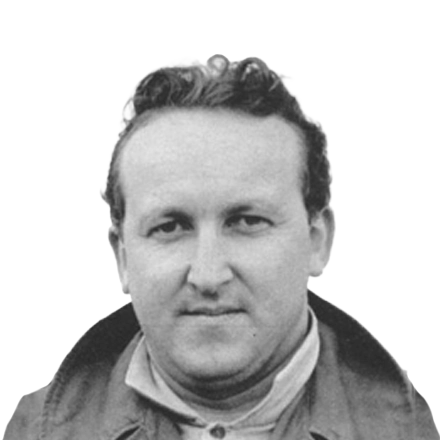
Piero Carini was one of Italy’s most respected post-war racing drivers — a dependable, versatile competitor who earned a reputation for speed, consistency and mechanical sympathy across Formula One, sports cars and touring car racing. Born in Genoa, Carini became closely associated with Ferrari during the golden age of Italian motorsport, racing alongside some of the era’s biggest names before his life was tragically cut short in a fatal accident in France in 1957.
Driver Bio
| Nationality | Italian |
| Birthplace | Genoa, Italy |
| Born | 6 March 1921 |
| Died | 30 May 1957 |
| First Grand Prix | 1952 French Grand Prix |
| Last Grand Prix | 1953 Italian Grand Prix |
| Years Active | 1952–1953 |
| Current/Last Team | Ferrari |
Carini’s rise through the ranks began in the fiercely competitive Italian racing scene of the late 1940s and early 1950s. In 1950, he announced himself as a serious talent by finishing third in the Modena Grand Prix, which that year was run to Formula Two regulations. Driving an OSCA, Carini impressed with his pace and composure against more established rivals. Although reliability issues plagued his machinery throughout 1951, his performances still caught the attention of influential teams within Italian racing circles.
That promise earned him a place with Scuderia Marzotto for the 1952 season, where he was entrusted with both Ferrari sports and Grand Prix cars. It was a major step forward in his career. Carini made his Formula One World Championship debut on 6 July 1952, entering the French Grand Prix in a Ferrari 166. Unfortunately, mechanical failures prevented him from showing his full potential, and he retired from both of his Grand Prix starts that season. Despite the frustrating results, Ferrari saw enough in the Italian driver to keep him on their radar.
In 1953, Carini was signed directly by the works Ferrari team as a junior driver, working alongside rising Italian star Umberto Maglioli. Although his Formula One opportunities remained limited — he competed only in the Italian Grand Prix that season and retired once again — being selected by Ferrari during one of the most competitive periods in motorsport was recognition of the trust the team placed in his ability and professionalism.
At the end of 1953, Carini switched focus and joined Alfa Romeo for the 1954 season, driving touring cars rather than Grand Prix machinery. The move proved successful. Carini collected class victories in some of Italy’s most prestigious road races, including the legendary Mille Miglia, the Tour of Sicily and the Dolomite Cup. He developed a reputation as a reliable endurance racer capable of balancing outright pace with the mechanical care needed to survive brutal long-distance events.
His success continued into 1955. Driving a Ferrari, Carini secured class victories at Dakar and in Caracas, Venezuela, while also taking an OSCA to a class win in the iconic Targa Florio — one of the toughest and most dangerous races in the world at the time. These performances further established him as one of Italy’s most capable sports car specialists of the era.
Death
Tragically, Carini’s career came to an abrupt end in 1957. Competing in a sports car race near Saint-Étienne behind the wheel of a Ferrari Testa Rossa, his car suddenly crossed the central reservation and collided head-on with another competitor. Carini was killed instantly in the crash. (Wikipedia)
Though his Formula One record was brief, Carini’s wider racing career reflected the spirit of 1950s motorsport: adaptable, fearless and endlessly committed to competition. Whether in Grand Prix cars, endurance racers or touring machinery, he represented the generation of drivers who raced anything, anywhere, often week after week, during one of the most dangerous chapters in motorsport history.
Grand Prix Stats
| Race Entries | 3 |
| Race Starts | 3 |
| Did Not Start | 0 |
| Best Race Start | 19 |
| Best Race Finish | – |
| Retirements | 3 |
| First-Lap Retirements | 0 |
| Not Classified | 0 |
| Disqualified | 0 |
| Did Not Qualify | 0 |
Qualifying
| Qualifying Sessions | 3 |
| Reached Q3 | 0 |
| Q2 Eliminations | 0 |
| Q1 Eliminations | 0 |
| Did Not Qualify | 0 |
Stats by Season
| Year | Constructor | Entries | Starts | Wins | Podiums | Poles | Fastest Laps | Front Rows | DNF | Best Start | Best Result | Pts Finishes | Points | Championship |
|---|---|---|---|---|---|---|---|---|---|---|---|---|---|---|
| 1952 | Privateer: Ferrari | 2 | 2 | 0 | 0 | 0 | 0 | 0 | 2 | 19 | – | 0 | 0 | NC |
| 1953 | Ferrari | 1 | 1 | 0 | 0 | 0 | 0 | 0 | 1 | 20 | – | 0 | 0 | NC |
Stats by Constructor
| Constructor | Years | Entries | Starts | Wins | Podiums | Poles | Fastest Laps | Front Rows | DNF | Best Start | Best Result | Pts Finishes | Points |
|---|---|---|---|---|---|---|---|---|---|---|---|---|---|
| Privateer: Ferrari | 1952 | 2 | 2 | 0 | 0 | 0 | 0 | 0 | 2 | 19 | – | 0 | 0 |
| Ferrari | 1953 | 1 | 1 | 0 | 0 | 0 | 0 | 0 | 1 | 20 | – | 0 | 0 |
Teammates & Qualifying Head-to-Head
| Teammate | Years | Races | Qualifying H2H |
|---|---|---|---|
| Gianfranco Comotti | 1952 | 1 | – |
| Umberto Maglioli | 1953 | 1 | – |
| Mike Hawthorn | 1953 | 1 | – |
| Luigi Villoresi | 1953 | 1 | – |
| Alberto Ascari | 1953 | 1 | – |
| Giuseppe Farina | 1953 | 1 | – |