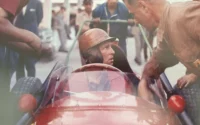




















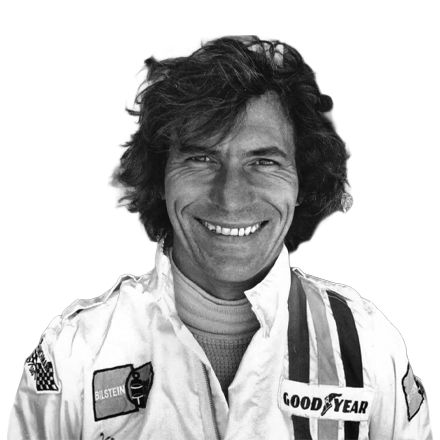
Victor Henry Elford was one of motorsport’s ultimate all-rounders — a fearless racer equally brilliant on rally stages, endurance circuits and Grand Prix grids. Nicknamed “Quick Vic” by rivals and teammates alike, the Englishman earned a legendary reputation for speed, bravery and adaptability during one of racing’s most dangerous and glamorous eras.
Driver Bio
| Nationality | British |
| Birthplace | Peckham, England, UK |
| Born | 10 June 1935 |
| Died | 13 March 2022 (aged 86) Plantation, Florida, US |
| First Grand Prix | 1968 French Grand Prix |
| Last Grand Prix | 1971 German Grand Prix |
| Years Active | 1968–1969, 1971 |
| Current/Last Team | BRM |
Born on 10 June 1935, Elford became best known for his extraordinary association with Porsche, helping transform the German manufacturer into a dominant force across endurance racing and rallying during the late 1960s and early 1970s. Although he competed in 13 Formula One World Championship Grands Prix between 1968 and 1971 — scoring eight championship points — Formula One represented only one chapter of a career that spanned virtually every major discipline in international motorsport.
Elford’s journey into racing began modestly enough as a co-driver, partnering David Seigle-Morris in a Triumph TR3A. By 1961, he had decided he wanted to drive himself competitively, despite scepticism from Triumph team manager Marcus Chambers. Undeterred, Elford purchased a race-prepared Mini and entered rallies privately. Results were limited at first, but the experience sharpened both his car control and determination.
His breakthrough came in 1962 with a factory-backed DKW Junior, with strong performances on British rallies beginning to attract attention. A return to Triumph followed in 1963 with the Triumph TR4, before Elford moved to Ford in 1964 — a switch that launched a highly successful three-year rallying partnership with the Ford Cortina.
By 1967, Elford had become European Rally Champion driving a works Porsche 911S, establishing himself as one of the finest rally drivers in the world. It marked the beginning of his golden era with Porsche.
Then came one of the most astonishing stretches of success in motorsport history.
In January 1968, Elford won the legendary Rally Monte Carlo in a Porsche 911S, mastering the icy Alpine stages against the world’s best rally drivers. Just one week later, he switched disciplines completely and won the 24 Hours of Daytona in a Porsche 907 — delivering Porsche’s first-ever overall victory in a 24-hour endurance race.
As if that wasn’t enough, later the same year, Elford teamed up with veteran Italian racer Umberto Maglioli to win the brutal Targa Florio in Sicily. The victory became legendary because Elford lost 18 minutes on the opening lap due to a tyre failure before staging a sensational comeback drive across the mountain roads to snatch victory.
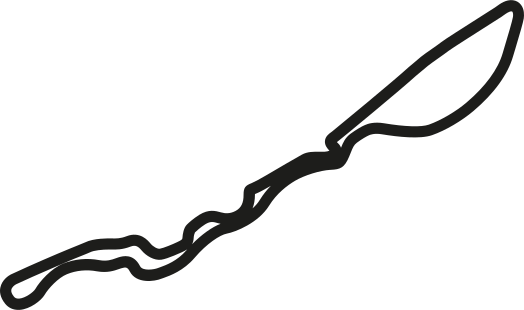
Only weeks later, he made his Formula One World Championship debut at the 1968 French Grand Prix and immediately finished fourth in atrociously wet conditions — an extraordinary performance for a rookie driver.
That ability to succeed across wildly different forms of racing became Elford’s trademark.
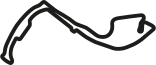
At the 1969 Monaco Grand Prix, he became the first driver since Louis Chiron to achieve major success both at Monaco and the Monte Carlo Rally — one of motorsport’s rarest distinctions.
Meanwhile, his endurance racing exploits continued to grow. Driving for Martini Racing in the ferocious Porsche 917 era, Elford was clocked at more than 380 km/h during practice for the 1971 24 Hours of Le Mans in the long-tail Porsche 917LH — a staggering speed even by modern standards.
In 1971 he also won the 12 Hours of Sebring in a Porsche 917K and claimed multiple victories in the 1000km Nürburgring races. The Nürburgring in particular became one of his defining circuits. Elford adored the daunting German track and ultimately won six major races there, a total surpassed only by legends Rudolf Caracciola and Stirling Moss.
His reputation for courage extended beyond pure driving speed. During the 1972 24 Hours of Le Mans, Elford stopped mid-race after spotting a burning Ferrari Daytona. Believing the driver trapped, he abandoned his own race to attempt a rescue. Although the Ferrari driver had already escaped, Elford then discovered the wreckage of Jo Bonnier’s Lola hidden among the trees — the Swedish driver having been killed in the accident. Elford’s bravery and instinctive humanity during the chaos earned him appointment as a Chevalier of the French National Order of Merit by President Georges Pompidou.
Throughout his career, Elford raced an astonishing variety of machinery for manufacturers including Porsche, Ferrari, Ford, Alfa Romeo, Lancia, Chaparral, Shadow, Lola, Chevron, Triumph and Subaru. He also drove in Can-Am, NASCAR and Trans-Am competition, while making Formula One appearances for Cooper and BRM.
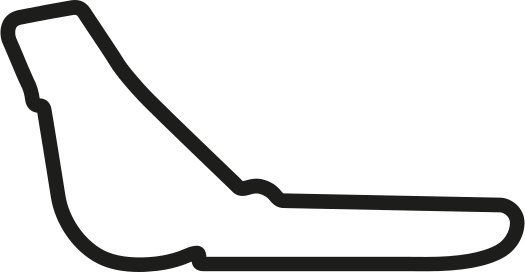
Among his many achievements were lap records at some of the world’s greatest circuits: the Nürburgring, Targa Florio, Daytona, Sebring, Monza, Laguna Seca, Riverside, Road Atlanta, Buenos Aires and even Le Mans itself.
Elford also played a surprising role in another branch of motorsport history. On 4 February 1967 at Lydden Hill, he won the very first Rallycross event ever held — giving him a place in the origins of an entirely new discipline.
That same year he also triumphed in the gruelling 84-hour Marathon de la Route at the Nürburgring, sharing a Porsche 911S with Hans Herrmann and Jochen Neerpasch. His teammates specifically trusted Elford’s rally expertise to handle the terrifying overnight stints in rain and fog on the full 28-kilometre Nürburgring circuit.
After retiring from racing, Elford settled in South Florida, remaining an admired and highly respected figure within international motorsport circles. In 2015 he received the prestigious Phil Hill Award from the Road Racing Drivers Club, presented by Bobby Rahal in recognition of his extraordinary contribution to racing.
Death
Victor Elford died on 13 March 2022 at the age of 86 after battling cancer for roughly a year.
Remembered as one of the fastest and most versatile drivers of his generation, “Quick Vic” embodied a rare breed of racer capable of mastering virtually anything with wheels — whether on mountain rally stages, Formula One grids or flat-out endurance circuits in the dead of night.
Grand Prix Stats
| Race Entries | 13 |
| Race Starts | 13 |
| Did Not Start | 0 |
| Best Race Start | 5th |
| Best Race Finish | 4th |
| Retirements | 5 |
| First-Lap Retirements | 2 |
| Not Classified | 0 |
| Disqualified | 0 |
| Did Not Qualify | 0 |
Qualifying
| Qualifying Sessions | 13 |
| Reached Q3 | – |
| Q2 Eliminations | – |
| Q1 Eliminations | – |
| Did Not Qualify | 0 |
Points
| Points Scored | 8 |
| Points Finishes | 4 |
| Most Points in a Single Season | 5 (1968) |
| Seasons with Points | 2 (1968, 1969) |
Stats by Season
| Year | Constructor | Entries | Starts | Wins | Podiums | Poles | Fastest Laps | Front Rows | DNF | Best Start | Best Result | Pts Finishes | Points | Championship |
|---|---|---|---|---|---|---|---|---|---|---|---|---|---|---|
| 1968 | Cooper | 7 | 7 | 0 | 0 | 0 | 0 | 0 | 4 | 5 | 4 | 2 | 5 | 17th |
| 1969 | Privateer: Cooper, Privateer: McLaren | 5 | 5 | 0 | 0 | 0 | 0 | 0 | 1 | 6 | 5 | 2 | 3 | 13th |
| 1971 | BRM | 1 | 1 | 0 | 0 | 0 | 0 | 0 | 0 | 18 | 11 | 0 | 0 | NC |
Stats by Constructor
| Constructor | Years | Entries | Starts | Wins | Podiums | Poles | Fastest Laps | Front Rows | DNF | Best Start | Best Result | Pts Finishes | Points |
|---|---|---|---|---|---|---|---|---|---|---|---|---|---|
| Cooper | 1968 | 7 | 7 | 0 | 0 | 0 | 0 | 0 | 4 | 5 | 4 | 2 | 5 |
| Privateer: Cooper | 1969 | 1 | 1 | 0 | 0 | 0 | 0 | 0 | 0 | 16 | 7 | 0 | 0 |
| Privateer: McLaren | 1969 | 4 | 4 | 0 | 0 | 0 | 0 | 0 | 1 | 6 | 5 | 2 | 3 |
| BRM | 1971 | 1 | 1 | 0 | 0 | 0 | 0 | 0 | 0 | 18 | 11 | 0 | 0 |
Teammates & Qualifying Head-to-Head
| Teammate | Years | Races | Qualifying H2H |
|---|---|---|---|
| Johnny Servoz-Gavin | 1968 | 1 | – |
| Robin Widdows | 1968 | 1 | – |
| Lucien Bianchi | 1968 | 4 | – |
| Howden Ganley | 1971 | 1 | – |
| Jo Siffert | 1971 | 1 | – |