































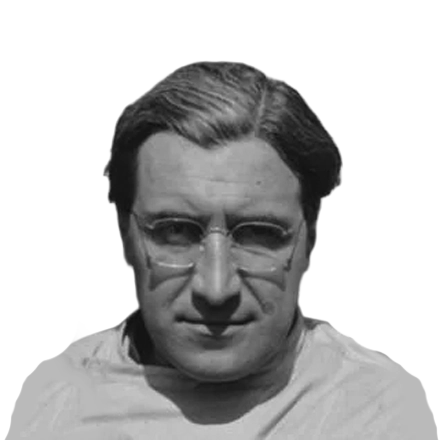
Alan Everest Brown was a British racing driver, team owner, and important early figure in post-war Formula One. Though never one of the sport’s headline stars, Brown played a meaningful role in the rise of two of Britain’s most historic names—Cooper and Vanwall—while also carving out a respected career of his own.
Driver Bio
| Nationality | British |
| Birthplace | Malton, England, UK |
| Born | 20 November 1919 |
| Died | 20 January 2004 |
| First Grand Prix | 1952 Swiss Grand Prix |
| Last Grand Prix | 1953 Italian Grand Prix |
| Years Active | 1952–1954 |
| Current/Last Team | Privateer: Cooper |
He competed in nine Formula One World Championship Grands Prix, debuted on 18 May 1952, and scored two championship points. More notably, he became the first driver ever to score World Championship points for Cooper, and he also gave the very first Vanwall car its race debut.
In the broader story of British motorsport, Brown was one of the quietly influential racers who helped lay the foundations for the nation’s later Grand Prix dominance.
Early life and route into racing
Born in England on 20 November 1919, Brown belonged to the generation whose early adult years were shaped by the Second World War before turning to sport in peacetime Britain.
When post-war motor racing began to flourish again, Brown entered the scene driving a Cooper, then a small but ambitious constructor that would later revolutionise Formula One with rear-engined design.
Brown quickly became associated with the emerging British specialist-car movement, where innovation often outpaced budget, and private entrants could still challenge established continental teams.
Écurie Richmond
Brown later joined forces with fellow racer Eric Brandon to create Écurie Richmond.
The team became one of several respected independent British outfits competing in Formula One and Formula Two events during the early 1950s. In an era before modern factory dominance, such private teams played a vital role in growing the sport and providing opportunities for talented drivers.
Formula One career
Brown made his World Championship debut on 18 May 1952, during the period when Formula One World Championship races were run to Formula Two regulations.
He went on to contest nine World Championship Grands Prix, alongside numerous non-championship Formula One races—a major part of the era’s racing calendar and often just as competitive as championship rounds.
First points for Cooper
One of Brown’s most lasting achievements came when he became the first driver to score World Championship points for Cooper.
At the time, Cooper was still an outsider marque rather than the championship-winning force it would later become. Brown’s results helped prove the team could compete on the international stage.
That point-scoring breakthrough formed part of Cooper’s early climb toward becoming one of the most important constructors in Formula One history.
Vanwall debut
Brown also gave the first-ever Vanwall car its competition debut.
Vanwall would later become one of Britain’s pioneering Grand Prix teams, winning the inaugural Constructors’ Championship in 1958 and helping establish Britain as a Formula One powerhouse.
Brown’s role in its first public outing links him directly to the beginnings of that success story.
Championship record
Across his Formula One World Championship appearances, Brown scored two championship points—a modest tally on paper, but one earned in an era of small grids, limited points-paying positions, and fierce competition from Europe’s best drivers.
Life after driving
After retiring from active competition, Brown remained involved in motorsport as a team entrant.
At the 1959 British Grand Prix, he entered two drivers under the banner of Alan Brown Equipe, continuing his support of British racing talent and maintaining his place within the paddock.
That shift from driver to entrant mirrored the path of many respected racers of the era, whose knowledge and contacts often proved just as valuable outside the cockpit.
Grand Prix Stats
| Race Entries | 9 |
| Race Starts | 8 |
| Did Not Start | 1 |
| Best Race Start | 9th |
| Best Race Finish | 5th |
| Retirements | 2 |
| First-Lap Retirements | 0 |
| Not Classified | 0 |
| Disqualified | 0 |
| Did Not Qualify | 0 |
Qualifying
| Qualifying Sessions | 9 |
| Reached Q3 | 0 |
| Q2 Eliminations | 0 |
| Q1 Eliminations | 0 |
| Did Not Qualify | 0 |
Points
| Points Scored | 2 |
| Points Finishes | 1 |
| Most Points in a Single Season | 2 (1952) |
| Seasons with Points | 1 |
Stats by Season
| Year | Entrant | Chassis | Engine | 1 | 2 | 3 | 4 | 5 | 6 | 7 | 8 | 9 | WDC | Points |
|---|---|---|---|---|---|---|---|---|---|---|---|---|---|---|
| 1952 | Ecurie Richmond | Cooper T20 | Bristol Straight-6 | SUI 5 | 500 | BEL 6 | FRA | GBR 22 | GER | NED | ITA 15 | 16th | 2 | |
| 1953 | Cooper Car Company | ARG 9 | 500 | NED | BEL | FRA | NC | 0 | ||||||
| RJ Chase | Cooper T23 | GBR Ret | ||||||||||||
| Equipe Anglaise | GER Ret | SUI | ITA 12 | |||||||||||
| 1954 | ARG | 500 | BEL | FRA | GBR DNS | GER | SUI | ITA | ESP | NC | 0 |
Teammates & Qualifying Head-to-Head
| Teammate | Years | Races | Qualifying H2H |
|---|---|---|---|
| Eric Brandon | 1952 | 4 | – |
| Adolfo Schwelm Cruz | 1953 | 1 | – |
| John Barber | 1953 | 1 | – |
| Helm Glockler | 1953 | 1 | – |