























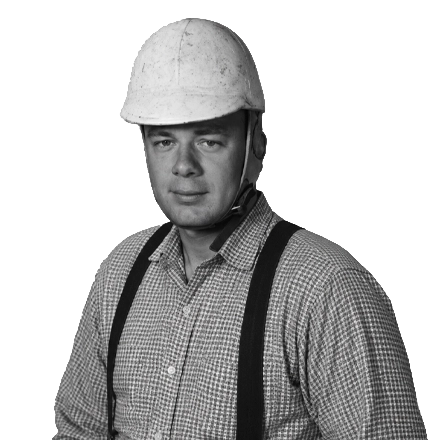
Gerald Frederick Hoyt was one of the most naturally gifted American racing drivers of the early 1950s, a fearless driver whose rise through the ranks of National Championship racing culminated in one of the most memorable qualifying performances in Indianapolis 500 history. Born in Chicago on 29 January 1929, Hoyt’s career was characterised by speed and remarkable promise before tragedy brought it to an abrupt end in the summer of 1955.
Driver Bio
| Nationality | American |
| Birthplace | Chicago, Illinois, USA |
| Born | 29 January 1929 |
| Died | 11 July 1955 |
| First Grand Prix | 1950 Indianapolis 500 |
| Last Grand Prix | 1955 Indianapolis 500 |
| Years Active | 1950–1951, 1953–1955 |
| Current/Last Team | Stevens |
From Military Service to Motorsport
Before establishing himself in racing, Hoyt served with the famed 101st Airborne Division during the Second World War. Following his military service, he turned his attention to motorsport, quickly earning a reputation as a talented and aggressive driver capable of competing with the best in American open-wheel racing.
As he progressed through the National Championship ranks, Hoyt became known for his ability to extract exceptional performance from his machinery, a quality that would soon place him in the spotlight on America’s biggest racing stage.
Indianapolis Glory
Hoyt’s defining moment came during qualifying for the 1955 Indianapolis 500. Entering the event as a respected but relatively unheralded contender, he stunned competitors, officials and even himself by securing pole position for the race.
His four-lap qualifying average of 140.045 mph (225.38 km/h) was the second-fastest ever recorded at Indianapolis at that time, underlining both his courage and outright speed around the legendary oval. The achievement instantly elevated his profile and established him among the leading drivers of his generation.
Because the Indianapolis 500 formed part of the Formula One World Championship during that era, Hoyt’s accomplishment also carried international significance. At the time, he became the youngest driver ever to claim pole position for a World Championship event, a remarkable distinction that reflected the scale of his achievement.
Race day, however, proved far less rewarding. An oil leak forced Hoyt to retire after just 40 laps, denying him the opportunity to convert his sensational qualifying pace into a strong result. It was a familiar frustration at Indianapolis. Across four starts at the Speedway, he never managed to complete more than 130 laps of the 200-lap classic, despite regularly showing competitive speed.
Tragic Final Race
Just two months after his Indianapolis breakthrough, Hoyt travelled to Oklahoma City to compete in a sprint car race. On the opening lap, his car struck a fence and overturned in a violent accident.
Safety standards of the era offered little protection for drivers, particularly around the head and upper body. Hoyt suffered severe brain injuries and passed away the following morning, on 11 July 1955.
The tragedy was made even more heartbreaking by the timing. Hoyt had married only two weeks before the accident, and many within the racing community believed he was on the verge of establishing himself as one of America’s leading stars.
Legacy
Although his career was brief, Jerry Hoyt left an enduring mark on American motorsport. His pole-winning run at Indianapolis remains one of the standout qualifying performances of the 1950s and serves as a reminder of the talent he possessed.
Hoyt was laid to rest at Crown Hill Cemetery.
Grand Prix Stats
| Race Entries | 5 |
| Race Starts | 4 |
| Did Not Start | 0 |
| Best Race Start | 1st x 1 |
| Best Race Finish | 8th x 1 |
| Retirements | 2 |
| First-Lap Retirements | 0 |
| Not Classified | 0 |
| Disqualified | 0 |
| Did Not Qualify | 1 |
Pole Positions
| Pole Positions | 1 |
| First Pole | 1955 Indianapolis 500 |
| Last Pole | 1955 Indianapolis 500 |
| Most Consecutive Poles | 0 |
| Most Poles in a Single Season | 1 |
| Seasons with Poles | 1 |
Qualifying
| Qualifying Sessions | 1 |
| Reached Q3 | 0 |
| Q2 Eliminations | 0 |
| Q1 Eliminations | 0 |
| Did Not Qualify | 1 |
Front Row Starts
| Front Row Starts | 1 |
| Poles | 1 |
| 2nd on Grid | 0 |
| Most Front Row Starts in a Season | 1 |
| Seasons with Front Row Starts | 1 |
Complete Formula One World Championship results
| Year | Entrant | Chassis | Engine | 1 | 2 | 3 | 4 | 5 | 6 | 7 | 8 | 9 | WDC | Points |
|---|---|---|---|---|---|---|---|---|---|---|---|---|---|---|
| 1950 | Ludson Morris | Kurtis Kraft | Offenhauser L4 | GBR | MON | 500 21 | SUI | BEL | FRA | ITA | NC | 0 | ||
| 1951 | Pat Clancy | Ewing | Offenhauser L4 | SUI | 500 DNQ | BEL | FRA | GBR | GER | ITA | ESP | NC | 0 | |
| 1953 | John Zink | Kurtis Kraft | Offenhauser L4 | ARG | 500 23* | NED | BEL | FRA | GBR | GER | SUI | ITA | NC | 0 |
| 1954 | Hoosier Racing | Kurtis Kraft | Offenhauser L4 | ARG | 500 8 † | BEL | FRA | GBR | GER | NC | 0 | |||
| 1955 | Jim Robbins | Stevens | Offenhauser L4 | ARG | MON | 500 31 | BEL | NED | GBR | ITA | NC | 0 |
† Indicates shared drive with Paul Russo