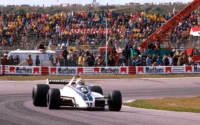

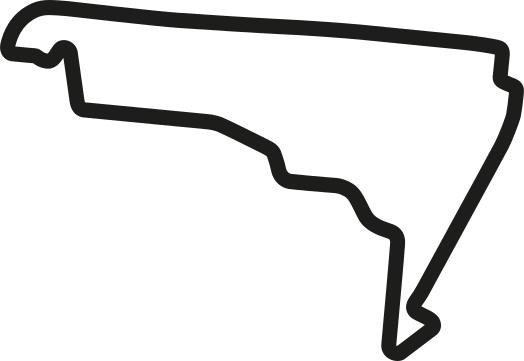































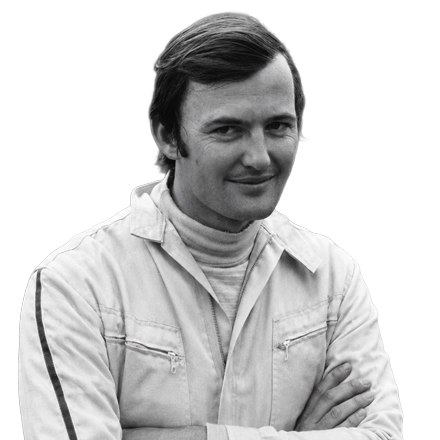
Jonathan James Williams (26 October 1942 – 31 August 2014) was a British racing driver whose career took him to Formula One, Formula Two and international sports car racing during the 1960s and early 1970s. Although he made just a single Formula One World Championship start, Williams raced for Ferrari, helped develop Grand Prix machinery alongside Frank Williams, and played a memorable role in the making of Steve McQueen’s iconic film Le Mans.
Driver Bio
| Nationality | British |
| Birthplace | Cairo, Egypt |
| Born | 26 October 1942 |
| Died | 31 August 2014 |
| First Grand Prix | 1967 Mexican Grand Prix |
| Last Grand Prix | 1967 Mexican Grand Prix |
| Years Active | 1967 |
| Current/Last Team | Ferrari |
Early Life
Born in Cairo, Egypt, on 26 October 1942, Williams grew up with a passion for motorsport and began competing in British racing during the early 1960s.
His early career saw him race saloon cars before progressing through the junior single-seater categories. By 1963, he had graduated to Formula Three, where his performances earned increasing recognition within British motorsport.
During this period, Williams worked alongside the young Frank Williams—later founder of the Williams Formula One team—as well as Sheridan Thynne and the highly regarded Piers Courage, laying the foundations for relationships that would shape his racing career.
Sports Car Racing
Williams’ growing reputation earned him a factory drive with Ferrari in 1967, initially as part of the Italian marque’s sports car programme.
The season proved to be one of enormous upheaval for Ferrari. Team leader Lorenzo Bandini lost his life following his accident at the Monaco Grand Prix, while Williams’ sports car teammate Günter Klass was killed during practice for the Mugello road race.
Despite these tragedies, Williams continued to impress with his speed and versatility behind the wheel.
Formula One Career
Later in 1967, Ferrari rewarded Williams with a Formula One opportunity.
He made his sole World Championship appearance at the 1967 Mexican Grand Prix, finishing eighth on his debut. Although he did not score championship points, the result demonstrated his ability to compete at the highest level of Grand Prix racing.
Ferrari chose not to retain him for the following season, and a planned Formula One programme with Abarth ultimately failed to materialise, bringing his World Championship career to an unexpectedly early conclusion.
Formula Two and Development Work
Although his Formula One opportunities were limited, Williams remained highly active in European single-seater racing.
In 1968, he competed in Formula Two and achieved victory in the Rhine Cup driving a car entered by Frank Williams. He later raced for the works Serenissima team before becoming involved in the development of the De Tomaso Formula One car for Frank Williams during 1969.
His combination of engineering understanding and driving ability made him a valuable development driver while he continued competing in Formula Two events.
Le Mans and Later Racing Career
Alongside his single-seater programme, Williams continued racing sports cars throughout the late 1960s and early 1970s.
One of his most unusual appearances came at the 1970 24 Hours of Le Mans, where he drove a Porsche 908/02 fitted with cameras to capture race footage for Steve McQueen’s legendary film Le Mans. The innovative project helped create some of the authentic on-track footage that has since become synonymous with one of motorsport’s most celebrated films.
Williams retired from professional racing in 1972.
Life After Racing
Following his retirement from competition, Williams pursued a career as a professional pilot, initially flying for Italian industrialist Alessandro de Tomaso. Although he later admitted he never particularly enjoyed flying, it became his full-time occupation for several years.
He subsequently turned his attention to writing and photography, remaining closely connected to the motorsport world through his work documenting the sport and sharing stories from its golden era.
Legacy
Jonathan Williams died on 31 August 2014 at the age of 71.
His contribution to motorsport continued to be recognised after his death through his appearance in the documentary Steve McQueen: The Man & Le Mans, released nine months later. The film closes with footage of Williams driving in the original Le Mans, providing a fitting tribute to a driver whose career touched Formula One, Ferrari, endurance racing and one of cinema’s greatest motorsport productions.
Grand Prix Stats
| Race Entries | 1 |
| Race Starts | 1 |
| Did Not Start | 0 |
| Best Race Start | 16th |
| Best Race Finish | 8th |
| Retirements | 0 |
| First-Lap Retirements | 0 |
| Not Classified | 0 |
| Disqualified | 0 |
| Did Not Qualify | 0 |
Qualifying
| Qualifying Sessions | 1 |
| Reached Q3 | Not Applicable |
| Q2 Eliminations | Not Applicable |
| Q1 Eliminations | Not Applicable |
| Did Not Qualify | 0 |
Stats by Season
| Year | Constructor | Entries | Starts | Wins | Podiums | Poles | Fastest Laps | Front Rows | DNF | Best Start | Best Result | Pts Finishes | Points | Championship |
|---|---|---|---|---|---|---|---|---|---|---|---|---|---|---|
| 1967 | Ferrari | 1 | 1 | 0 | 0 | 0 | 0 | 0 | 0 | 16 | 8 | 0 | 0 | NC |
Stats by Constructor
| Constructor | Years | Entries | Starts | Wins | Podiums | Poles | Fastest Laps | Front Rows | DNF | Best Start | Best Result | Pts Finishes | Points |
|---|---|---|---|---|---|---|---|---|---|---|---|---|---|
| Ferrari | 1967 | 1 | 1 | 0 | 0 | 0 | 0 | 0 | 0 | 16 | 8 | 0 | 0 |
Teammates & Qualifying Head-to-Head
| Teammate | Years | Races | Qualifying H2H |
|---|---|---|---|
| Chris Amon | 1967 | 1 | – |