




















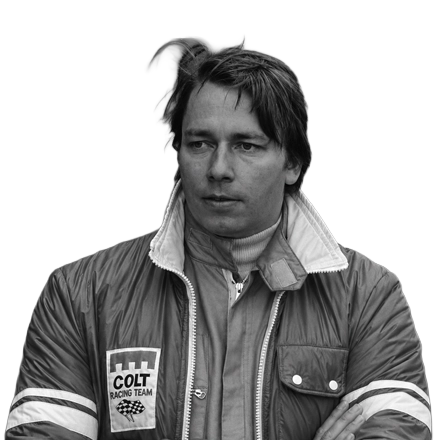
Leo Juhani “Leksa” Kinnunen (5 August 1943 – 26 July 2017) was a pioneering Finnish racing driver who became the first Finn to compete in Formula One. Although his time in Grand Prix racing was brief, Kinnunen enjoyed outstanding success in sports car racing and the Interserie, winning the Nordic Challenge Cup in 1969, claiming three consecutive Interserie titles between 1971 and 1973, and playing a key role in Porsche’s victorious 1970 World Sportscar Championship campaign. He also holds the distinction of being the last Formula One driver to race wearing an open-face helmet.
Driver Bio
| Nationality | Finnish |
| Birthplace | Tampere, Finland |
| Born | 5 August 1943 |
| Died | 26 July 2017 |
| First Grand Prix | 1974 Belgian Grand Prix |
| Last Grand Prix | 1974 Italian Grand Prix |
| Years Active | 1974 |
| Current/Last Team | Privateer: AAW Racing Team Surtees |
Kinnunen began his motorsport journey on two wheels before switching to car racing after obtaining his driving licence in the early 1960s. His natural speed quickly became evident as he enjoyed success in rallying, autocross and ice racing, finishing runner-up in the Finnish Rally Championship after ending the season level on points with champion Simo Lampinen.
He also competed in the Finnish Formula Three Championship, initially driving an older Brabham before switching to a Titan in 1968. The change brought immediate success, with several victories, including an impressive win at Ahvenisto where he defeated future Formula One star Ronnie Peterson.
International breakthrough
In 1969, Kinnunen turned his full attention to circuit racing and immediately made his mark by winning the Nordic Challenge Cup, the predecessor to the Interserie. His performances included two victories and a memorable battle with Jochen Rindt at Keimola Motor Stadium, earning him a Porsche test at the Österreichring.
The test proved career-changing. Porsche signed Kinnunen to partner Pedro Rodríguez in the World Sportscar Championship, and the pairing announced themselves in spectacular fashion by winning the 24 Hours of Daytona. Together they helped Porsche secure the manufacturers’ world title in 1970. Despite the success, Kinnunen often felt restricted, as the Porsche 917 had been developed around Rodríguez’s driving style and he was not permitted to make the changes he believed would unlock even greater performance.
His defining sports car drive came later that season at the Targa Florio. With Rodríguez sidelined through illness, Kinnunen took centre stage in the Porsche 908/03 and produced one of the greatest laps in endurance racing history. On the final lap, he shattered the existing lap record by one-and-a-half minutes with a time of 33 minutes and 36 seconds—a record that still stands as the fastest lap ever recorded on the legendary Sicilian road circuit.
Interserie success
Kinnunen’s reputation continued to grow when he joined Finland’s AAW Racing Team in the Interserie driving the mighty Porsche 917. He won the championship at his first attempt in 1971, despite the emotional impact of witnessing the fatal accident that claimed the life of former team-mate Pedro Rodríguez at the Norisring.
He went on to dominate the championship, securing three consecutive titles from 1971 to 1973. Across that remarkable period he collected 18 heat victories and 11 overall wins, establishing himself as one of the series’ greatest drivers. During 1973 he also returned briefly to rallying, finishing third in the 1000 Lakes Rally driving a Porsche Carrera.
Formula One
Kinnunen came close to reaching Formula One as early as 1971. Encouraged by Jochen Rindt, he entered discussions with Team Lotus, but Rindt’s tragic death at Monza brought the negotiations to an abrupt end. According to Kinnunen, Bernie Ecclestone later offered him a drive without pay, an arrangement he refused as he believed professional drivers deserved to be paid for their work.
His Formula One opportunity finally arrived in 1974 when John Surtees offered him a Surtees TS16 to run through the newly formed AAW Racing Team. Unfortunately, the project was beset by problems from the outset. The overweight car arrived just before the Belgian Grand Prix weekend, having already been used extensively as a factory development chassis, and Kinnunen had never even driven it before practice began. Mechanical failures, a lack of spare parts and limited funding meant the team struggled throughout the season.
After failing to qualify in Belgium, Kinnunen made his only World Championship start at the Swedish Grand Prix. Although the car was fuelled for only a short opening stint, he produced an impressive drive by overtaking five rivals in the opening laps before a spark plug failure forced him to retire. It proved to be the high point of an otherwise frustrating campaign, with further failures to qualify and mounting financial difficulties eventually bringing the AAW Formula One project to an end.
Later career
Following his departure from Formula One, Kinnunen immediately returned to the Interserie, winning both races at Hockenheim despite competing in only the final round of the season. He then rejoined Porsche in endurance racing, driving for Martini Racing in the 1975 World Sportscar Championship. Partnered by Herbert Müller, his best result was third at the Nürburgring.
In 1976 he moved to a Porsche 934 Turbo, collecting three podium finishes, including an excellent second place at Watkins Glen. Financial problems within the team eventually ended the programme, and Kinnunen retired from full-time circuit racing in 1977.
Although he stepped away from international circuit competition, Kinnunen continued rallying in his native Finland and added another major victory by winning the Arctic Rally in 1979. He later remained involved in motorsport in administrative roles while living in Turku.
Away from the racetrack, Kinnunen was personally invited by Steve McQueen to drive during the filming of the iconic movie Le Mans. However, Porsche refused permission under the terms of his contract, and the role instead went to David Piper, who was seriously injured during filming. Despite never appearing in the film, the invitation reflected the immense respect Kinnunen commanded within international motorsport.
Grand Prix Stats
| Race Entries | 6 |
| Race Starts | 1 |
| Did Not Start | 0 |
| Best Race Start | 25th |
| Best Race Finish | – |
| Retirements | 1 |
| First-Lap Retirements | 0 |
| Not Classified | 0 |
| Disqualified | 0 |
| Did Not Qualify | 5 |
Qualifying
| Qualifying Sessions | 6 |
| Reached Q3 | 0 |
| Q2 Eliminations | 0 |
| Q1 Eliminations | 0 |
| Did Not Qualify | 5 |
Stats by Season
| Year | Constructor | Entries | Starts | Wins | Podiums | Poles | Fastest Laps | Front Rows | DNF | Best Start | Best Result | Pts Finishes | Points | Championship |
|---|---|---|---|---|---|---|---|---|---|---|---|---|---|---|
| 1974 | Privateer: AAW Racing Team Surtees | 6 | 1 | 0 | 0 | 0 | 0 | 0 | 1 | 25 | n/a | 0 | 0 | NC |