



































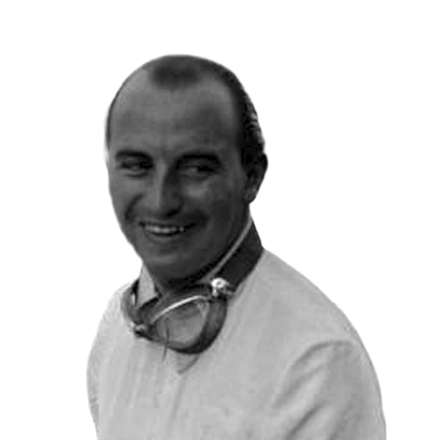
Paul Pietsch lived one of the most extraordinary lives in motorsport history — a man who not only raced against the giants of pre-war Grand Prix racing but also helped shape Europe’s automotive media industry for decades afterwards. Driver, journalist, publisher, entrepreneur — Pietsch’s career stretched across almost the entire modern history of motor racing.
Driver Bio
| Nationality | German |
| Birthplace | Freiburg im Breisgau, Germany |
| Born | 20 June 1911 |
| Died | 31 May 2012 |
| First Grand Prix | 1950 Italian Grand Prix |
| Last Grand Prix | 1952 German Grand Prix |
| Current/Last Team | Veritas |
Born in Freiburg, Germany, Pietsch launched his racing career in 1932, competing with privately entered Bugattis and Alfa Romeos at a time when Grand Prix racing was becoming faster, more dangerous, and increasingly dominated by factory-backed teams.
Early success came on the frozen lakes of Sweden, where Pietsch showed both bravery and car control in spectacular ice races. Driving an Alfa Romeo, he won the 1933 III Svenska Isloppet Grand Prix at Hemfjärden and followed it up with victory in the 1934 Vallentunaloppet on Lake Vallentunasjön — events that helped establish his reputation as one of Germany’s rising racing talents.
His performances earned him an opportunity with the mighty Auto Union, one of the legendary “Silver Arrows” teams of the 1930s. Beginning with the 1935 German Grand Prix, Pietsch contested three Grands Prix for Auto Union and achieved an impressive third-place finish at the 1935 Italian Grand Prix. However, the team’s notoriously difficult rear-engined machines proved challenging even for experienced drivers, and Pietsch eventually stepped away from the works outfit.
From 1937 onward, he continued racing as a privateer in a Maserati, taking on the dominant factory teams with far fewer resources. His finest drive came at the 1939 German Grand Prix, where he stunned the field by leading from lap two against the all-conquering Silver Arrows. Although ignition trouble eventually dropped him back to third place, the result was regarded as a heroic achievement for an independent driver competing against the full might of Europe’s top manufacturers.
Formula One
Following the Second World War, Pietsch returned to racing and made more history by becoming the first German driver ever to compete in a Formula One World Championship Grand Prix. He debuted on 3 September 1950 and went on to participate in three World Championship events. His most notable appearance came in the 1951 German Grand Prix, driving a factory Alfa Romeo, although his race ended in an accident. Despite never scoring championship points, Pietsch had already secured a unique place in Formula One history.
By then, however, racing was only part of his story. Pietsch had also built a hugely successful publishing empire focused on motorcycles, cars, technology, and enthusiast culture. He founded the magazine Das Auto and expanded his company, Motor Presse Stuttgart, into the largest publisher in the European market for technology and specialist-interest magazines. Through journalism and publishing, Pietsch arguably influenced far more people than he ever could from behind the wheel alone.
Later Life & Death
In later life, Pietsch became a living link to motorsport’s earliest eras. Following the death of fellow German driver Karl Kling in 2003, Pietsch became the oldest surviving Formula One driver and the last surviving competitor from the pre-war Grand Prix generation. Even in his later years, motorsport remained part of family life, with his son Peter-Paul Pietsch regularly competing at the Nürburgring alongside fellow motoring journalists.
On 31 May 2012, Paul Pietsch died from pneumonia at the remarkable age of 100 years, 11 months, and 11 days. He became the first Grand Prix driver in F1 history to reach the age of 100 — a fitting milestone for a man whose life spanned the birth, rise, and global transformation of modern motor racing.
Grand Prix Stats
| Race Entries | 3 |
| Race Starts | 3 |
| Did Not Start | 0 |
| Best Race Start | 7th |
| Best Race Finish | – |
| Retirements | 3 |
| First-Lap Retirements | 1 |
| Not Classified | 0 |
| Disqualified | 0 |
| Did Not Qualify | 0 |
Qualifying
| Qualifying Sessions | 3 |
| Reached Q3 | 0 |
| Q2 Eliminations | 0 |
| Q1 Eliminations | 0 |
| Did Not Qualify | 0 |