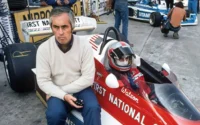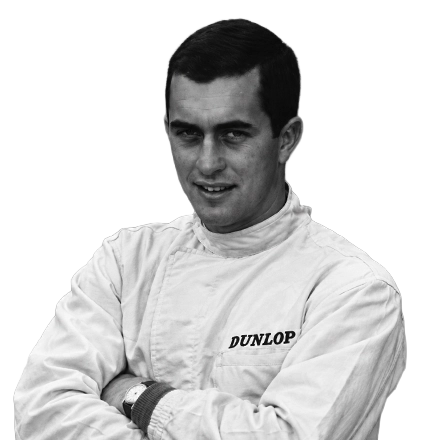
Roger Penske turned a successful driving career into one of motorsport’s most influential businesses. Born Roger Searle Penske in Shaker Heights, Ohio, on 20 February 1937, he became known as “the Captain” through decades of team ownership, major race victories and an expanding automotive enterprise.
Driver Bio
| Nationality | American |
| Birthplace | Shaker Heights, Ohio, USA |
| Born | 20 February 1937 |
| First Grand Prix | 1961 United States Grand Prix |
| Last Grand Prix | 1962 United States Grand Prix |
| Current/Last Team | Privateer: Dupont Team Zerex Lotus |
His father Jay, a metal-fabrication executive, encouraged an early interest in business and machinery. As a teenager, Penske rebuilt and sold cars. He graduated from school in 1955 and from Lehigh University in 1959, where he belonged to Phi Gamma Delta. His early life also included service as a choirboy and acolyte in the Episcopal Church.
Competition began with hillclimbs and Porsche machinery before SCCA racing around Philadelphia and at venues such as Vineland. His first professional race came at Marlboro. In 1961 he was named SCCA Driver of the Year, and national attention followed as his results established him among America’s leading road racers.
Penske made two Formula One World Championship appearances, in the United States Grands Prix of 1961 and 1962. He also won a NASCAR Pacific Coast race at Riverside in 1963. An Indianapolis rookie test with Dean Van Lines was offered, but he never raced in the 500 as a driver. Business increasingly competed with racing for his attention.
He had joined Alcoa as an intern in 1959 and worked as a sales engineer before becoming a Chevrolet dealership manager in 1963. The following year, with a loan from his father, he bought the dealership. In 1965 he retired from driving to concentrate on business, making the decision that ultimately shaped the greater part of his motorsport influence.
Penske Racing made its debut at Daytona in 1966. The organisation grew across several categories, with Indianapolis becoming a particularly important part of its identity. By the end of 2024, Team Penske had reached twenty Indianapolis 500 victories, a record built through successive generations of drivers, engineers and cars.
Penske remained closely involved in the racing operation, including periods calling strategy for Will Power. The team’s success was therefore connected not only with ownership and investment, but also with the practical decisions made during races. Its record expanded well beyond American open-wheel competition.
That breadth became a defining characteristic: individual racing programmes could change while the organisation continued entering major championships.
On 18 November 2012, Brad Keselowski secured the team’s first NASCAR Cup drivers’ championship. Keselowski’s victory at Las Vegas on 16 September 2018 then marked the organisation’s 500th win across its various racing programmes. Joey Logano added a second Cup title later that year, strengthening Penske’s position at the top of American stock-car racing.
Australia became another major undertaking. Late in 2014, Penske acquired a 51 per cent interest in Dick Johnson Racing. The 2015 driver line-up involved Marcos Ambrose and Scott Pye, with Fabian Coulthard joining as the programme expanded to two cars in 2016. Scott McLaughlin replaced Pye for 2017.
The Australian operation’s first victory under the partnership came through Coulthard in Tasmania in 2017. Bathurst success followed in 2019 with McLaughlin, adding Australia’s best-known touring-car race to Penske’s international list of major wins. The venture showed that the organisation’s ambitions extended beyond its established American championships.
The business group grew in parallel. Penske Truck Leasing developed from three Pennsylvania locations in 1969, based in Reading. The wider Penske Corporation, headquartered in Bloomfield Hills, Michigan, came to encompass automotive retail, truck leasing and other transport businesses. Penske Automotive Group operated dealerships across North America and Europe, while Penske Motor Group built a substantial presence in California and Texas.
A particularly significant transaction was announced on 4 November 2019: the acquisition of Indianapolis Motor Speedway and the IndyCar series. The purchase was completed on 6 January 2020. It placed the venue most closely associated with Penske’s racing success, together with the championship in which his team competed, under the family’s business umbrella.
The ownership structure subsequently evolved. In 2025, Fox acquired a one-third interest in Penske Entertainment, the parent organisation for IndyCar and the Speedway. Penske retained the controlling interest. That distinction matters when describing his role after the original acquisition: ownership continued, but with a major broadcast partner also holding a stake.
Family members became involved in the expanding businesses. Penske has five children across his marriages to Lisa Stouffer and Kathryn Hulbert. His son Greg held senior roles within the automotive operations and donated a kidney to him in 2017. Other members of the family developed business careers of their own, including Jay Penske in media.
Penske also became a visible figure in American public life. He received the Presidential Medal of Freedom in 2019 and publicly supported Donald Trump in 2020. In April 2025, drivers and cars from his NASCAR, IndyCar and sports-car programmes appeared at the White House, reflecting the scale and prominence of the racing organisation.
His own F1 appearances were brief, but the influence that followed was anything but. Penske moved from driving the cars to building teams, businesses and eventually ownership of an entire championship and its most famous venue. The early racer became an organiser whose decisions have shaped much of modern American motorsport.
Grand Prix Stats
| Race Entries | 2 |
| Race Starts | 2 |
| Did Not Start | 0 |
| Best Race Start | 12th |
| Best Race Finish | 8th |
| Retirements | 0 |
| First-Lap Retirements | 0 |
| Not Classified | 0 |
| Disqualified | 0 |
| Did Not Qualify | 0 |
Qualifying
| Qualifying Sessions | 2 |
| Reached Q3 | 0 |
| Q2 Eliminations | 0 |
| Q1 Eliminations | 0 |
| Did Not Qualify | 0 |