


























In Formula 1, suspension design is far more than a mechanical consideration. For the 2026 season, suspension architecture sits at the intersection of aerodynamics, packaging, and performance, with teams choosing between push-rod and pull-rod layouts at both ends of the car to maximise efficiency.
While the regulations themselves narrow the scope of what is possible, they do not dictate a single solution. Instead, each team’s final suspension concept is shaped by a complex mix of aerodynamic targets, weight distribution, cooling demands and ease of operation. As the first 2026 cars have emerged, a variety of approaches have already become clear.
See also…
The fundamental choice
At its most basic level, the decision is whether to use push-rod or pull-rod suspension. This choice is rarely about suspension geometry in isolation, as neither concept holds a clear advantage in terms of pure kinematics or leverage ratios.
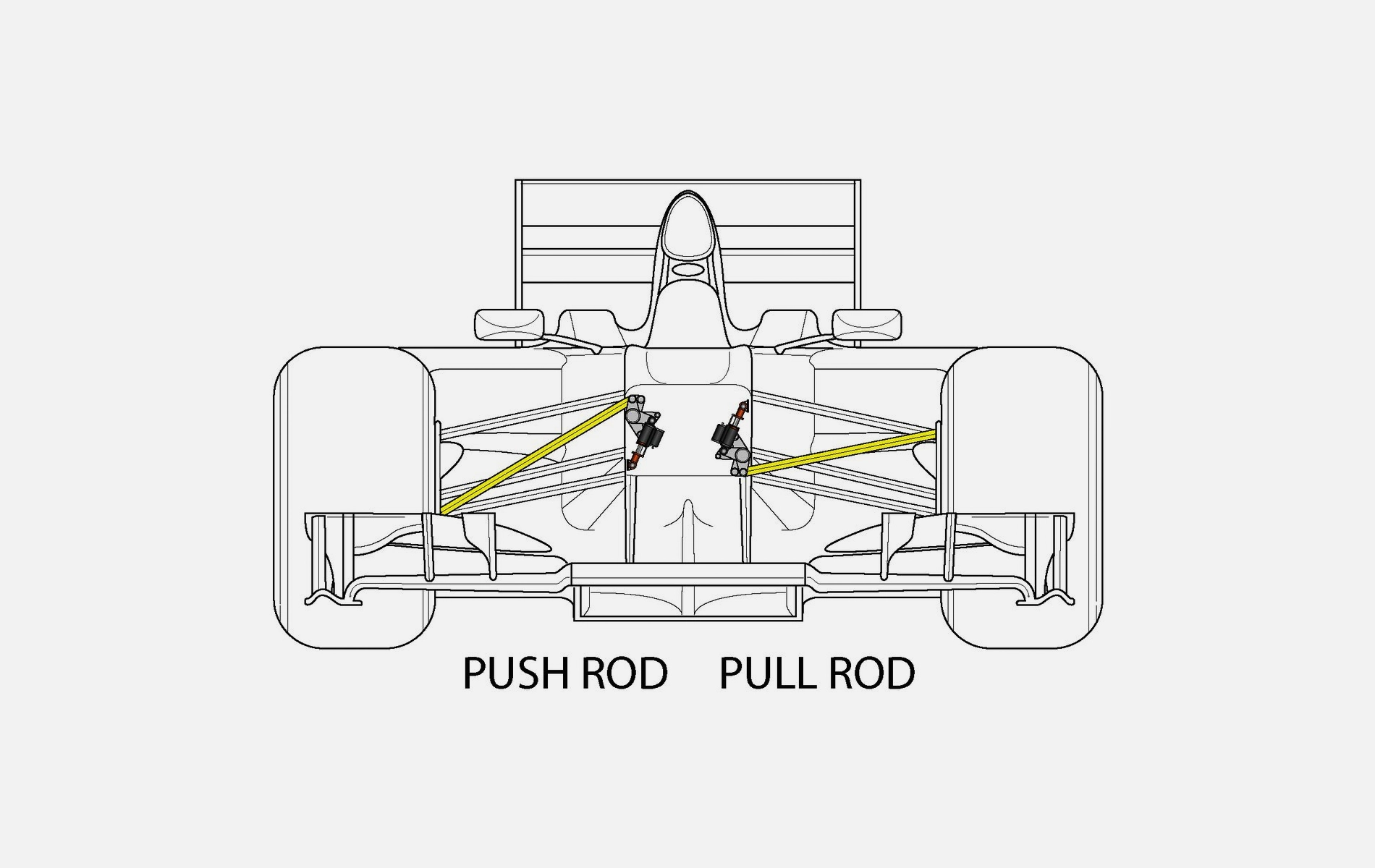
Instead, the overriding factor is how the suspension can be packaged within the car, particularly in areas where airflow is extremely sensitive. Both front and rear suspension members sit directly in the path of critical flow structures, meaning even small deviations from a conventional layout can have far-reaching aerodynamic consequences downstream.
As a result, suspension is often designed to prioritise aerodynamics, with mechanical compromises accepted where necessary.
Weighing the trade-offs
Push-rod suspension offers several practical advantages. It is generally easier to access, simpler to work on and more forgiving when it comes to setup changes. However, it tends to raise the centre of gravity and can limit rear diffuser volume. At the front, it may also interfere with airflow to the radiators, the floor, and the underbody.
Pull-rod suspension, by contrast, can lower mass within the chassis and help clean up airflow into the sidepods and floor. That makes it attractive from an aerodynamic and weight distribution standpoint. The downside is increased complexity, more difficult access for mechanics, and a narrower tuning window.
Every change carries a cost, so for a team to commit to one solution over the other, the perceived gains must outweigh the compromises. Packaging decisions also influence how quickly and efficiently setup changes can be made, with poorly accessible components potentially costing valuable time during race weekends.
Lessons from the previous era
Under the outgoing regulations, many leading teams adopted a pull-rod front suspension combined with a push-rod rear suspension.
At the front, this approach allowed the remaining suspension elements to be inclined to manage oncoming airflow, guiding it more effectively toward the floor and sidepods.
At the rear, the move toward push-rod was largely driven by diffuser geometry. A pull-rod arrangement risked encroaching on underfloor volume, an issue that teams had encountered under earlier regulations, albeit in reverse configurations.
A clear trend — with notable exceptions
For 2026, most teams have opted for push-rod suspension at both the front and rear of the car. However, not everyone has followed that path.
| Team | Front suspension | Rear suspension |
|---|---|---|
| Mercedes | Push-rod | Push-rod |
| Red Bull | Push-rod | Push-rod |
| Ferrari | Push-rod | Push-rod |
| Racing Bulls | Push-rod | Push-rod |
| Haas | Push-rod | Push-rod |
| Cadillac | Pull-rod | Pull-rod |
| Alpine | Pull-rod | Pull-rod |
The decisions made by Alpine and Cadillac underscore that, even within today’s tightly constrained technical framework, there remains scope for interpretation.
Philosophy over conformity
Each team has arrived at its suspension layout by evaluating what works best for its overall package—not just mechanically, but also aerodynamically and operationally. Weight distribution, cooling efficiency, and the interaction between the suspension and airflow all factor into the final decision.
That both Alpine and Cadillac have diverged from the prevailing trend suggests a different philosophy rather than a simple contrarian choice.
Whether that alternative approach is rooted in a key technical insight or simply reflects a different optimisation strategy will only become clear once the 2026 season unfolds on track.
Seen in: