


























Nestled on the Asian side of Istanbul in the Tuzla district, Istanbul Park is one of Formula One’s most celebrated modern circuits. Designed by renowned circuit architect Hermann Tilke, the track quickly gained global recognition for combining sweeping elevation changes with a flowing layout rarely seen at newly built venues. Unlike many modern circuits that rely heavily on tight, slow corners, Istanbul Park features long, high-speed bends and wide run-off areas that allow drivers to push their cars to the limit.
The circuit’s defining feature is the legendary Turn 8, a daunting four-apex left-hander taken at incredible speeds that places immense lateral forces on both drivers and tyres. This corner alone has cemented Istanbul Park’s reputation as one of the most technically demanding tracks in the world. While the venue boasts the safety and infrastructure of a modern facility, its flowing layout and elevation changes provide a challenge more reminiscent of classic circuits like Spa-Francorchamps or Suzuka.
Istanbul Park hosted the Formula One Turkish Grand Prix between 2005 and 2011, then returned to the calendar for two seasons in 2020 and 2021. During its original run, the circuit became known for producing thrilling races and dramatic moments, with drivers and fans praising its exciting combination of speed, rhythm, and technical complexity.
See also…
Istanbul Park
| First Grand Prix | 2005 Turkish Grand Prix |
| Number of Laps | 58 |
| Circuit Length | 5.338 km |
| Race Distance | 309.396 km |
| Lap Record | 1:24.770 Juan Pablo Montoya (2005) |
Circuit
When was the Istanbul Park built?
Construction of Istanbul Park began in September 2003, with the aim of bringing Formula One to Turkey for the first time. The project formed part of a wider push to expand motorsport in the region and to establish Istanbul as a major sporting destination between Europe and Asia. After nearly two years of construction, the circuit officially opened in August 2005, just days before hosting its inaugural Turkish Grand Prix.
Situated near the Sabiha Gökçen International Airport, the circuit occupies more than two million square metres of land surrounded by forests and open countryside. The facility was designed to hold up to 125,000 spectators, with a main grandstand seating around 25,000 and additional temporary stands allowing the venue to host some of the largest crowds in Turkish motorsport history.
Unlike many traditional European circuits that evolved from public roads, Istanbul Park was purpose-built for racing. The track measures 5.338 kilometres in length and features 14 corners, with widths ranging from 14 to 21.5 metres. Its design incorporates dramatic elevation changes and long straights, including a start-finish straight stretching more than 650 metres.
One of the circuit’s defining characteristics is its anti-clockwise layout, which is uncommon in Formula One. This direction places unusual strain on drivers’ neck muscles, particularly through the long sequence of left-hand bends that culminate in the famous Turn 8. The corner’s four apexes and sustained high-speed load create some of the highest lateral forces experienced on any circuit, often pushing tyres and drivers to their limits.
Turn 1 provides another spectacular challenge. Positioned at the end of the main straight, the corner plunges downhill into a tight left-hander often compared to the famous Laguna Seca Corkscrew. The dramatic elevation change, combined with heavy braking, often prompts overtaking attempts and occasional race-changing incidents.
Elsewhere on the lap, the circuit flows across four different elevation levels, creating a rhythm that rewards precision and car balance. A fast uphill kink on the back straight, jokingly referred to by some as “Faux Rouge,” further adds to the circuit’s dynamic character.
Despite being designed in the modern era, Istanbul Park has earned widespread praise from drivers and fans alike. Former Formula One chief executive Bernie Ecclestone once described it as “the best race track in the world,” a sentiment echoed by many who appreciate its blend of speed, technical difficulty, and flowing design.
When was the first Turkish Grand Prix?
The Turkish Grand Prix made its Formula One debut in 2005, marking Turkey’s first appearance on the F1 World Championship calendar. The race quickly established itself as a fan favourite thanks to Istanbul Park’s exciting layout and the competitive racing it produced.
Brazilian driver Felipe Massa became the circuit’s most successful Formula One driver in its early years, winning three consecutive races with Ferrari between 2006 and 2008. Other winners included Lewis Hamilton, Sebastian Vettel, Jenson Button, Kimi Räikkönen, and Valtteri Bottas.
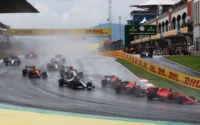
After the 2011 Turkish Grand Prix, the race was dropped from the calendar due to financial disagreements. However, the circuit returned unexpectedly during the 2020 Formula One season, when several races were cancelled due to the COVID-19 pandemic. That year’s event produced one of the most memorable races in modern F1 history, with Lewis Hamilton mastering treacherous wet conditions to secure his seventh world championship.
Istanbul Park also hosted the 2021 Turkish Grand Prix, again stepping in to help fill gaps in the pandemic-affected calendar. While the circuit has not appeared regularly on the schedule since then, it remains widely regarded as one of the best modern racing venues and a popular candidate for future Formula One returns.
Istanbul Park lap record
The official lap record for the Istanbul Park Grand Prix layout is 1:24.770, set by Juan Pablo Montoya during the 2005 Turkish Grand Prix while driving for McLaren.
Although this remains the official race lap record, the fastest lap ever recorded around the circuit was set by Lewis Hamilton, who posted a 1:22.868 during qualifying for the 2021 Turkish Grand Prix.