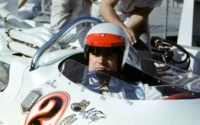


























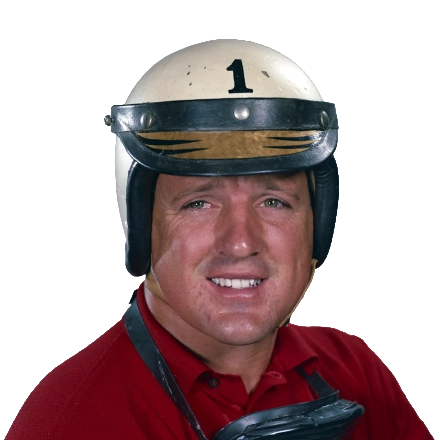
Anthony Joseph “A. J.” Foyt Jr. is an American former racing driver, team owner, and one-man argument against the idea that greatness needs a single lane. Across open-wheel racing, midgets, sprint cars, stock cars, endurance racing, and just about anything else with an engine and four wheels, Foyt built one of the most fearsome résumés in motorsport history.
Driver Bio
| Nationality | American |
| Birthplace | Houston, Texas, USA |
| Born | 16 January 1935 |
| First Grand Prix | 1958 Indianapolis 500 |
| Last Grand Prix | 1960 Indianapolis 500 |
| Years Active | 1958–1960 |
| Current/Last Team | Bowes Seal Fast: Kurtis Kraft |
He is best known as the first four-time winner of the Indianapolis 500, and he still holds the record for the most American National Championship titles, with seven. His numbers are staggering: 159 USAC victories, the most in series history, and 67 career Indy car wins, also a record. But statistics only tell part of the story. Foyt’s reputation was forged not just on how often he won, but on the sheer breadth of what he could win in.
He remains the only driver ever to win the Indianapolis 500, the Daytona 500, the 24 Hours of Le Mans, and the 24 Hours of Daytona—a combination so absurdly difficult it feels almost invented. He is also a member of numerous motorsport halls of fame, which feels less like an honour and more like administration catching up with reality.
By the mid-1960s, Foyt had already started building the second half of his legacy as a team owner, fielding cars for himself and others. After stepping away from driving, he continued that work through A. J. Foyt Enterprises, which has competed in CART, the IndyCar Series, and NASCAR.
Early life
Foyt was born in Houston, Texas, to Anthony Joseph “Tony” Foyt and Emma Evelyn Monk. Racing was practically in the family workshop. His father was a mechanic who owned and raced midget cars as a hobby, and young A. J. was introduced to speed early—very early. At the age of three, his father gave him a toy racer powered by a lawnmower engine.
That was enough to light the fuse.
According to family lore, Foyt scored his first victory at five years old after challenging local midget champion Doc Cossey to a match race at Buffalo Stadium—and winning. Years later, Foyt recalled that moment as the instant he knew exactly what he wanted to do with his life.
If anyone had doubts, they did not last long. On one occasion, Tony Foyt left 11-year-old A. J. at home while he went to the races, only to return and find that his son had taken the family’s other race car for a spin around the yard, damaged the property, and managed to set the engine on fire. It was not ideal parenting material, perhaps, but it did confirm the direction of travel.
Foyt was a handful at school, frequently getting into fights and sometimes running home shortly after being dropped off in the morning. One teacher even phoned his mother to complain that his homework was covered in drawings of race cars. That, to be fair, was probably a fairly accurate reflection of his priorities.
Once he got a driver’s license, he bought a used Ford and sharpened the mechanical skills he had learned while working on his father’s cars. He also raced on the streets until the police reported him to his parents. Eventually, Foyt dropped out of high school to work as a mechanic and focus fully on racing—a decision that turned out to be, in purely competitive terms, excellent.
Driving career
Midget cars
Foyt began racing midgets at 17, driving for a low-budget owner after his father refused to let him use his own car. He competed in the 1956 Night Before the 500 at West 16th Street Speedway, across from the Indianapolis Motor Speedway, and soon began carving out a name for himself.
His first midget feature win came in Kansas City in 1957, and he finished seventh in the season standings. After that, he no longer ran midgets full-time, but he kept returning whenever his schedule allowed—and usually looked very comfortable doing it.
He won the Turkey Night Grand Prix in both 1960 and 1961, the first two years after the race moved to Ascot Park in Gardena, California. In 1961, he also won the Hut Hundred from the back of the field and finished seventh in the National Midget standings. In 1970, he added the Astro Grand Prix, staged inside the Houston Astrodome, because apparently, normal race venues were not enough.
Foyt’s success even extended internationally. In 1975 and 1976, he won the Australian Speedcar Grand Prix at Liverpool International Speedway in Sydney. By the time he stepped away, he had amassed 20 midget feature wins. Even at the height of his fame, he still made appearances in small local races to support promoters who had helped him in the early years—a reminder that under all the fire and bravado, he never forgot where he came from.
Sprint cars
Foyt’s sprint car career began in 1956, also at age 21, driving the Les Vaughn Offy with the International Motor Contest Association. On August 24 that year, he outqualified 42 other drivers at the Minnesota State Fair. A day later, he won his first sprint car race in Fargo, North Dakota, capturing the IMCA feature at the Red River Fair.
On June 16, 1957, at Salem, Indiana, he won a bruising duel with Bob Cleberg on the high-banked asphalt oval. That result put him squarely on the radar of USAC car owners, and later that season, he switched from IMCA to USAC.
It was the right move. Foyt eventually won 28 USAC National sprint car feature races and claimed the USAC Eastern Championship in 1960. Even after he became a superstar at Indianapolis, he kept racing sprint cars—because for Foyt, the idea of being “above” a racing category did not really exist.
Championship cars and Indy glory
Foyt made his Indianapolis 500 debut in 1958, spinning out on lap 148. It would not be long before Indianapolis became his kingdom.
In 1961, he became the first driver to successfully defend his points championship and win the Indianapolis 500. The race itself had plenty of drama. A late pit stop left him short on fuel after a refuelling problem, while Eddie Sachs, unaware that Foyt’s car was lighter and quicker because of that, pushed desperately to keep up. Sachs had to pit with just three laps left for a tyre, Foyt also had to stop again for fuel, but he resumed the lead and won by 8.28 seconds—at that point the second-closest finish in race history.
From 1957 to 1992, Foyt raced in every championship car season, starting 374 races, finishing in the top ten 201 times, and winning 67 times. In 1958, he also raced in Italy at Monza in the Trophy of the Two Worlds, because domestic domination apparently was not enough of a workload.
At the 1964 Indianapolis 500, Ford-powered entries were widely expected to take over. Discussions were held about Foyt potentially joining Team Lotus, but Colin Chapman would not guarantee him use of the reserve car for the full month. Foyt, never one to gamble on anyone else’s uncertainty, stayed with his trusty Offenhauser-powered roadster. He then won 10 of 14 races that season, claimed the 1964 championship, and won his second Indianapolis 500. The race, tragically, is also remembered for the second-lap crash that killed Dave MacDonald and Eddie Sachs.
His third Indy 500 win came in 1967, and once again, chaos played a role. Parnelli Jones and the radical STP-Paxton Turbocar looked unbeatable until the car failed with three laps remaining. Foyt inherited the lead, but even then the race was not done with him. Entering turn four on the final lap, he sensed trouble, backed off, and moments later threaded through a front-stretch pile-up triggered by Carl Williams. It was classic Foyt: hard, fast, instinctive, and somehow still standing at the end of the madness.
Then came 1977 and his fourth Indianapolis 500 victory, making him the first driver ever to reach that mark. This one required a different kind of brilliance. After running out of fuel and making a stop, he had to erase roughly 32 seconds to catch Gordon Johncock. Foyt started turning up the turbo boost—an act that risked destroying the engine—and clawed back 1.5 to 2 seconds per lap. Johncock’s engine failed when Foyt had closed to within eight seconds, and Foyt swept through for the win.
He won the Indianapolis 500 in 1961, 1964, 1967, and 1977, becoming the first four-time winner. He also qualified for the race 35 times and recorded a top-ten finish at Indianapolis in five consecutive decades, from the 1950s to the 1990s. That is not longevity. That is a residency.
His championship car record stretched well beyond Indy. Twelve of his 67 wins came at Trenton, and he won the national championship seven times.
The famous temper was never far away, either. At the 1982 Indianapolis 500, he started on the front row but was caught up when Kevin Cogan spun. Furious, Foyt delivered one of racing’s most memorable live-broadcast outbursts, loudly blaming “Cogan” in language that required no interpretation. After repairs during the red flag, he returned to lead early before retiring because of crash damage.
In 1990, at a CART race at Road America, Foyt suffered one of the worst crashes of his career when his car left the track and slammed through a dirt embankment, badly injuring his legs and feet. After multiple surgeries and months of rehabilitation, he returned for the 1991 Indianapolis 500 and qualified second. He announced his retirement before the race, then changed his mind after being caught in an early incident. Naturally. In 1992, he made his 35th consecutive Indianapolis 500 start and finished ninth.
Sports car racing
Foyt’s versatility is one of the central reasons his legend endures, and nowhere is that clearer than in sports cars.
He won the 24 Hours of Le Mans in 1967—in his only attempt—sharing a Ford GT40 Mk IV with Dan Gurney in an entry run by Carroll Shelby. Before the race, Foyt had irritated fans and the French press by describing the daunting Le Mans circuit as “nothin’ but a little old country road,” which was not exactly a diplomatic masterclass. Then he went out and helped win the thing.
He reportedly had only about ten laps of practice, and when Gurney overslept and missed a nighttime driver change, Foyt was forced into a long double-stint and ended up driving nearly 18 hours of the 24. That is less a race strategy than a stress test for the human body.
In 1985, he won both the 12 Hours of Sebring and the 24 Hours of Daytona in a Porsche, cementing his place among endurance racing’s elite.
Stock cars
USAC stock cars
Foyt was also a major force in USAC stock cars, winning the championship in 1968, 1978, and 1979. He finished second in 1963 and 1969, and third in 1970. As usual, if there was a title available, he tended to have a go at it.
NASCAR
Foyt took to NASCAR with the same attitude he brought everywhere else: learn fast, drive hard, leave with trophies.
Although he had already been a professional racer for eight seasons before trying stock cars at NASCAR level, he needed only ten races to score his first win. At the 1964 Firecracker 400 at Daytona, Richard Petty dominated until engine trouble knocked him out. Foyt then traded the lead with Bobby Isaac over the final 50 laps and passed him on the last lap to win.
At Riverside in January 1965, he was running up front with Dan Gurney and Parnelli Jones in the Motor Trend 500 when disaster struck. After Jones retired, Gurney and Foyt fought over the lead until Foyt spun late in the race. Chasing back hard, his brakes failed at the end of Riverside’s downhill back straight. He launched off an embankment, crashed violently, and tumbled end-over-end several times. The track doctor pronounced him dead at the scene before Jones revived him. Foyt survived with severe chest injuries, a broken back, and a fractured ankle. It was one of the many moments in his life where survival and stubbornness seemed to operate as business partners.
At the 1971 Daytona 500, he ran out of fuel near the finish and lost to Petty. A year later, he came back and won the 1972 Daytona 500. He also finished third in the race in 1979.
He won at Ontario Motor Speedway in 1971 and 1972 for Wood Brothers Racing, and his final NASCAR victory came in the first of Daytona’s 125-mile qualifying heats in 1978, driving a self-entered Buick.
Not every NASCAR headline was glorious. In 1988, he was banned for six months and fined $5,000 after a series of incidents at the Winston 500 at Talladega. The suspension was later lifted, though the fine was increased to $7,500. Even his disciplinary records had revisions.
His final NASCAR Winston Cup start came in the 1994 Brickyard 400, where he finished 30th. He failed to qualify in 1995 and 1996. He also made three starts in the NASCAR Craftsman Truck Series, with a best finish of 18th in the 1995 GM Goodwrench/Delco Battery 200 after qualifying ninth.
Legendary mechanic Smokey Yunick perhaps put it best when he wrote that A. J. Foyt “could beat your ass in anything that had a motor and wheels.” It is hard to improve on that.
Career legacy
Trying to summarise A. J. Foyt’s career neatly is a bit like trying to catalogue a thunderstorm.
He started the Indianapolis 500 in 35 consecutive years and won it four times. He is the only driver to win Indy in both front-engined and rear-engined cars. He is also the only driver to win the Indianapolis 500 and the 24 Hours of Le Mans in the same year, doing so in 1967.
He remains the only driver ever to win the Indianapolis 500, Daytona 500, 24 Hours of Daytona, 24 Hours of Le Mans, and 12 Hours of Sebring. He is one of just twelve drivers to complete endurance racing’s Triple Crown of Sebring, Daytona, and Le Mans.
Across various forms of dirt and pavement competition, he collected 41 USAC Stock Car wins and 50 Sprint Car, Midget, and Dirt Champ Car wins. He won the 1975 and 1976 Australian Speedcar Grand Prix, captured twelve championships across multiple categories, and claimed the IROC titles in 1976 and 1977. He also won seven NASCAR races.
Alongside Mario Andretti, he is one of only two drivers to have won both the Indianapolis 500 and the Daytona 500. He is also the last living driver to have started in the 1958 Race of Two Worlds at Monza.
In 1987, he set the closed-course speed record in the Oldsmobile Aerotech, averaging 257.123 mph (413.799 km/h) at a test track near Fort Stockton, Texas.
At Indianapolis, his list of records is almost comically long. He was the first of four drivers to win the race four times, and he still holds or held numerous marks, including most consecutive starts, most career starts, most races led, most times led, most laps driven, and most miles driven—a total of 4,909 laps and 12,272.5 miles.
In 1961, he even appeared on I’ve Got a Secret alongside Ray Harroun, the first Indianapolis 500 winner, with their victories separated by fifty years. In a sport that reveres lineage, it was a wonderfully fitting image.
Foyt is also the oldest living winner of the Indianapolis 500.
Car owner
Even while still racing, Foyt was already building his future as an owner. Through a long partnership with Jim Gilmore, he competed under the Gilmore-Foyt Racing banner for many years. The team even built its own Coyote chassis from 1966 to 1983, a very Foyt-like detail: if the available tools were not enough, make your own.
After retiring from driving, he continued with A. J. Foyt Enterprises, fielding teams in NASCAR and CART. When the Indy Racing League launched in 1996, Foyt’s loyalty to the Indianapolis Motor Speedway made him one of the few major CART owners willing to back the new series.
That decision paid off. Scott Sharp earned a share of the 1996 IRL title in a Foyt car, Kenny Bräck won the 1998 IRL championship, and then captured the 1999 Indianapolis 500 for Foyt—putting A. J. back in the Indy winner’s circle for the fifth time, now as an owner.
The Foyt ownership era had its own flashpoints. In the inaugural IRL race at Texas Motor Speedway in 1997, Foyt driver Billy Boat was initially declared the winner after a scoring error by USAC. Arie Luyendyk, who believed he had actually won, confronted track boss Eddie Gossage, and Foyt responded by shoving Luyendyk into a tulip bed from behind. It was, in its own way, an exceptionally A. J. solution. A review later reversed the result and named Luyendyk the winner, though Foyt kept the trophy. The IRL promptly removed USAC from future scoring duties.
Personal life
In 1955, Foyt married Lucy Zarr. She died in 2023. He is the grandfather of A. J. Foyt IV and Larry Foyt, and he was also the godfather of John Andretti.
Foyt owns The Foyt Ranches in Hockley, Texas, and Del Rio, Texas.
Pop culture
Even outside racing, the name carried weight. In The Office, season 5, episode 17, “Lecture Circuit,” Michael Scott sees that Holly Flax’s boyfriend is named A. J. and immediately asks: “What kind of name is A.J.? What, do you race cars?” For certain generations, that joke needed no explanation.
Awards and honours
Foyt’s place in motorsport history has been recognised by induction into a long list of halls of fame, including the:
Texas Sports Hall of Fame (1967)
Auto Racing Hall of Fame (1978)
National Midget Auto Racing Hall of Fame (1988)
Motorsports Hall of Fame of America (1989)
National Sprint Car Hall of Fame (1990)
International Motorsports Hall of Fame (2000)
Automotive Hall of Fame (2007)
USAC Hall of Fame (2012)
Sebring Hall of Fame (2018)
Houston Sports Hall of Fame (2019)
Final word
A. J. Foyt was not simply a champion. He was a category unto himself.
He won everywhere, in everything, against everyone. He could be brilliant, brutal, theatrical, intimidating, wildly quotable, and almost impossibly tough. American motorsport has produced many legends, but very few all-terrain forces of nature. Foyt was one of them.
Grand Prix Stats
| Race Entries | 3 |
| Race Starts | 3 |
| Did Not Start | 0 |
| Best Race Start | 12th |
| Best Race Finish | 10th |
| Retirements | 2 |
| First-Lap Retirements | 0 |
| Not Classified | 0 |
| Disqualified | 0 |
| Did Not Qualify | 0 |
Qualifying
| Qualifying Sessions | 3 |
| Reached Q3 | 0 |
| Q2 Eliminations | 0 |
| Q1 Eliminations | 0 |
| Did Not Qualify | 0 |
Teammates
| 6 drivers | Involvement | First Year | Last Year |
|---|---|---|---|
| Earl Motter | 1 | 1959 | |
| Johnny Boyd | 1 | 1960 | |
| Richie Ginther | 2 | 1964 | |
| Graham Hill | 2 | 1964 | |
| Dan Gurney | 1 | 1967 | |
| Bob Bondurant | 1 | 1967 |
Stats by Season
| Year | Constructor | Entries | Starts | Wins | Podiums | Poles | Fastest Laps | Front Rows | DNF | Best Start | Best Result | Pts Finishes | Points | Championship |
|---|---|---|---|---|---|---|---|---|---|---|---|---|---|---|
| 1958 | Dean Van Lines: Kuzma | 1 | 1 | 0 | 0 | 0 | 0 | 0 | 1 | 12th | 10th | 0 | 0 | NC |
| 1959 | Dean Van Lines: Kuzma | 1 | 1 | 0 | 0 | 0 | 0 | 0 | 0 | 12th | 10th | 0 | 0 | NC |
| 1960 | Bowes Seal Fast: Kurtis Kraft | 1 | 1 | 0 | 0 | 0 | 0 | 0 | 1 | 12th | 10th | 0 | 0 | NC |
Stats by Constructor
| Constructor | Years | Entries | Starts | Wins | Podiums | Poles | Fastest Laps | Front Rows | DNF | Best Start | Best Result | Pts Finishes | Points |
|---|---|---|---|---|---|---|---|---|---|---|---|---|---|
| Dean Van Lines: Kuzma | 1958–1959 | 2 | 2 | 0 | 0 | 0 | 0 | 0 | 1 | 12th | 10th | 0 | 0 |
| Bowes Seal Fast: Kurtis Kraft | 1960 | 1 | 1 | 0 | 0 | 0 | 0 | 0 | 1 | 12th | 10th | 0 | 0 |