




























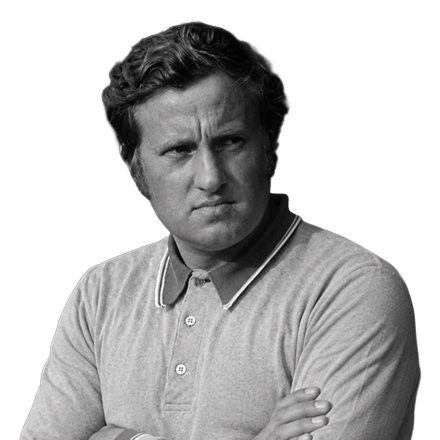
Alan Brinley Rees (12 January 1938 – 6 September 2024) was a Welsh racing driver, team founder and motorsport executive whose influence on Formula One extended far beyond his years behind the wheel. While his own Grand Prix career was relatively brief, Rees went on to become one of the most important figures in the business and management side of the sport, helping to create two of Formula One’s best-known teams and leaving a legacy that spanned more than half a century.
Driver Bio
| Nationality | British |
| Birthplace | Langstone, Wales, UK |
| Born | 12 January 1938 |
| Died | 6 September 2024 |
| First Grand Prix | 1966 German Grand Prix |
| Last Grand Prix | 1967 British Grand Prix |
| Years Active | 1966–1967 |
| Current/Last Team | Privateer: Brabham |
Born in Langstone, Newport, Monmouthshire, Wales, on 12 January 1938, Rees emerged as one of Britain’s most promising young racing talents during the early 1960s. His rise through the ranks was built on speed, determination and a reputation for consistently outperforming more established rivals.
In 1962, he secured a drive with the factory Lotus Formula Junior team, one of the most respected junior programmes in international motorsport. Rees immediately impressed, winning three races during the season and establishing himself as a serious prospect for higher levels of competition. His momentum was interrupted, however, when a heavy accident during the Nürburgring 1000 Kilometres sports car race brought his campaign to an early end.
Undeterred, Rees returned to competition and spent much of the next six years racing for the highly regarded Roy Winkelmann Racing organisation in Formula Two. Between 1963 and 1968 he became one of the category’s standout performers, regularly defeating drivers who would later become Formula One legends. Among those he raced against—and often beat—were future world champions Jackie Stewart and Jochen Rindt, underlining the quality of his driving during one of Formula Two’s most competitive eras.
Although Formula Two remained his primary focus, Rees also made appearances in the Formula One World Championship during the 1960s. He started three World Championship Grands Prix, two of which were entered with Formula Two machinery under the regulations then used for certain events. While he did not score championship points, he delivered a notable performance in the 1967 German Grand Prix at the Nürburgring, finishing seventh overall and second among the Formula Two runners. Against a field packed with Grand Prix stars, it stood as the finest World Championship result of his driving career.
Yet Rees’s greatest impact on Formula One would come after he stepped away from full-time racing.
In 1969, he became one of the four founders of March Engineering, a company that would quickly establish itself as one of motorsport’s most influential constructors. Alongside Max Mosley, Graham Coaker and Robin Herd, Rees helped create a business that supplied cars across multiple racing categories. The company’s name famously originated from the founders’ initials, with the “AR” representing Alan Rees.
March rapidly became a major force in international motorsport, competing in Formula One while also building successful cars for Formula Two, Formula Three and IndyCar competition. Rees’s experience as a driver gave him valuable insight into team operations, talent development and race management.
At the end of 1971, he left March and joined Shadow Racing Cars, where he took on the role of team principal. His leadership skills quickly became apparent, and he helped guide the team through a period of growth in Formula One.
In 1977, Rees was once again at the centre of a major motorsport venture when he left Shadow to co-found Arrows. The team would go on to become one of Formula One’s longest-serving independent constructors, competing in more than 380 Grands Prix over two decades. Rees played a crucial role in shaping the organisation and remained deeply involved in its operations for many years.
A major chapter in his career came to a close in 1996 when he and the remaining founders sold Arrows to Tom Walkinshaw. By that point, Rees had successfully transitioned from racing driver to influential team builder, helping to shape the modern Formula One landscape from both sides of the pit wall.
Following the death of Max Mosley in 2021, Rees became the last surviving co-founder of March Engineering, a reminder of his unique place in the sport’s history and of the remarkable generation that helped transform Formula One into a global enterprise.
Alan Rees passed away in Ascot, Berkshire, on 6 September 2024 at the age of 86. Remembered as a gifted racer, respected team manager and visionary founder, he left an enduring mark on motorsport through both his achievements on the track and the teams he helped create. Few figures have influenced Formula One in so many different ways, or for so long.
Grand Prix Stats
| Race Entries | 3 |
| Race Starts | 3 |
| Did Not Start | 0 |
| Best Race Finish | 7th |
| Retirements | 1 |
| First-Lap Retirements | 0 |
| Not Classified | 0 |
| Disqualified | 0 |
| Did Not Qualify | 0 |
Qualifying
| Qualifying Sessions | 3 |
| Reached Q3 | 0 |
| Q2 Eliminations | 0 |
| Q1 Eliminations | 0 |
| Did Not Qualify | 0 |
Complete Formula One World Championship results
| Year | Entrant | Chassis | Engine | 1 | 2 | 3 | 4 | 5 | 6 | 7 | 8 | 9 | 10 | 11 | WDC | Points |
|---|---|---|---|---|---|---|---|---|---|---|---|---|---|---|---|---|
| 1966 | Roy Winkelmann Racing | Brabham BT18 (F2) | Cosworth Straight-4 1.0L | MON | BEL | FRA | GBR | NED | GER Ret | ITA | USA | MEX | NC | 0 | ||
| 1967 | Cooper Car Company | Cooper T81 | Maserati V12 | RSA | MON | NED | BEL | FRA | GBR 9 | NC | 0 | |||||
| Roy Winkelmann Racing | Brabham BT23 (F2) | Cosworth Straight-4 1.6L | GER 7 | CAN | ITA | USA | MEX |
Teammates & Qualifying Head-to-Head
| Teammate | Years | Races | Qualifying H2H |
|---|---|---|---|
| Jochen Rindt | 1967 | 1 | – |
| Pedro Rodriguez | 1967 | 1 | – |