






























Max Rufus Mosley (13 April 1940 – 23 May 2021) was a British lawyer, businessman and former racing driver who became one of the most influential figures in modern motorsport. Best known for serving as President of the Fédération Internationale de l’Automobile (FIA), the organisation that governs Formula One and many other international motorsport championships, Mosley played a pivotal role in shaping the commercial, legal and safety landscape of the sport.
| President of the Fédération Internationale de l’Automobile | |
|---|---|
| In office 23 October 1993 – 23 October 2009 | |
| Preceded by | Jean-Marie Balestre |
| Succeeded by | Jean Todt |
| President of the Fédération Internationale du Sport Automobile | |
| In office 1991–1993 | |
| Preceded by | Jean-Marie Balestre |
| Succeeded by | Position abolished |
| Personal details | |
| Born | Max Rufus Mosley 13 April 1940 London, England |
| Died | 23 May 2021 (aged 81) London, England |
| Spouse | Jean Taylor (m. 1960) |
| Children | 2 |
| Parents | Sir Oswald Mosley, Diana Mitford |
| Relatives | Nicholas Mosley, 3rd Baron Ravensdale (paternal half-brother)Jonathan Guinness, 3rd Baron Moyne (maternal half-brother)Desmond Guinness (maternal half-brother)Alexander Mosley (brother) |
After qualifying as a barrister, Mosley combined his legal expertise with a passion for racing by helping to establish March Engineering, a successful racing car manufacturer and Formula One team. Between 1969 and 1977, he oversaw the company’s legal and commercial affairs before becoming its representative within the Formula One Constructors’ Association (FOCA), the organisation representing Formula One teams.
Working alongside Bernie Ecclestone, Mosley became a key negotiator in Formula One’s political and commercial evolution. In 1978, he was appointed FOCA’s official legal adviser, helping to broker the original Concorde Agreement with Marco Piccinini. The landmark deal brought an end to the long-running dispute between FOCA and the Fédération Internationale du Sport Automobile (FISA), then the governing body for Formula One under the FIA.
Mosley’s influence continued to grow throughout the sport. He was elected President of FISA in 1991 before becoming President of the FIA two years later. During his tenure, he championed major improvements in both motorsport and road car safety. Among the achievements he regarded most highly was helping establish the European New Car Assessment Programme (Euro NCAP), which transformed the way vehicle safety was measured and encouraged manufacturers to build safer cars. He also promoted technological innovation and environmental initiatives within motorsport, pushing the sport towards greener engineering solutions.
In 2008, Mosley became the centre of intense media scrutiny after British newspapers published allegations concerning his private life, including claims of Nazi-themed role play. He strongly denied those accusations, successfully sued the newspaper responsible for invasion of privacy, and remained FIA President despite widespread public controversy. He completed his final term in office in 2009 before handing over to his preferred successor, Jean Todt.
Away from motorsport, Mosley’s background attracted attention throughout his life. He was the youngest son of Sir Oswald Mosley, founder of the British Union of Fascists, and Diana Mitford of the famous Mitford family. His education took him through France, Germany and Britain before he read Physics at Christ Church, Oxford. After graduating, he switched to law and was called to the Bar in 1964.
As a young man, Mosley briefly became involved in his father’s post-war political organisation, the Union Movement, although he later acknowledged that his family name effectively ended any serious political ambitions. He undertook some work for the Conservative Party during the early 1980s before becoming a donor to the Labour Party throughout much of the New Labour era, continuing until 2018.
His life was later explored in Michael Shevloff’s 2020 documentary Mosley. Max Mosley died on 23 May 2021 at the age of 81. An inquest later concluded that he had taken his own life following a terminal cancer diagnosis.
Family and early life
Max Mosley was born in London on 13 April 1940, during the opening stages of the Second World War. He was the youngest son of Sir Oswald Mosley, leader of the British Union of Fascists (BUF), and Diana Mitford, one of the renowned Mitford sisters. Alongside his elder brother Alexander, he also had five older half-siblings through his parents’ previous relationships, including novelist Nicholas Mosley, merchant banker Jonathan Guinness and Irish conservationist Desmond Guinness. His wider family connections also included Deborah Cavendish, Duchess of Devonshire, Peregrine Cavendish, 12th Duke of Devonshire, Winston Churchill MP, and Queen Elizabeth The Queen Mother.
Only weeks after Max’s birth, his father was imprisoned by the Churchill government under Defence Regulation 18B because of his fascist political activities and support for a negotiated peace with Nazi Germany. His mother was detained shortly afterwards. With both parents interned, Max and his brother spent their earliest years separated from them, while Prime Minister Winston Churchill later requested that Diana Mosley be allowed regular visits with her young son.
When Sir Oswald and Diana were released from Holloway Prison in November 1943, public hostility towards the family remained intense. Their children struggled to gain admission to schools because of both their parents’ political reputation and their own unruly behaviour, leading to a period of home education before the family settled into life across a succession of country homes.
Following the war, the Mosleys spent time at Crowood Farm in Wiltshire before Max was sent to Stein an der Traun in Germany at the age of 13. The two years he spent there gave him fluent German, an ability that would later prove valuable throughout his international motorsport career. Returning to Britain, he attended Millfield School in Somerset before completing his education in London.
Mosley went on to study Physics at Christ Church, Oxford, graduating in 1961. During his university years, he served as Secretary of the Oxford Union, where his father spoke on two occasions, including a debate against Jeremy Thorpe. While at Oxford, he also introduced fellow student Robert Skidelsky to Sir Oswald Mosley, a relationship that would later influence Skidelsky’s biography of Mosley’s father.
Although he originally intended to pursue a scientific career, Mosley later concluded there was little financial future in physics. Instead, he trained as a barrister at Gray’s Inn, qualified in 1964 and specialised in patent and trademark law after completing his pupillage under Maurice Drake. During the same period, between 1961 and 1964, he also served with the Territorial Army’s Parachute Regiment.
The Mosley family divided much of their time between homes in Ireland and Orsay, near Paris, travelling regularly across Europe. Max developed a love of riding and hunting, while family holidays frequently involved sailing around the Mediterranean. During one voyage, they visited Spain as guests of General Francisco Franco, a long-standing acquaintance of Sir Oswald Mosley.
Like many Formula One figures of his generation, Mosley later made his home in Monaco. On 9 June 1960, he married Jean Taylor, the daughter of a Streatham police officer, in London’s Chelsea Register Office. The couple had two sons, Alexander and Patrick.
Tragedy struck the family in 2009 when Alexander Mosley, a successful restaurateur, was found dead at his home in Notting Hill, aged 39. An inquest later concluded that he had died as a result of non-dependent drug abuse.
Politics
Politics formed part of Max Mosley’s life long before motorsport became his defining passion. As the son of Sir Oswald Mosley, he was exposed to political campaigning from an early age and, during his teens and early twenties, became involved with his father’s post-war organisation, the Union Movement (UM), which promoted a vision of European nationalism.
Former Union Movement member Trevor Grundy later recalled that a teenage Mosley participated in activities promoting the party, including painting its flash-and-circle symbol across London during the Soviet invasion of Hungary in 1956. Grundy also remembered Mosley organising social events designed to introduce young people to the movement in a more relaxed setting, hoping to distance it from the public’s association with fascism. It was at one of these gatherings that Mosley met his future wife, Jean Taylor.
In the late 1950s, Max and his brother Alexander were photographed dressed as Teddy Boys in London’s Notting Hill during a period of racial unrest. A year later, they campaigned for their father when Sir Oswald stood as the Union Movement candidate for Kensington North in the 1959 General Election.
Despite this early involvement, Mosley rarely spoke publicly about his political past. After Sir Oswald’s death, he described his father as “a much maligned and much misunderstood political giant of his era,” while also acknowledging the challenges of growing up under such a controversial surname. Looking back, he often reflected that being born into such a politically charged family was something he eventually had to leave behind, even if public perceptions followed him throughout his life.
In 1961, Mosley worked as election agent for Union Movement candidate Walter Hesketh during a by-election in Manchester Moss Side. Around the same period, he was involved in a violent confrontation in London in which his father was attacked by a crowd. Mosley intervened to protect him, was arrested and charged with threatening behaviour, but was later cleared after the court accepted that he had been acting in his father’s defence.
By the time he qualified as a barrister in 1964, Mosley had largely stepped away from active politics. His legal career and growing interest in motor racing soon became his primary focus.
Racing Career
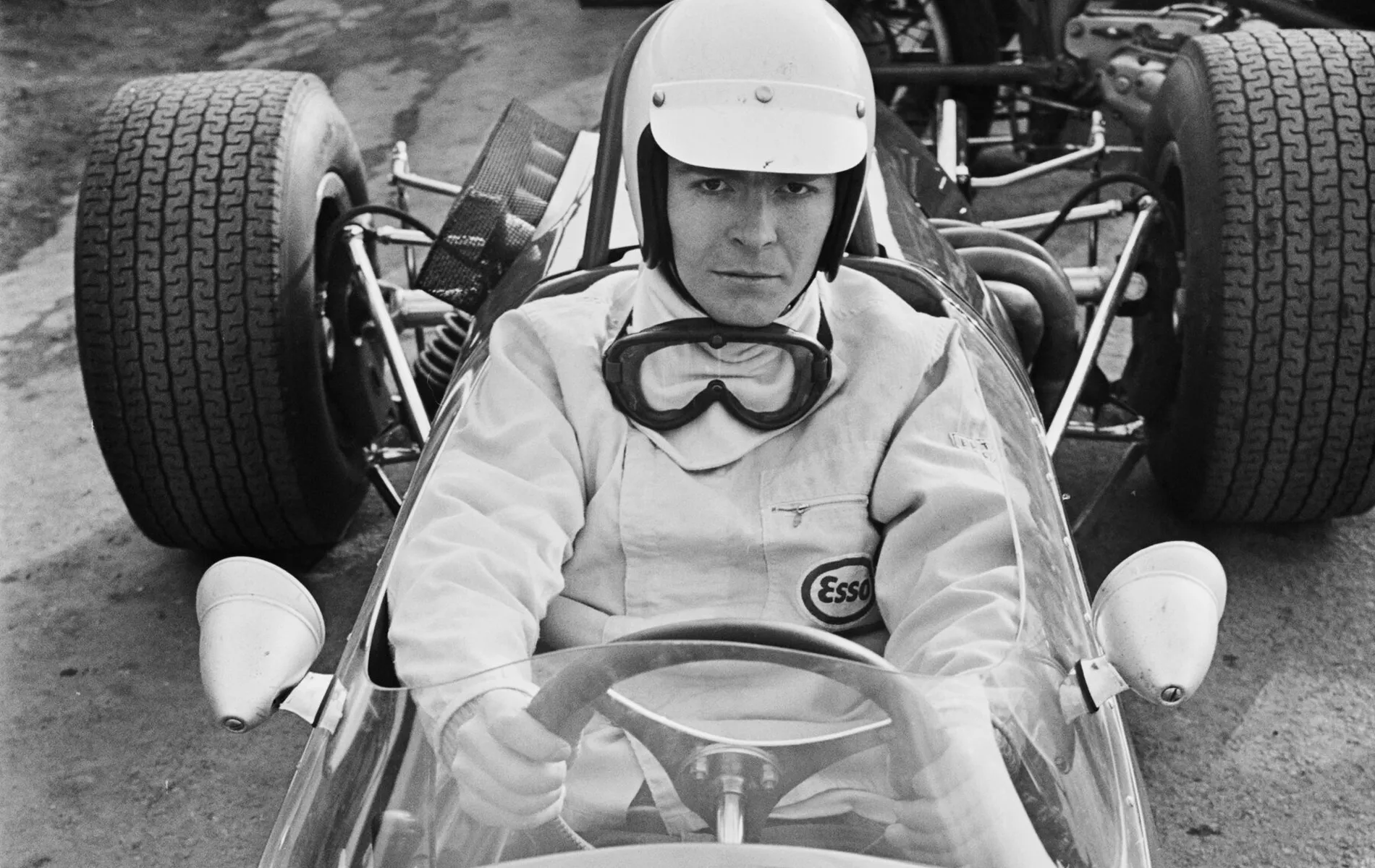
Mosley’s introduction to motor racing came almost by chance while he was studying at Oxford. After his future wife received tickets to an event at Silverstone, the couple attended out of curiosity. What began as a casual day out quickly developed into a lifelong passion.
Once qualified as a barrister, Mosley supplemented his income by teaching law during the evenings, allowing him to finance a racing career of his own. Beyond the thrill of competition, he found something else equally appealing about the sport: unlike politics, few people cared about his family background.
He later recalled one of his earliest races, when he overheard fellow competitors wondering whether he might be related to coachbuilder Alf Moseley rather than Sir Oswald Mosley. For the first time in his life, he felt he had entered a world where his surname carried little significance. That sense of anonymity, he often said, remained one of motorsport’s greatest attractions.
Mosley competed extensively in British national racing during 1966 and 1967, entering more than 40 events. He claimed 12 victories during that period and established several class lap records, earning a reputation as an intelligent and dependable competitor.
In 1968, he joined forces with driver Chris Lambert to create the London Racing Team, entering the fiercely competitive European Formula Two Championship—the final stepping stone before Formula One. Their cars were prepared by Frank Williams, who would later become one of Formula One’s most successful team owners.
The era was notoriously dangerous. Mosley’s Formula Two debut came at Hockenheim, where double World Champion Jim Clark was killed during the meeting. Within two years, both of Mosley’s 1968 teammates, Chris Lambert and Piers Courage, had also lost their lives in racing accidents.
Mosley’s strongest Formula Two result came with eighth place in a non-championship race at Monza. Although never considered among the outright fastest drivers, those who worked alongside him respected his intelligence behind the wheel. Engine builder Brian Hart later observed that Mosley may not have possessed exceptional pace, but he was an analytical driver who avoided unnecessary risks and consistently relied on sound judgement rather than outright aggression.
By 1969, after suffering two major accidents caused by mechanical failures on his Lotus, Mosley reached an honest conclusion about his future behind the wheel. He accepted that becoming Formula One World Champion was unrealistic and decided to retire from competitive driving.
That decision marked the end of one career—but the beginning of another that would shape Formula One for decades to come.
March Engineering
Retirement from racing did little to diminish Max Mosley’s involvement in motorsport. Instead, it was the beginning of the chapter that would establish his reputation as one of Formula One’s sharpest legal and commercial minds.
In 1969, following two major accidents caused by mechanical failures in his Lotus, Mosley accepted that his ambitions as a driver had reached their natural conclusion. Rather than chase an increasingly unlikely future behind the wheel, he turned his attention to building a business around the sport he loved.
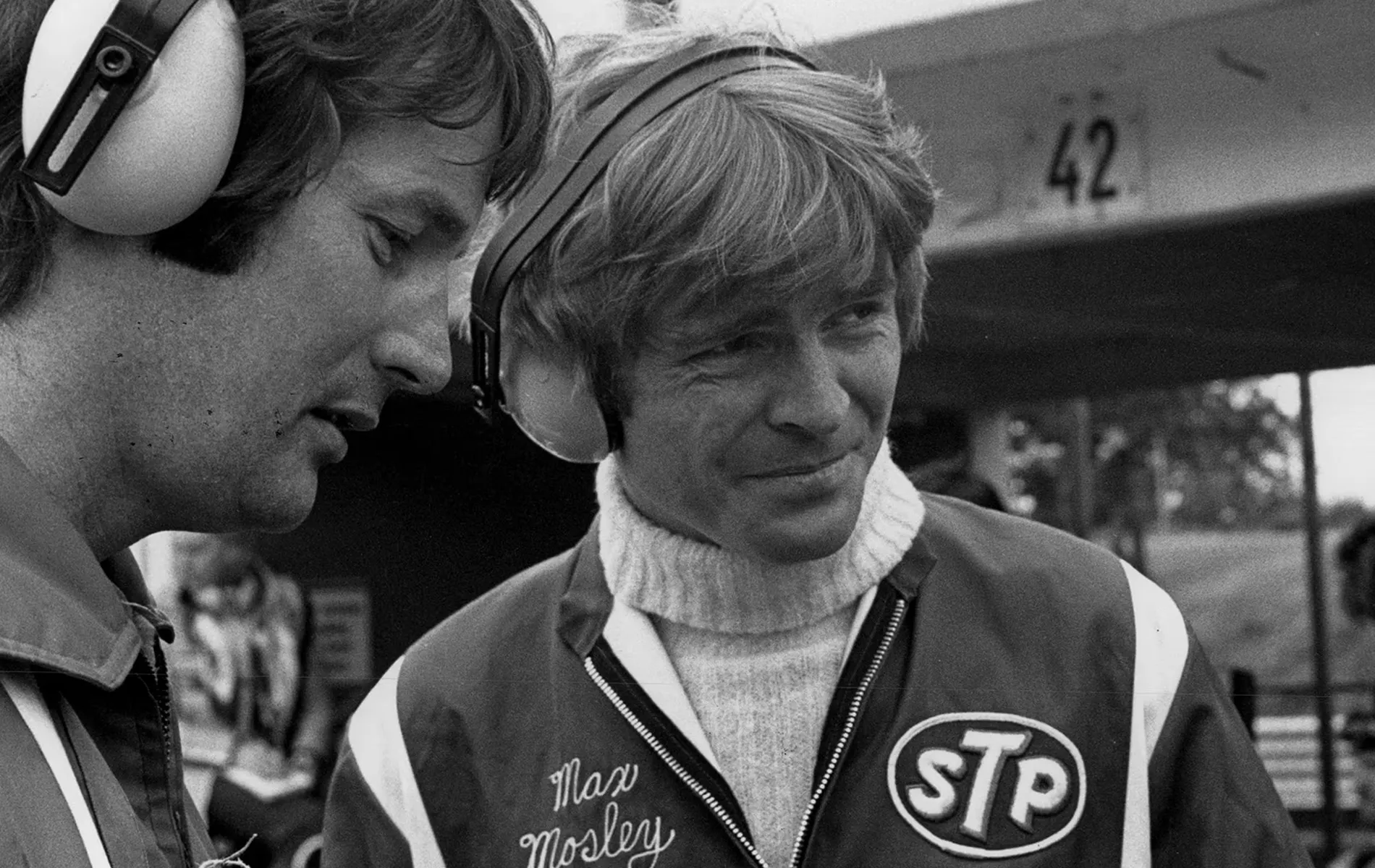
Together with Robin Herd, Alan Rees and Graham Coaker, Mosley co-founded March Engineering, a new racing car manufacturer that would quickly become one of the most ambitious entrants in international motorsport. The company’s name was formed from the founders’ initials, with the “M” representing Mosley. Each partner invested £2,500 to get the venture off the ground, although Sir Oswald Mosley reportedly warned his son that the company would almost certainly fail—adding that it would at least provide valuable experience.
From the outset, Mosley assumed responsibility for the legal, financial and commercial side of the business. While his partners concentrated on engineering and car design, he negotiated contracts, secured sponsorships, managed finances and promoted the fledgling company with remarkable confidence.
A bold arrival in Formula One
Despite having limited resources and no Formula One pedigree, March announced plans to enter the 1970 World Championship with extraordinary ambition.
Originally intending to field a single car, Mosley’s deal-making quickly transformed the project. By the time the opening race arrived, March cars occupied five places on the grid—two entered by the factory team and three supplied to customer outfits. He also secured vital commercial backing from Firestone and STP, sponsorship agreements that helped fund the company’s rapid expansion.
The gamble paid off almost immediately.
March made one of the most successful Formula One debuts in the sport’s history. Its cars won three of the opening four Grands Prix of the 1970 season, including the Spanish Grand Prix, where reigning World Champion Jackie Stewart claimed victory in a customer March run by Tyrrell Racing.
The results propelled March to third place in the Constructors’ Championship during its very first season. Away from Formula One, the company also enjoyed strong commercial success, selling around 40 cars to customer teams competing across junior racing categories.
Success comes at a price
Behind the scenes, however, the picture was far less secure.
Although customer sales generated healthy income, the costs of running a competitive Formula One operation rapidly outpaced profits. The factory team consumed money at an alarming rate, while expensive driver contracts placed further strain on the business.
Mosley became known for making difficult commercial decisions when necessary. One of the most notable involved lead driver Chris Amon, whose contract represented a significant financial burden. Mosley later admitted that he looked for every opportunity to reduce those costs, believing Stewart’s performances in a customer March already demonstrated the competitiveness of the car without requiring such an expensive works programme.
By the end of the season, Mosley had also taken full control of the company’s finances, including responsibility for the factory that had previously been overseen by Graham Coaker, who subsequently left the organisation. To keep March operating through another season, Mosley and Robin Herd raised an additional £20,000 from friends and family, including support from Mosley’s half-brother Jonathan Guinness.
Fighting to stay competitive
March entered 1971 facing a fresh set of challenges.
Tyrrell had begun designing its own Formula One chassis, depriving March of one of its strongest customer relationships. Sponsorship income from Firestone and STP was no longer sufficient, while Mosley struggled to secure the major financial backing needed to compete with better-funded rivals.
Determined to keep the business alive, he pursued a series of pragmatic commercial agreements. Among the most significant was a deal to run Alfa Romeo engines in one of the team’s Formula One cars, which provided valuable funding even though the engines ultimately failed to deliver the hoped-for competitiveness or to establish a lasting partnership.
Despite continued financial pressures, March once again finished third in the Constructors’ Championship. Driver Ronnie Peterson emerged as one of the stars of the season, finishing runner-up in the Drivers’ Championship with a Cosworth-powered March.
The financial strain, however, showed little sign of easing. By the close of 1971, the company had recorded losses of £71,000. Differences over how best to address those problems eventually led Alan Rees to leave the business in early 1972.
Building a customer racing powerhouse
While Formula One remained expensive, March discovered a highly profitable niche supplying cars to teams competing in Formula Two, Formula Three and other junior categories.
Mosley proved instrumental in growing that side of the business.
He organised extensive test sessions for journalists and prospective customers, ensuring March cars received maximum publicity. He also introduced an innovative rental programme that allowed drivers to lease complete race packages—including cars and engines—rather than purchase them outright, thereby lowering the barrier to entry and expanding the company’s customer base.
One strategic decision paid dividends for years to come. Although March initially lost money supplying Formula Two machinery to Ford motorsport boss Jochen Neerpasch, the relationship later opened the door to an exclusive agreement after Neerpasch joined BMW. Beginning in 1973, March became BMW’s Formula Two partner, and BMW-powered March chassis went on to dominate the category, winning five of the following eleven European Formula Two championships.
Innovation as a marketing tool
Throughout the 1970s, March repeatedly considered withdrawing from Formula One as costs escalated. Yet each time, Mosley managed to secure enough funding to keep at least one works car on the grid.
He also understood that publicity could be just as valuable as outright victories.
One of his most imaginative ideas involved backing Robin Herd’s radical six-wheeled March 2-4-0 project. Inspired by the attention generated by Tyrrell’s six-wheel P34, Mosley believed an unconventional design would attract sponsors and keep March firmly in the public eye.
Although the 2-4-0 never raced in Formula One, it achieved exactly what Mosley hoped. The car generated enormous media interest, while sales of its Scalextric model reportedly made it one of the company’s most commercially successful designs.
Alongside these promotional efforts, Mosley negotiated sponsorship packages for drivers and successfully supplied March chassis to several rival Formula One teams, including Williams and Penske. Although the factory operation rarely challenged consistently for championships, it remained competitive enough to claim Grand Prix victories in both 1975 and 1976.
A new direction
After almost a decade balancing commercial pressures, political negotiations and the relentless financial demands of Formula One, Mosley concluded that his future lay beyond running a racing team.
At the end of the 1977 season, he left March Engineering to work full-time with the Formula One Constructors’ Association (FOCA). He sold his shares in the company, although he remained a director for a period, bringing to a close one of the most influential chapters of his business career.
His departure also marked the beginning of an even greater role—one that would place him at the centre of Formula One’s political battles and ultimately reshape the governance of international motorsport.
Formula One Constructors’ Association (FOCA)
By the late 1960s, Max Mosley had become as valuable in the Formula One paddock for his legal expertise as he had once been for his driving. While representing March Engineering, he regularly attended meetings of the Grand Prix Constructors’ Association (GPCA), where teams negotiated commercial arrangements and prize money with the sport’s governing authorities.
Although March was a newcomer, Mosley quickly recognised that negotiations between the teams lacked direction. Rival constructors often distrusted one another, with many more concerned about protecting individual interests than presenting a united front. His legal training made him an increasingly influential voice in discussions that were becoming ever more political.
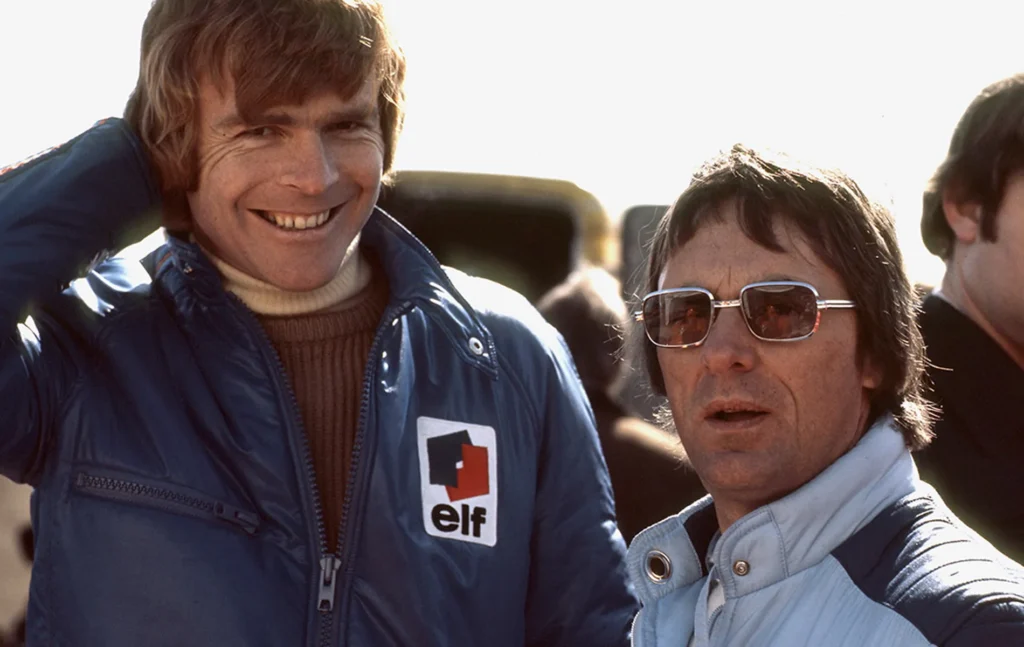
Everything changed in 1971 when Bernie Ecclestone purchased the Brabham Formula One team.
Mosley later recalled immediately recognising Ecclestone’s commercial instincts. Within minutes of attending his first GPCA meeting, Ecclestone had identified the weaknesses in the existing system and began working alongside Mosley. Before long, the pair were effectively negotiating on behalf of the constructors themselves, laying the foundations for a partnership that would shape Formula One for decades.
In 1974, that relationship evolved into the creation of the Formula One Constructors’ Association (FOCA). Founded by Ecclestone, Colin Chapman, Teddy Mayer, Ken Tyrrell, Frank Williams and Mosley, FOCA was established to represent the collective commercial interests of Formula One teams during negotiations with the sport’s governing bodies.
When Mosley left March Engineering at the end of 1977, he became FOCA’s full-time legal adviser. The appointment reflected not only his legal ability but also his growing reputation as a skilled negotiator capable of navigating Formula One’s increasingly complex political landscape.
The FISA–FOCA war
The late 1970s and early 1980s saw Formula One descend into one of the most significant political conflicts in its history.
FOCA represented the independent, predominantly British-based teams, while the Fédération Internationale du Sport Automobile (FISA), led by Jean-Marie Balestre, was backed by major manufacturer teams including Ferrari, Renault and Alfa Romeo.
Disagreements over governance, regulations, television income and commercial control escalated into what became known as the FISA–FOCA war.
Mosley emerged as one of FOCA’s chief strategists throughout the dispute. Working closely with Ecclestone, he used his legal expertise to challenge FISA’s authority while helping maintain unity among the independent constructors.
The conflict reached its peak in 1980 when FOCA organised the non-championship South African Grand Prix after threatening to establish its own rival governing body. The successful staging of the race, combined with worldwide television coverage, demonstrated that Formula One teams possessed significant commercial power outside FISA’s control.
The pressure ultimately forced both sides back to the negotiating table.
Working alongside Italian motorsport official Marco Piccinini, Mosley helped draft the first Concorde Agreement, a landmark settlement that fundamentally reshaped Formula One. The agreement established a lasting balance between sporting regulation and commercial management, giving FISA responsibility for the rules while granting FOCA control over many of the sport’s commercial and television rights.
The Concorde Agreement ended years of instability and became the constitutional framework that governed Formula One for decades, with later versions continuing long after Mosley left office.
Having helped secure the agreement, Mosley stepped away from Formula One politics in 1982 to pursue a brief return to national politics through the Conservative Party. His absence from motorsport would prove short-lived.
FISA presidency
Mosley returned to international motorsport administration in 1986 with the support of both Bernie Ecclestone and Jean-Marie Balestre. He was elected President of the FISA Manufacturers’ Commission, giving him a seat on the organisation’s World Council and placing him firmly back at the heart of Formula One governance.
Away from official duties, he also co-founded Simtek Research with engineer Nick Wirth. The consultancy specialised in advanced motorsport engineering and technical development, although Mosley later sold his interest in the company after moving into senior FIA leadership.
During this period, Mosley continued strengthening Formula One’s commercial structure. He was instrumental in encouraging closer cooperation between Ecclestone and the governing body, believing the sport required both political stability and experienced commercial leadership to thrive.
Challenging Balestre
By 1991, Mosley believed Formula One needed new leadership.
He announced his intention to challenge Jean-Marie Balestre for the presidency of FISA, arguing that the organisation required clearer governance and greater impartiality.
Mosley was particularly critical of what he saw as political interference in Formula One, citing Balestre’s controversial involvement following the dramatic 1989 Japanese Grand Prix, in which Ayrton Senna was disqualified after colliding with Alain Prost during their championship-deciding clash.
Campaigning on a platform of modernisation and improved governance, Mosley argued that the president of FISA should concentrate on leading the governing body rather than becoming involved in the day-to-day running of Formula One.
His message resonated with delegates.
In the presidential election, Mosley defeated Balestre by 43 votes to 29, bringing an end to one of the sport’s most influential administrations.
Rather than serving a full term without challenge, Mosley honoured a campaign promise by resigning after one year and immediately seeking re-election to confirm that he still commanded members’ confidence.
The strategy worked.
He was comfortably returned to office, strengthening both his authority and his reputation as a leader willing to be judged on his own performance.
FIA presidency
1993–1997
In 1993, Max Mosley became President of the Fédération Internationale de l’Automobile (FIA), succeeding Jean-Marie Balestre following an agreement that saw Balestre move into the newly created position of President of the FIA Senate.
The appointment placed Mosley in charge of the world’s governing body for motorsport while also giving him responsibility for representing millions of motorists through the FIA’s road safety initiatives.
Although Formula One remained highly visible, Mosley repeatedly stated that improving road safety was where he believed he could make the greatest difference.
His presidency was almost immediately defined by tragedy.
In May 1994, Formula One suffered one of its darkest weekends when Roland Ratzenberger and three-time World Champion Ayrton Senna were both killed during the San Marino Grand Prix at Imola.
While much of the world’s attention focused on Senna, Mosley chose to attend Ratzenberger’s funeral, explaining years later that countless people would rightly honour Senna, whereas he felt someone from the FIA should also pay tribute to the Austrian driver.
The accidents transformed the FIA’s approach to safety.
Mosley established the Advisory Expert Group under Professor Sid Watkins to investigate every aspect of circuit design, vehicle construction and driver protection. The resulting reforms reshaped modern Formula One.
Engine performance was reduced to limit speeds, grooved tyres were introduced to reduce cornering grip, circuits were redesigned to improve run-off areas, crash-testing standards became dramatically more demanding, and the HANS (Head and Neck Support) device eventually became mandatory, significantly reducing the risk of fatal head and neck injuries.
Many of these innovations later influenced safety standards across motorsport as a whole.
Mosley’s first FIA presidency also saw Formula One’s commercial rights become more clearly defined.
In 1995, the FIA reached an agreement granting Bernie Ecclestone control of Formula One’s commercial rights for fifteen years in exchange for annual royalty payments to the governing body. Although controversial, Mosley argued that the agreement reflected Ecclestone’s decades of investment in transforming Formula One into a global television product while securing long-term financial stability for the FIA.
The deal drew criticism from several leading team principals, including Ron Dennis, Frank Williams and Ken Tyrrell, who believed the teams should have played a greater role in negotiations. Nevertheless, the agreement fundamentally reshaped Formula One’s commercial future and became one of the defining business decisions of Mosley’s presidency.
1997–2001
Max Mosley secured a second term as FIA President in October 1997, but his attention was soon consumed by one of the biggest legal and political battles of his career.
At the heart of the dispute was the European Commission, which questioned the FIA’s dual role as both the regulator of international motorsport and a commercial rights holder. Regulators argued that several agreements between the FIA and Bernie Ecclestone’s companies could restrict competition, placing Formula One’s future under intense scrutiny.
The conflict quickly escalated. Confidential correspondence between the European Commission, the FIA and Ecclestone was leaked to the media, fuelling speculation over the sport’s governance and threatening plans to float Formula One as a public company.
Mosley refused to back down.
Determined to defend what he believed was the FIA’s legitimate role, he led lengthy negotiations with European regulators while publicly challenging many of their arguments. The dispute became increasingly personal, with both sides exchanging strong criticism throughout the proceedings.
Elsewhere, the FIA also faced legal challenges over television rights. A German court ruled that the commercial rights to the FIA European Truck Racing Cup should revert to the series organiser rather than remain under agreements negotiated with Ecclestone. Mosley appealed the ruling, temporarily suspending the championship before a revised decision ultimately allowed the series to continue.
Throughout this period, Mosley repeatedly warned that if European legislation prevented Formula One from operating effectively, the sport could relocate its commercial activities outside the European Union altogether.
Reshaping Formula One’s commercial future
After months of negotiations, the FIA and the European Commission reached a landmark agreement in 2001.
As part of the settlement, the FIA agreed to withdraw entirely from Formula One’s commercial activities while retaining responsibility for governing the sport. The agreement effectively separated regulation from commercial management, something European regulators had long demanded.
Mosley devised an innovative solution to protect both the FIA and Bernie Ecclestone’s commercial investment.
Rather than extending the existing television agreement by a relatively short period, the FIA granted commercial rights for 100 years. Mosley argued that such an arrangement resembled an outright sale rather than an anti-competitive licence, a position ultimately accepted by the European Commission.
The agreement generated approximately $300 million for the FIA, enabling the creation of the FIA Foundation. Established in 2001, the Foundation was dedicated to promoting road safety, environmental protection, and sustainable mobility worldwide. Mosley regarded this as one of the most significant long-term achievements of his presidency, allowing Formula One’s commercial success to fund projects benefiting motorists far beyond the racetrack.
Defending Formula One’s tobacco sponsorship
Alongside the European Commission dispute, Mosley became deeply involved in another major political battle—protecting Formula One from an immediate ban on tobacco sponsorship.
-

The First Sponsor in Formula One: A History of Sponsorship in Formula 1
-
-
Grid Girls in Formula 1: Origins, roles, the 2018 ban and what came after
Throughout the 1990s, cigarette manufacturers remained the sport’s principal financial backers, with brands such as Marlboro, Rothmans, West and Mild Seven supporting many of Formula One’s leading teams.
When the newly elected Labour government backed European proposals to prohibit tobacco advertising, Mosley argued that an immediate ban would have severe consequences for British motorsport.
Together with Bernie Ecclestone, he met Prime Minister Tony Blair in October 1997, warning that Formula One’s technical expertise, investment and thousands of skilled jobs could move overseas if teams were denied sufficient time to secure replacement sponsors.
The meeting later became politically controversial after Ecclestone’s financial donation to the Labour Party came to light, prompting accusations that Formula One had received preferential treatment.
Although the resulting media storm forced Labour to return Ecclestone’s donation, Formula One was granted additional time to phase out tobacco sponsorship.
Mosley continued campaigning for a gradual transition, arguing that the sport required financial stability while new commercial partnerships were developed. Despite his efforts, European legislation eventually brought tobacco sponsorship in Formula One to an end, with the final restrictions taking effect during the mid-2000s.
Championing road safety
While Formula One politics dominated headlines, Mosley consistently insisted that his proudest work took place away from Grand Prix racing.
One initiative stood above all others: Euro NCAP.
As Chairman of the European New Car Assessment Programme, Mosley helped transform vehicle safety testing across Europe. At the time, many manufacturers opposed the programme, fearing poor crash-test ratings would damage sales. Mosley believed the opposite.
By publicly highlighting safety performance, he argued, manufacturers would compete to build safer vehicles, ultimately saving thousands of lives. History proved him right.
Euro NCAP became one of the most influential consumer safety programmes in the automotive industry, encouraging manufacturers to dramatically improve occupant protection and pedestrian safety. The European Commission later described it as one of the most effective road safety initiatives ever introduced.
Looking back years later, Mosley repeatedly identified Euro NCAP—not Formula One politics—as the achievement he valued most from his time as FIA President.
In early 2001, he announced his intention to seek a third term, stating that, if re-elected, it would likely be his final mandate as President.
2001–2005
Max Mosley was comfortably re-elected as FIA President in 2001, beginning what he described as his final term in office. Although Formula One continued to expand commercially, the political landscape was changing rapidly.
Major automotive manufacturers—including BMW, Mercedes-Benz, Renault, Toyota and Honda—had become increasingly influential within the sport. Concerned about Formula One’s commercial direction under Bernie Ecclestone, they formed the Grand Prix Manufacturers Association (GPMA) and even proposed launching a rival world championship outside FIA control.
While the breakaway series never materialised, it represented the most significant challenge yet to the existing Formula One structure.
Mosley remained firm throughout the dispute, defending the FIA’s authority while continuing negotiations aimed at preserving stability within the championship.
Considering retirement
In June 2004, Mosley unexpectedly announced that he intended to leave the FIA a year before his mandate expired, explaining that he no longer found the administrative side of the role particularly rewarding and believed he had largely achieved the objectives he had set when first elected.
The announcement surprised the motorsport world.
Just weeks later, however, the FIA Senate persuaded him to remain in office. Some observers viewed the episode as part of wider political manoeuvring within Formula One, while others believed Mosley had genuinely considered stepping aside before concluding that his work was unfinished.
During this period, he also publicly identified Ferrari team principal Jean Todt as someone he believed possessed the experience and leadership qualities to one day succeed him as FIA President.
The 2005 United States Grand Prix controversy
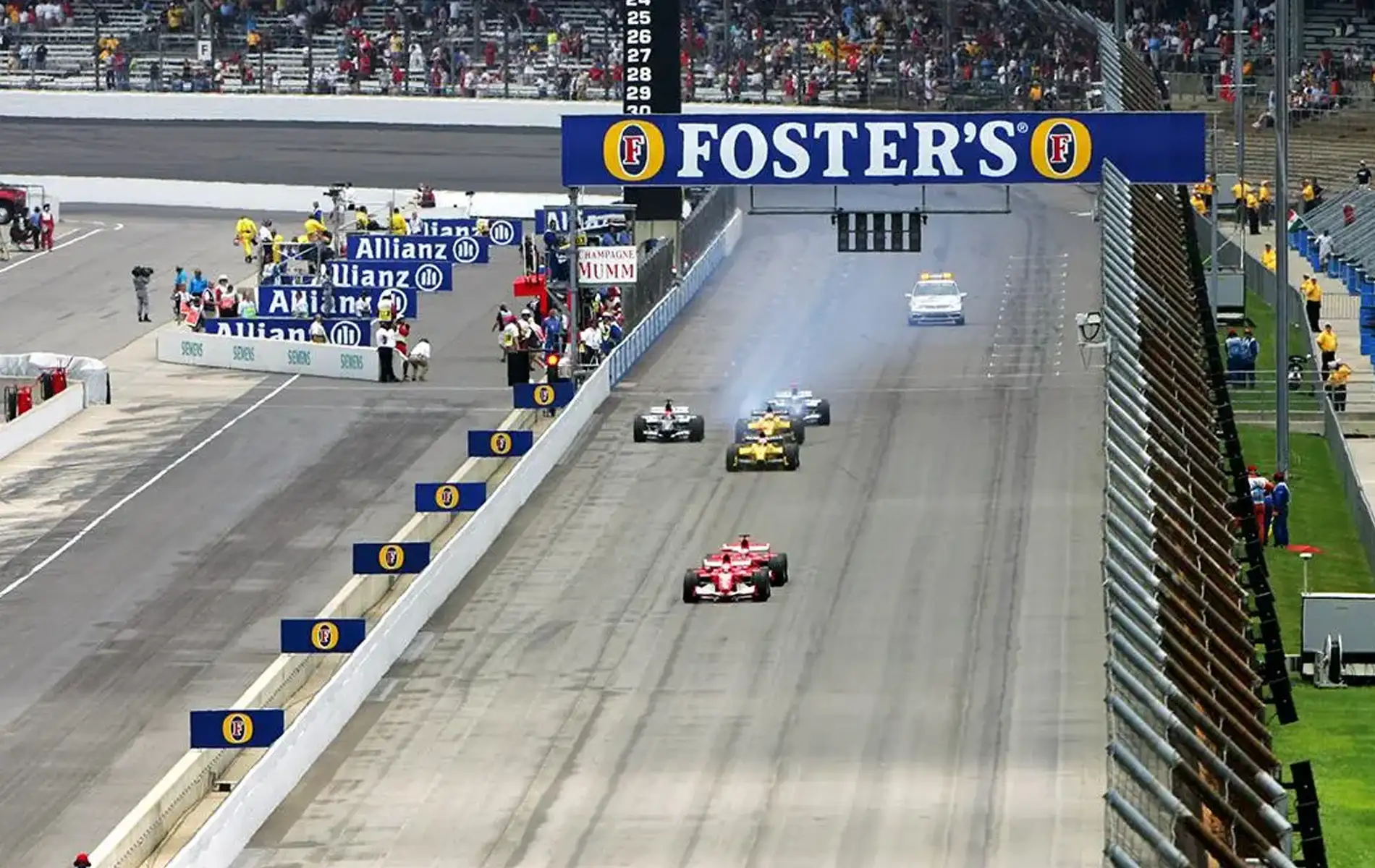
One of the defining moments of Mosley’s presidency came during the 2005 United States Grand Prix at Indianapolis.
After Michelin discovered that its tyres could not safely withstand the high-speed banking at the circuit, fourteen of the twenty Formula One cars faced the prospect of being unable to compete.
Several teams proposed installing a temporary chicane before the banked corner to reduce speeds.
Mosley rejected the suggestion.
He argued that introducing a major circuit alteration immediately before a World Championship race would compromise both safety procedures and sporting integrity. Instead, the FIA maintained that Michelin teams could race using alternative tyres, replace damaged tyres only when safety demanded it, or simply reduce their speed through the affected section.
None of those options proved acceptable.
As a result, all seven Michelin-equipped teams withdrew after the formation lap, leaving just six Bridgestone-shod cars to contest the race.
The event became one of Formula One’s most controversial Grands Prix, drawing widespread criticism from fans, teams and sections of the media. Several team principals, including Minardi owner Paul Stoddart, openly criticised Mosley’s handling of the situation and renewed calls for changes to the sport’s leadership.
Mosley, however, defended the FIA’s position, insisting that preserving consistent safety standards and sporting regulations was more important than introducing last-minute solutions simply to avoid public embarrassment.
2005–2009
Max Mosley was re-elected unopposed for a fourth term as FIA President in 2005, extending a tenure that had already transformed both Formula One governance and international road safety. By this stage, his influence reached far beyond the paddock, and in recognition of his contributions to motorsport and vehicle safety, France appointed him a Chevalier of the Légion d’honneur in 2006.
Although Formula One continued to grow commercially, Mosley increasingly focused on ensuring the sport remained relevant to the wider automotive industry. He believed that Formula One should do more than entertain—it should serve as a laboratory for technologies that would eventually improve everyday road cars.
Driving technological change
One of Mosley’s key priorities during his final years in office was encouraging Formula One to embrace innovation with genuine road-car applications.
He became increasingly critical of the enormous sums teams were spending on developing ever more powerful, high-revving V8 engines, arguing that such investments delivered little practical benefit outside racing. Instead, he wanted manufacturers to direct their engineering expertise towards technologies that improved efficiency, reduced fuel consumption and supported environmental sustainability.

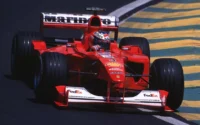
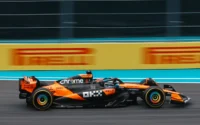
To help achieve that goal, Mosley proposed freezing engine development for a decade, allowing manufacturers to redirect budgets into new areas of research rather than continually chasing marginal performance gains.
Among the initiatives he strongly supported was the introduction of the Kinetic Energy Recovery System (KERS), which debuted in Formula One in 2009. The hybrid technology captured energy normally lost during braking and allowed drivers to redeploy it for additional performance. While initially met with mixed reactions, KERS represented the first significant step towards the hybrid power units that would later define modern Formula One.
Mosley also encouraged teams to submit proposals for future technical regulations that would prioritise fuel efficiency, sustainability and technological relevance, signalling a clear shift in the direction he wanted Formula One to take.
The McLaren espionage case
Perhaps the most controversial sporting issue of Mosley’s final presidency was the 2007 Formula One espionage affair involving McLaren and Ferrari.
The dispute began when Ferrari alleged that confidential technical information had been improperly obtained by McLaren through designer Mike Coughlan.
The FIA’s initial investigation found insufficient evidence to prove that McLaren had gained any competitive advantage, and the team was cleared of wrongdoing.
However, the situation changed dramatically after Italian police uncovered emails exchanged between McLaren personnel, including communications involving World Champion Fernando Alonso, suggesting that confidential Ferrari information had circulated within the team.
Armed with this new evidence, the FIA reconvened the World Motor Sport Council.
This time the outcome was very different.
McLaren was found guilty of possessing and using Ferrari’s intellectual property. The team received a record fine of $100 million—the largest financial penalty in Formula One history at the time—and was excluded from the 2007 Constructors’ Championship, although its drivers were allowed to retain their individual championship points.
The decision divided opinion throughout the sport.
Some former drivers and team principals argued that the punishment was excessive, while others believed it was necessary to protect Formula One’s sporting integrity.
Critics, including Sir Jackie Stewart and broadcaster Martin Brundle, questioned whether the FIA had pursued McLaren more aggressively than previous cases involving intellectual property disputes.
Mosley firmly rejected suggestions of inconsistency. He argued that the decisive factor had been the emergence of new evidence proving that confidential Ferrari data had circulated beyond one individual within McLaren, fundamentally changing the nature of the case.
Later that year, Renault was also found to have possessed confidential McLaren technical information. However, after reviewing the evidence, the FIA concluded that there was insufficient proof the information had influenced the team’s performance and decided not to impose a sporting penalty.
The 2008 News of the World controversy
In March 2008, Mosley’s presidency faced its greatest personal challenge.
The News of the World published secretly recorded footage showing Mosley participating in private sadomasochistic activities involving five consenting women. The newspaper alleged that the gathering included Nazi role-play, an accusation that immediately attracted worldwide media attention because of Mosley’s family background.
Mosley categorically denied the claim.
While acknowledging that publication of the story had caused considerable personal embarrassment, he insisted there had been no Nazi theme or intention whatsoever.
The revelations triggered widespread calls for his resignation.
Several national motoring organisations, senior figures within Formula One and leading automotive manufacturers questioned whether he could continue as FIA President. His planned attendance at the Bahrain Grand Prix was cancelled amid growing pressure, while public criticism intensified across the international media.
Despite the controversy, Mosley refused to step aside.
He maintained that his private life had no bearing on his ability to lead the FIA and stated that he had received significant private support from individuals across the motorsport community, even if few were prepared to express it publicly.
Surviving a vote of confidence
To resolve the growing uncertainty, the FIA convened an Extraordinary General Meeting in Paris in June 2008. Delegates voted overwhelmingly to retain Mosley as President. He survived the confidence vote by 103 votes to 55, with several abstentions, allowing him to continue serving despite months of intense scrutiny.
Although a number of national motoring clubs considered leaving the FIA following the result, most eventually accepted the decision and focused on restoring stability within the organisation.
Only weeks later, Mosley secured another major victory.
In July 2008, the High Court ruled decisively in his favour in his privacy action against the News of the World.
Mr Justice Eady concluded that there was no evidence whatsoever to support the newspaper’s central allegation that the events involved Nazi role-play or mocked victims of the Holocaust. The court found that publication of the story represented a serious invasion of Mosley’s privacy and awarded him damages.
The judgement became one of the most significant privacy rulings in British legal history and sparked wider debate about press freedom, personal privacy and media ethics.
The final Formula One power struggle
Although Mosley had repeatedly indicated that his fourth term would be his last, uncertainty surrounded his future throughout 2009.
Formula One teams, now organised under the newly established Formula One Teams Association (FOTA), became embroiled in another major dispute with the FIA over proposed regulations, including the introduction of voluntary budget caps.
Several leading teams threatened to establish a breakaway championship if the FIA proceeded with its plans.
For a time, Mosley suggested he might seek a fifth term as President, arguing that he had a responsibility to defend the authority of the FIA during one of the most turbulent periods in the sport’s history.
Negotiations continued throughout the summer.
In June 2009, the FIA and FOTA eventually reached a compromise that preserved Formula One’s existing structure while ending the immediate threat of a rival championship. As part of the agreement, Mosley confirmed that he would not seek re-election.
Although he briefly left open the possibility of changing his mind, he ultimately honoured the commitment and formally endorsed former Ferrari chief executive Jean Todt as his preferred successor.
When the FIA presidential election took place later that year, Todt was elected President, bringing Max Mosley’s sixteen-year leadership of the organisation to a close.
During those sixteen years, Mosley had overseen profound changes to Formula One’s governance, transformed safety standards both on the circuit and on public roads, modernised the FIA’s commercial structure and helped shape the direction of motorsport well into the twenty-first century.
Death
Max Mosley died on 23 May 2021 at the age of 81.
News of his death was confirmed by his long-time friend and Formula One commercial chief Bernie Ecclestone. Tributes quickly arrived from across the worlds of motorsport, law and road safety, reflecting Mosley’s decades of influence on both racing and the wider automotive industry.
He was laid to rest beside his mother, Diana Mitford, at St Mary’s Churchyard in Swinbrook, Oxfordshire. Later that same year, his wife Jean, whom he had married more than six decades earlier, died aged 81 and was buried alongside him.
In March 2022, an inquest established that Mosley had died by suicide after receiving a terminal cancer diagnosis. The hearing was told that he had been informed he had only weeks left to live and had spoken openly with his personal assistant of twenty years about his intention to end his life the day before his death.
The coroner concluded that Mosley had died from a self-inflicted gunshot wound.
His death brought to a close a life that had been as controversial as it was influential.
Whether viewed as an architect of modern Formula One, a champion of road safety or a determined defender of personal privacy, Mosley left a lasting mark on international motorsport. His work helped reshape racing governance, revolutionised safety standards for both competitors and road users, and influenced the technological direction of Formula One long after his presidency ended.
Seen in: