





























If you watched Formula 1 any time from the 1970s through to the mid-2010s, the pre-race grid had a very different look. Alongside the cars, drivers, and mechanics stood rows of young women holding driver name boards, umbrellas and sponsor branding. They were called grid girls. To some, they were part of the travelling theatre that made a Grand Prix feel like a world tour show. To others, they were a relic that sat awkwardly with a modern, global sport.
What To Know?
- Formula 1 ended the use of grid girls on 30 January 2018, replacing them with the FIA-backed Grid Kids programme from the start of the 2018 season.
- Grid girls historically performed promotional and ceremonial tasks on the pre-race grid, offering the women event experience, networking and travel, but the practice drew criticism for objectifying women and clashing with modern brand values.
- Pay was typically arranged via agencies, with commonly cited day rates in the UK and Europe around £120 to £160, varying by event, experience and duties.
- The ban was led by F1’s Liberty Media-era management and aligned the sport’s image with inclusivity and youth development, while similar roles continue in some other motorsport series outside F1.
This is the complete story of who grid girls were, how the role evolved, why they left the F1 grid in 2018 and what came next. Along the way, we will look at what the job involved, what opportunities it offered, the controversies that grew around it, and answer the big questions our readers ask most: when F1 banned grid girls, whether they still exist in motorsport, how much the role usually paid, and who ultimately made the call.
What were grid girls, and what did they actually do?
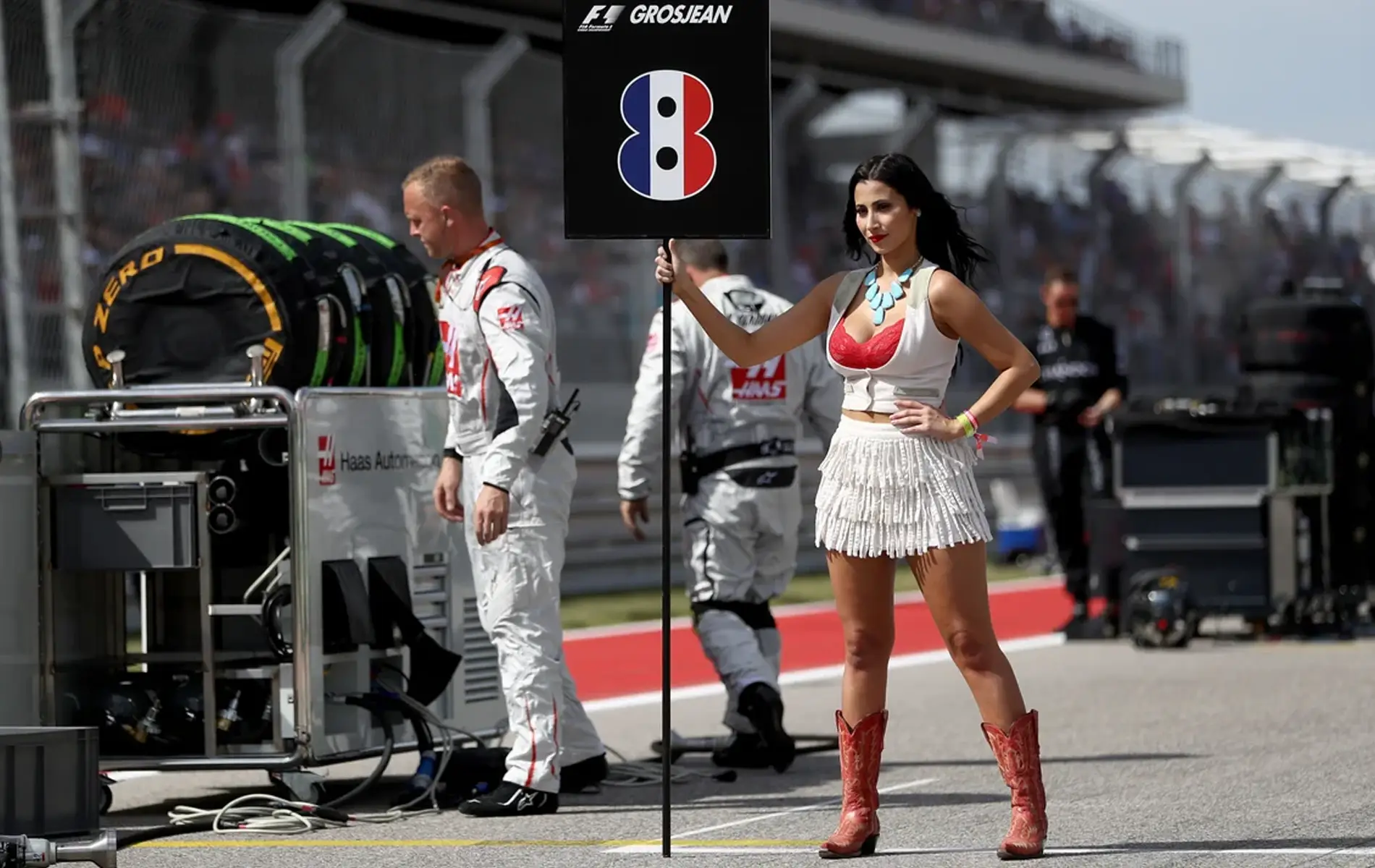
At heart, grid girls were promotional staff. Agencies hired them on behalf of race promoters, sponsors or teams to perform visible, time-critical tasks in front of the cameras and the grandstands. On a typical Grand Prix Sunday, their jobs included:
- Standing at each grid slot with a number or driver name board so broadcasters and spectators could identify cars during the pre-race build-up
- Holding umbrellas to shade drivers in very hot or wet conditions while engines and tyres came up to temperature
- Appearing in sponsor activations around the paddock, fan zones and podium avenue
- Assisting with ceremonial elements such as national anthems and post-race presentations
The role demanded punctuality, confidence in front of huge crowds, long hours on your feet and the ability to follow strict stage-managed timing. While much of the public focus sat on clothes and spectacle, the job itself was part choreography and part event operations.
If you love the nuts and bolts of how a Grand Prix works before the lights go out, you might also enjoy our explainer on F1 qualifying and our deep dive into F1 flags, both of which set the scene for what happens after those pre-race rituals.
A brief history of grid girls in F1
Promotional models appeared around international motorsport long before the modern F1 era, but the image that most fans recall took shape in the 1970s and 1980s. Grand Prix weekends grew into full-blown commercial festivals with title sponsors, national promoters and hospitality. Television audiences ballooned. As the show element grew, pre-race ceremonies became more choreographed and grid girls became a codified part of the grid.
Through the 1990s and 2000s, teams and sponsors used the grid as prime advertising real estate. Outfits tended to mirror brand colours and campaign creative. On any given Sunday, you might see a grid full of coordinated looks that told a visual story about the sport’s partners. Mostly tobacco sponsors.
That spectacle brought tension, too. By the 2010s, women’s place in the sport was being discussed far more openly, not simply as spectators or promotional staff but as competitors, engineers, strategists and leaders. The optics of a line of women as decoration in front of all-male driver fields started to feel out of step to many fans, broadcasters and brands. The debate simmered for years before it came to a head in 2018.
If you are curious about women competing in and around F1 beyond this specific debate, jump over to our features on the list of female F1 drivers and our coverage of pathways such as the F1 Super Licence.
-

Meet the Trailblazing Female F1 Drivers: History, Grand Prix Starters & Test Drivers
-
-
Beginners Guide: Everything To Know About F1 Drivers, Teams & Rules


Why the role appealed to many women
It is easy to treat grid girls as a symbol and forget there were thousands of individual careers behind the placards. For some women, the role was simply a day rate for event work. For others, it was a stepping stone into wider modelling or presenting. The job offered:
- Access to a global stage with television exposure and professional photography
- Networking with brands, media crews and event managers
- Travel to major cities and iconic circuits
- Transferable skills in live events, timing and hospitality
Former grid girls often describe the atmosphere on the grid as electric. The sensory overload of fuel, brake dust and crowd noise is unlike any other event job. Many also valued that agency over their own work, choosing where and how often to appear.
Our piece on how F1 makes money sets a wider context for how sponsorship and brand activations fit into a Grand Prix weekend in modern F1, which helps explain why the role existed in the first place.
The criticisms and how they gathered pace
From the late 2000s onwards, a range of critics argued that the grid girl tradition sent the wrong message about women in the sport. The main concerns were:
- Objectification. The job centred on appearance and a strictly gendered presentation at a time when F1 was trying to showcase technical merit and equal opportunity.
- Brand alignment. Global partners increasingly framed their campaigns around inclusion and social responsibility. The grid image clashed with that.
- Audience expectations. Broadcasters and race promoters were aiming to make events more family-friendly and youth-focused.
By January 2018, the decision finally arrived. Formula 1 announced it would end the use of walk-on grid girls for the 2018 season, saying the custom did not resonate with F1’s brand values and was at odds with modern societal norms.
When did F1 ban grid girls?
F1 banned grid girls on 30 January 2018, with the change taking effect from the start of the 2018 FIA Formula One World Championship. The official statement set the new policy across F1 and other series taking place during a Grand Prix weekend.
Within a week, F1 and the FIA introduced Grid Kids, a programme that invited young competitors from national motorsport clubs to take those pre-race places on the grid. The idea was to inspire the next generation by putting karting and junior single-seater drivers beside their heroes during the build-up.
For the wider context of how F1 has continued to modernise formats since then, see our guides to F1 sprint races and our explainer on DRS rules and changes.
Who got rid of grid girls?
The decision was taken by Formula 1’s management under Liberty Media, which had acquired the commercial rights the previous year. Sean Bratches, then Managing Director of Commercial Operations, fronted the announcement. He framed the move as part of an effort to bring the sport in line with brand values and contemporary norms. Multiple outlets carried the statement and quotes at the time.
“While the practice of employing grid girls has been a staple of Formula 1 Grands Prix for decades, we feel this custom does not resonate with our brand values and clearly is at odds with modern day societal norms. We don’t believe the practice is appropriate or relevant to Formula 1 and its fans, old and new, across the world.”
The policy was paired with the FIA-supported Grid Kids initiative, signalling coordinated buy-in from the rule-making body as well as the commercial rights holder.
Do grid girls still exist?
Not in Formula 1. The 2018 decision removed them from the grid, and they have not returned.
In other motorsport series, practices vary. In MotoGP, promotional staff and umbrella holders continue to appear in many markets. Reporting in 2024 indicated there were no plans to remove them at that time, even following Liberty’s later deal to acquire a majority stake in Dorna Sports, MotoGP’s parent company.
Elsewhere, the picture is mixed. Some series and events have moved to family-oriented alternatives or dancers, while others still use promotional models on specific weekends. The debate pops up in parallel sports too. Darts, for example, removed its walk-on girls in January 2018 after broadcaster feedback, though a seniors tour later brought ambassadors back in a limited capacity.
So while the F1 grid has been firmly aligned to the Grid Kids model since 2018, the broader world of motorsport has not moved in lockstep.
If you would like a quick refresher on how F1 increasingly courts younger audiences and new fans, our Beginner’s Guide to F1 is a handy starting point.
How much did grid girls get paid?
Rates varied significantly by country, agency, client and event. It is hard to pin down a single universal figure because most hires were handled through local promotional agencies rather than a central F1 scale. That said, typical published day rates in the UK and Europe often sat in the low hundreds.
Industry-facing posts and agency pages that discussed rates during the 2010s and early 2020s commonly cited about £120 to £160 per day as a baseline, with scope for higher fees at blue-riband events and for experienced staff, and occasional unpaid or reduced-rate work for newcomers seeking experience. These ballpark figures match the publicly posted ranges we can still find from the period.
Two caveats mattered:
- Grand Prix weekends are long. Call times ran from early morning through to the podium, and staff would be hired across Friday, Saturday and Sunday. Effective weekend totals could therefore be a multiple of a single-day rate.
- Additional commercial work. Some grid girls combined the grid role with sponsor hospitality, fan-zone work or photo calls, all of which could be billed separately.
For comparison with other money matters in the paddock, explore our breakdowns of F1 salaries nd the F1 points system that determines where the prize money eventually flows.
What the 2018 change meant for F1’s image
Looking back, the 2018 decision was part of a broader repositioning of Formula 1. The sport wanted to welcome new audiences and present a cleaner, more inclusive image that highlighted innovation, sustainability and young talent. Replacing grid girls with Grid Kids did three things at once:
- Kept the ceremony. The pre-race grid had transformed into a stage, now featuring children who actively compete in grassroots motorsport.
- Reframed the story. The cameras cut to future drivers rather than paid models, which aligned better with messages about opportunity and pathways.
- Reduced a flashpoint. A long-running debate cooled, which suited global brands keen to avoid off-message headlines.
The original announcement made those motivations explicit and set the tone for how F1 has handled pre-race presentation ever since.
If you are interested in how the sport balances show and substance, our articles on the most controversial US Grands Prix and the long view of title fightbacks in F1 history follow the same thread from other angles.
Did any teams or races try to bring the old system back?
No. After the 2018 policy shift, the grid across all Grand Prix adopted the new format. The occasional column or opinion piece has argued for a return, but there has been no reversal from F1 management.
Like tobacco liveries, V10 noise and refuelling, grid girls belong to a particular era of F1 History. They were part of how the sport presented itself when commercial storytelling was different. The 2018 switch did not erase that past. It reframed the present and future around a new set of values and audiences.
For many fans who grew up with the old grid, there will always be a flicker of nostalgia for the visual theatre. For others, the modern pre-race stage feels more authentic to what F1 wants to be. The sport has learned that everything on that grid says something about who it is. Today, it prefers that the story be about engineering, talent pipelines and a more inclusive welcome.
Seen in: