




























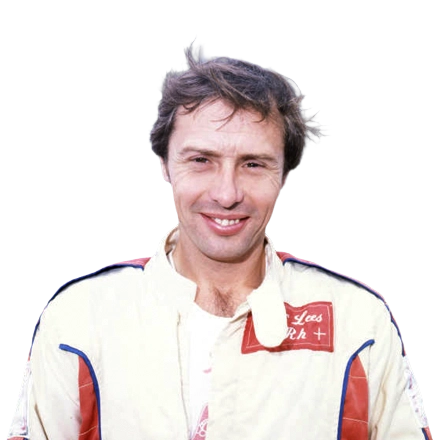
Geoffrey Thompson Lees is a British former racing driver whose career is a story of persistence, reinvention, and international success. Although his Formula One results never reflected his talent, Lees went on to build an outstanding second act in Japan, where he became one of the most respected foreign drivers of his generation.
Driver Bio
| Nationality | British |
| Birthplace | Atherstone, England, UK |
| Born | 1 May 1951 |
| First Grand Prix | 1978 British Grand Prix |
| Last Grand Prix | 1982 French Grand Prix |
| Years Active | 1978–1980, 1982 |
| Current/Last Team | Lotus |
Born near Kingsbury, Lees emerged during a fertile era for British motorsport, when the country was producing world-class engineers, teams, and drivers at every level. Like many ambitious racers of the 1970s, he climbed the traditional ladder through junior single-seaters before earning his chance in Formula One.
Formula One career
Ensign: 1978
Lees made his Formula One World Championship debut on 16 July 1978. His first opportunity came at his home event, the British Grand Prix, driving a privately entered Ensign run by Mario Deliotti, owner of an Alfa Romeo dealership in Birmingham.
It was a classic underdog chance, but Lees failed to qualify. Still, reaching a Formula One weekend at all was an important breakthrough.
Tyrrell and Shadow: 1979–1980
In 1979, Lees earned a one-off drive for Tyrrell, a far more established outfit. It offered a glimpse of what might have been possible with stronger backing and continuity.
A more regular chance came in 1980 with the struggling Shadow. By then, however, Shadow was in decline and unable to provide consistently competitive machinery. Later that same year, Lees also drove for the works Ensign team and unsuccessfully attempted to qualify a RAM-entered Williams in the United States.
Theodore, Lotus and final appearances: 1981–1982
Lees also appeared in the 1981 non-championship Formula One race at Kyalami for Theodore Racing, where he crashed into the barriers after front suspension failure.
Hoping to reset his career, he stepped back from Formula One to pursue a stronger route forward. His final World Championship appearances came in 1982 with single outings for Theodore and Team Lotus. In total, Lees participated in 12 Formula One World Championship Grands Prix, scoring no championship points.
While the statistics appear modest, they fail to capture the reality that Lees often drove uncompetitive or unstable cars, with little chance to show his full ability.
Formula Two success
Determined not to let Formula One define him, Lees joined Ralt with Honda power for the European Formula Two Championship. The move proved inspired.
He won the championship, underlining that his talent had never been in doubt. Lees hoped the title would earn a stronger Formula One return, but Honda chose to continue developing its Formula One engine programme rather than immediately place him in a top-level seat. That decision effectively closed the door on a serious Grand Prix comeback.
Japanese career
Formula Two and domestic stardom
Lees instead moved to Japan in the early 1980s—a decision that transformed his career. There he became one of the standout stars of the Japanese Formula Two Championship, winning the 1983 title and taking eight race victories.
Japan’s racing scene was growing rapidly at the time, attracting strong manufacturers, major sponsorship, and talented international drivers. Lees quickly became a central figure.
Sports cars and championships
He also enjoyed major success in sports car racing, representing leading Japanese marques in categories such as the Fuji Grand Champion Series, where he won three titles in 1986, 1988 and 1989.
Further honours followed in the All Japan Sports Prototype Championship, where he secured the C-class title in 1992. By then, Lees had become both highly respected and highly valued in Japanese motorsport circles.
Le Mans appearances
Lees also competed several times in the 24 Hours of Le Mans, with his best overall finish being sixth place in 1990. It was another sign of his versatility across multiple forms of racing.
Legacy
Geoff Lees is one of motorsport’s great examples of a driver whose career blossomed after Formula One. In Europe, he was often trapped in the wrong cars at the wrong time; in Japan, he became a champion, factory favourite, and long-term star.
Grand Prix Stats
| Race Entries | 12 |
| Race Starts | 5 |
| Did Not Start | 0 |
| Best Race Start | 16th |
| Best Race Finish | 7th |
| Retirements | 3 |
| First-Lap Retirements | 1 |
| Not Classified | 0 |
| Disqualified | 0 |
| Did Not Qualify | 7 |
Qualifying
| Qualifying Sessions | 12 |
| Reached Q3 | – |
| Q2 Eliminations | – |
| Q1 Eliminations | – |
| Did Not Qualify | 7 |
Complete Formula One World Championship results
| Year | Entrant | Chassis | Engine | 1 | 2 | 3 | 4 | 5 | 6 | 7 | 8 | 9 | 10 | 11 | 12 | 13 | 14 | 15 | 16 | WDC | Points |
|---|---|---|---|---|---|---|---|---|---|---|---|---|---|---|---|---|---|---|---|---|---|
| 1978 | Mario Deliotti Racing | Ensign N175 | Ford Cosworth DFV 3.0 V8 | ARG | BRA | RSA | USW | MON | BEL | ESP | SWE | FRA | GBR DNQ | GER | AUT | NED | ITA | USA | CAN | NC | 0 |
| 1979 | Candy Tyrrell Team | Tyrrell 009 | Ford Cosworth DFV 3.0 V8 | ARG | BRA | RSA | USW | ESP | BEL | MON | FRA | GBR | GER 7 | AUT | NED | ITA | CAN | USA | NC | 0 | |
| 1980 | Shadow Cars | Shadow DN11 | Ford Cosworth DFV 3.0 V8 | ARG | BRA | RSA 13 | USW DNQ | NC | 0 | ||||||||||||
| Shadow DN12 | BEL DNQ | ||||||||||||||||||||
| Theodore Shadow | MON DNQ | FRA DNQ | GBR | GER | AUT | ||||||||||||||||
| Unipart Racing Team | Ensign N180 | NED Ret | ITA DNQ | CAN | |||||||||||||||||
| RAM Racing | Williams FW07B | USA DNQ | |||||||||||||||||||
| 1982 | Theodore Racing Team | Theodore TY02 | Ford Cosworth DFV 3.0 V8 | RSA | BRA | USW | SMR | BEL | MON | DET | CAN Ret | NED | GBR | NC | 0 | ||||||
| John Player Team Lotus | Lotus 91 | FRA 12 | GER | AUT | SUI | ITA | CPL | ||||||||||||||
Teammates & Qualifying Head-to-Head
| Teammate | Years | Races | Qualifying H2H |
|---|---|---|---|
| Derek Daly | 1978 | 1 | – |
| Didier Pironi | 1979 | 1 | – |
| David Kennedy | 1980 | 5 | – |
| Jan Lammers | 1980 | 2 | – |
| Elio de Angelis | 1982 | 1 | – |