






























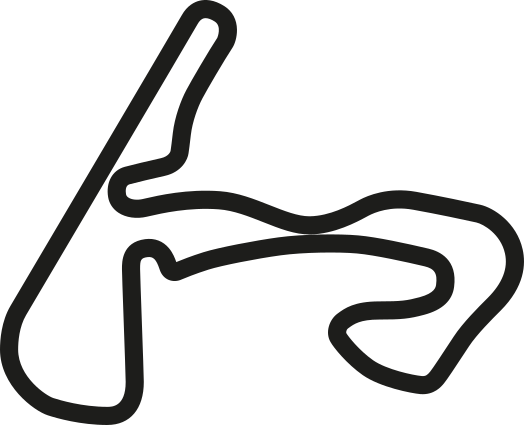




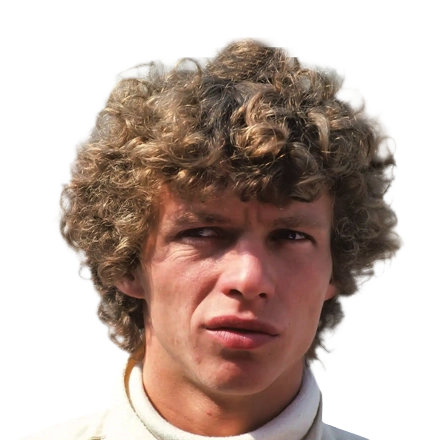
Few drivers in modern motorsport can match the range and longevity of Johannes Antonius “Jan” Lammers. Born on 2 June 1956 in Zandvoort, the Dutchman carved out one of racing’s most eclectic and enduring careers — from touring cars and Formula One to Le Mans glory, Japanese sportscar domination and even the Dakar Rally.
Driver Bio
| Nationality | Dutch |
| Birthplace | Zandvoort, Netherlands |
| Born | 2 June 1956 |
| First Grand Prix | 1979 Argentine Grand Prix |
| Last Grand Prix | 1992 Australian Grand Prix |
| Years Active | 1979–1982, 1992 |
| Current/Last Team | March |
Lammers is best known internationally for winning the 1988 24 Hours of Le Mans with Jaguar and Tom Walkinshaw Racing, sharing the victorious Silk Cut Jaguar with Johnny Dumfries and Andy Wallace. Yet that famous triumph represents only one chapter in a career that has stretched across more than four decades and virtually every corner of world motorsport.
After breaking into Formula One in 1979, Lammers spent four seasons in Grand Prix racing with Shadow, ATS, Ensign and Theodore. Although the machinery beneath him was rarely capable of matching his talent, he became known throughout the paddock as a naturally gifted and fearless driver. Opportunities with leading teams repeatedly came close — including possible drives with Ferrari, Lotus, Brabham and Renault — but circumstance, timing and financial realities often intervened.
Then came one of Formula One’s most remarkable returns. A full decade after his previous Grand Prix appearance, Lammers re-emerged in 1992 with March for the final two races of the season, setting a Formula One record for the longest gap between starts at the time.
Away from Formula One, Lammers built a reputation as one of the sport’s ultimate all-rounders. He competed in an extraordinary variety of categories, including Formula Ford, Formula 2, IndyCar, International Formula 3000, Japanese Formula 3000, the British Touring Car Championship, IMSA, FIA GT, the American Le Mans Series, Grand-Am and the Dakar Rally. Guest appearances ranged from the BMW M1 Procar Series and Grand Prix Masters to endurance events such as the Dubai 24 Hours and Gulf 12 Hours.
His success came in almost every type of racing car imaginable. Lammers became the youngest Dutch national racing champion in history when he won the 1973 Dutch Touring Car Championship at just 16, a feat he repeated in 1976. He later dominated the European Renault 5 Turbo Cup, securing back-to-back titles in 1983 and 1984.
As a single-seater driver, his breakthrough arrived in 1978 when he captured the European Formula 3 Championship — still making him the only Dutch driver ever to win the prestigious title. Along the way, he defeated future Formula One stars including Alain Prost, Nelson Piquet and Nigel Mansell.
Sports cars would ultimately become Lammers’ natural home. In addition to his Le Mans victory, he claimed the 1992 Japanese Sportscar Championship during the golden era of Group C prototype racing. Later, while balancing responsibilities as both driver and team owner, he won the 2002 and 2003 FIA Sportscar Championships with his own Racing for Holland team.
Lammers also proved influential away from the cockpit. In 1989, he founded Vitaal Racing, guiding Peter Kox to the EFDA Opel Lotus Euroseries title. He later launched Racing for Holland, which became a respected presence in international endurance racing between 2001 and 2007. From 2005 to 2009, he served as seatholder of the Dutch A1 Grand Prix team.
In recent years, Lammers has become one of the leading public figures behind the revival of the Dutch Grand Prix at Circuit Zandvoort. Acting as an ambassador and key driving force behind the project, he helped bring Formula One back to the famous seaside circuit in 2021, returning the sport’s top category to the dunes where his own story first began.
Early career
Touring cars
Born and raised in Zandvoort, Lammers grew up immersed in motorsport culture. As a teenager, he washed cars at a local advanced driving school run by Dutch touring-car legend Rob Slotemaker. Slotemaker quickly recognised the young Dutchman’s talent and encouraged him to pursue racing seriously.
Still too young to hold a full Dutch road licence, the teenager — affectionately nicknamed “Jantje”, or “Little John” — was already teaching skid-control techniques to drivers on private tracks. Slotemaker eventually placed him in a Simca Rallye 2 for the 1973 Dutch Touring Car Championship, and the results were immediate.
At just 16 years old, Lammers won his very first car race and went on to secure the national title in his rookie season, becoming the youngest Dutch motorsport champion in history.
Further seasons with the Simca followed, bringing more victories and growing recognition throughout the Netherlands. In 1976, he switched to an Opel Kadett GT/E run by Opel Dealer Team Holland and captured his second Dutch touring car crown.
Road to Formula One
Formula Ford
While still racing touring cars, Lammers began exploring single-seaters in Formula Ford during 1976. Driving a Crosslé in Benelux and European competition, he immediately demonstrated exceptional adaptability.
He stunned rivals by taking pole position in his very first Formula Ford race and scored victories at Jyllandsringen and Mengen. His standout wet-weather performance at the Formula Ford Festival at Brands Hatch further established him as one of Europe’s brightest young prospects.
Formula 3
A move into Formula 3 with Hawke in 1977 proved frustrating, but changing to Alan Docking’s Racing Team Holland operation for 1978 transformed Lammers’ career.
Teaming up alongside future Formula One driver Huub Rothengatter and future Indianapolis 500 winner Arie Luyendyk, Lammers delivered a sensational championship-winning season. Victories at Zandvoort, Magny-Cours, Karlskoga and Monza’s famous Lotteria race secured him the European Formula 3 title after a fierce battle with Sweden’s Anders Olofsson.
More impressively, he defeated an astonishing field of future stars that included Alain Prost, Nelson Piquet and Nigel Mansell. British magazine Autosport famously predicted at the time: “He just has to be a World Champion of the eighties.”
Formula 2
Lammers largely bypassed Formula 2 after receiving a direct offer to enter Formula One with Shadow in 1979. His only Formula 2 appearance came in 1980 at Zandvoort, where he retired from third place while driving a March-BMW.
Formula One
Lammers made his Formula One debut in 1979 with Shadow alongside fellow rookie Elio de Angelis. The team, however, was struggling financially and was rarely capable of challenging near the front.
Over four seasons, Lammers contested 41 Grand Prix for Shadow, ATS, Ensign and Theodore.
At ATS in 1980, he briefly showcased his potential by qualifying fourth at Long Beach before retiring on the opening lap with mechanical trouble. Strong performances also came at Zolder and Jarama, where reliability issues denied possible points finishes.
Lammers repeatedly found himself on the verge of major career breakthroughs. Colin Chapman considered him for Lotus, while Bernie Ecclestone tested him for Brabham alongside Nelson Piquet. In 1982, Ferrari approached him as a replacement for the late Gilles Villeneuve, only for a crash caused by a stuck throttle at Detroit to leave him with a broken thumb. Ferrari ultimately signed Patrick Tambay instead.
Even after his initial Formula One career ended, opportunities continued to surface. Tests and negotiations with Toleman, Tyrrell and DAMS all came close to reviving his Grand Prix prospects, though financial complications repeatedly halted progress.
Then, in 1992, came one final return. Replacing Karl Wendlinger at March, Lammers drove the Japanese and Australian Grands Prix, ten years after his previous Formula One appearance. He impressed immediately in wet conditions at Suzuka before gearbox failure ended his race, and later finished 12th in Adelaide. Plans for a full 1993 campaign collapsed when March’s financial troubles forced the team to fold.
Grand Prix Stats
| Race Entries | 41 |
| Race Starts | 23 |
| Did Not Start | 1 |
| Best Race Start | 4th |
| Best Race Finish | 9th |
| Retirements | 11 |
| First-Lap Retirements | 1 |
| Not Classified | 1 |
| Disqualified | 0 |
| Did Not Qualify | 17 |
Qualifying
| Qualifying Sessions | – |
| Reached Q3 | – |
| Q2 Eliminations | – |
| Q1 Eliminations | – |
| Did Not Qualify | 17 |
Stats by Season
| Year | Constructor | Entries | Starts | Wins | Podiums | Poles | Fastest Laps | Front Rows | DNF | Best Start | Best Result | Pts Finishes | Points | Championship |
|---|---|---|---|---|---|---|---|---|---|---|---|---|---|---|
| 1979 | Shadow | 15 | 12 | 0 | 0 | 0 | 0 | 0 | 5 | 14 | 9 | 0 | 0 | NC |
| 1980 | ATS / Ensign | 14 | 6 | 0 | 0 | 0 | 0 | 0 | 3 | 4 | 12 | 0 | 0 | NC |
| 1981 | ATS | 4 | 2 | 0 | 0 | 0 | 0 | 0 | 1 | 21 | 12 | 0 | 0 | NC |
| 1982 | Theodore | 6 | 1 | 0 | 0 | 0 | 0 | 0 | 1 | 26 | – | 0 | 0 | NC |
| 1992 | March | 2 | 2 | 0 | 0 | 0 | 0 | 0 | 1 | 23 | 12 | 0 | 0 | NC |
Stats by Constructor
| Constructor | Years | Entries | Starts | Wins | Podiums | Poles | Fastest Laps | Front Rows | DNF | Best Start | Best Result | Pts Finishes | Points |
|---|---|---|---|---|---|---|---|---|---|---|---|---|---|
| Shadow | 1979 | 15 | 12 | 0 | 0 | 0 | 0 | 0 | 5 | 14 | 9 | 0 | 0 |
| ATS | 1980–1981 | 10 | 5 | 0 | 0 | 0 | 0 | 0 | 3 | 4 | 12 | 0 | 0 |
| Ensign | 1980 | 8 | 3 | 0 | 0 | 0 | 0 | 0 | 1 | 19 | 12 | 0 | 0 |
| Theodore | 1982 | 6 | 1 | 0 | 0 | 0 | 0 | 0 | 1 | 26 | – | 0 | 0 |
| March | 1992 | 2 | 2 | 0 | 0 | 0 | 0 | 0 | 1 | 23 | 12 | 0 | 0 |
Teammates & Qualifying Head-to-Head
| Teammate | Years | Races | Qualifying H2H |
|---|---|---|---|
| Marc Surer | 1980 | 3 | – |
| Geoff Lees | 1980 | 2 | – |
| Slim Borgudd | 1981 | 1 | – |
| Emanuele Naspetti | 1992 | 2 | – |