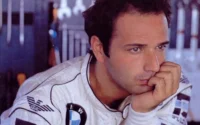


























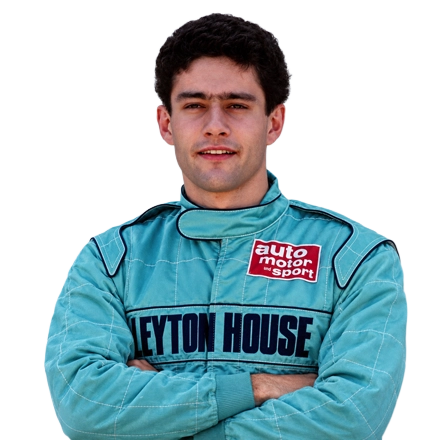
Karl Wendlinger’s Formula One career was interrupted by one of the most serious accidents of the 1994 season, but his racing story continued through major success in sports cars. Born in Kufstein on 20 December 1968, the Austrian progressed from karting and Formula Ford to become a leading junior driver, then part of Mercedes‘ celebrated young-driver programme.
Driver Bio
| Nationality | Austrian |
| Birthplace | Kufstein, Austria |
| Born | 20 December 1968 |
| First Grand Prix | 1991 Japanese Grand Prix |
| Last Grand Prix | 1995 Australian Grand Prix |
| Years Active | 1991–1995 |
| Current/Last Team | Sauber |
After finishing tenth in German Formula Three in 1988, Wendlinger won the championship in 1989. The next step brought him into Mercedes sports cars, where he shared the C11 programme with young talents Michael Schumacher and Heinz-Harald Frentzen and established drivers including Mauro Baldi and Jean-Louis Schlesser. It was an unusually strong environment in which to learn international endurance racing.
He combined Mercedes commitments with Formula 3000 for Helmut Marko in 1991. Mercedes motorsport chief Jochen Neerpasch also helped create F1 opportunities for the junior drivers. Schumacher went through Jordan to Benetton, while Wendlinger joined Leyton House for the final two Grands Prix of 1991, replacing Ivan Capelli.
His Japanese debut began from 22nd on the grid and ended in a first-corner incident involving JJ Lehto, Andrea de Cesaris and Emanuele Pirro. The rain-shortened Australian finale offered little more representative running: he was classified 20th, two laps behind Ayrton Senna. His championship introduction had amounted to two exceptionally disrupted races.
For 1992, the operation reverted to the March name, with Paul Belmondo in the other car. Money was scarce and the team continued with its existing machinery, modified to accommodate the tall Austrian. Wendlinger nevertheless qualified seventh at the opening South African Grand Prix, an impressive demonstration of speed in difficult circumstances.
Eighth in Spain was followed by fourth in Canada, where he finished a lap behind the winner and scored three points. Those points put him 12th in the championship, ahead of drivers including Capelli, Thierry Boutsen, Johnny Herbert and Stefano Modena. The result was particularly valuable to a team whose finances increasingly constrained its ability to compete.
Spain supplied a more specific example of those limits. As the track dried before the start, Footwork accepted a fine in order to change tyres late on the grid and went on to finish fifth and seventh. March could not afford the same penalty, leaving Wendlinger on the less suitable choice. His eighth place therefore reflected a financial restriction as well as the performance of the car and driver.
Sauber‘s new F1 programme offered Wendlinger a stronger base in 1993. Lehto initially took the headline results, but Wendlinger’s pace became increasingly evident. He qualified fifth at Donington before contact with Michael Andretti ended his race on the opening lap. At Monaco, a collision between the two Saubers brought another frustrating retirement and tension within the team.
The second half of the year was more productive. Wendlinger scored in Canada, then added points in Hungary, Italy and Portugal, including fourth at Monza. He finished with seven points and 12th in the championship, ahead of Lehto’s five points and 13th place. After two years in F1, he had begun turning the promise of the junior categories into regular results.
Frentzen joined him for 1994, with Sauber’s Ilmor engines now carrying Mercedes identification. Sixth in Brazil and fourth at San Marino gave Wendlinger a solid start. The deaths of Roland Ratzenberger and Senna at Imola then placed the entire sport under intense scrutiny as it travelled to Monaco.
During practice in Monte Carlo, Wendlinger’s car crashed at the chicane beyond the tunnel. He suffered severe head injuries and remained in a coma for weeks. The accident ended his season, and although a return was considered for Japan, his physical recovery was not sufficiently advanced. Regaining strength and fitness became the immediate priority.
The planned Japanese return was assessed through testing rather than simply setting a date for him to race. Those tests showed that his neck could not yet cope with the demands. The decision to wait meant that his recovery continued away from the championship for the remainder of 1994, with the opening of the next season becoming the new target.
He returned with Sauber, now Ford-powered, at the start of 1995. Four difficult races showed how demanding a full F1 comeback would be, and Jean-Christophe Boullion replaced him before Monaco. Wendlinger was recalled for the final two rounds, but the results did not secure a permanent return. His Grand Prix career was over, despite the determination that had brought him back to the cockpit.
Wendlinger later acknowledged that the effects of the Monaco accident had left him unable to manage the particular physical stresses of Formula One as he had before. That assessment explains the subsequent change of direction without treating his later sports-car success as evidence that the Grand Prix comeback should necessarily have worked. Different categories offered different demands and opportunities.
Sports cars provided the next substantial chapter. In 1999 he won the FIA GT Championship alongside Olivier Beretta, establishing himself again as a title-winning international driver. The achievement demonstrated that the end of his F1 career had not ended his capacity to compete at the highest level in another discipline.
His subsequent programme included DTM outings with Abt Audi and further GT racing. With JMB Racing, he drove a Maserati MC12 alongside Andrea Bertolini. He then joined Jetalliance, partnering Philipp Peter in 2006 and Ryan Sharp in 2007. The variety of teams and machinery reflected a long second career built around sports and touring cars.
The 2007 Daytona 24 Hours brought a frightening interruption when his Sigalsport BMW-powered Riley crashed. Wendlinger was taken to hospital as a precaution and the car retired. He continued racing, and in 2008 he and Sharp won the RAC Tourist Trophy at Silverstone for Jetalliance, taking the overall and GT1 honours ahead of the Maserati shared by Michael Bartels and Bertolini.
Away from racing, Wendlinger and his wife have two children; his son Jonas pursued football as a goalkeeper. His own familiar helmet used yellow and blue, with parallel blue bands, a blue circle and red-and-white arrow motifs, a recognisable design across both phases of his driving career.
Wendlinger’s record deserves to be read as a whole. The German F3 championship, Mercedes apprenticeship and promising Sauber performances explain why he was regarded as a major Austrian talent. His recovery and later FIA GT title explain why the story continued well beyond Monaco in 1994. The machinery changed, but he returned to winning at international level.
Grand Prix Stats
| Race Entries | 42 |
| Race Starts | 41 |
| Did Not Start | 1 |
| Best Race Start | 5th |
| Best Race Finish | 4th |
| Retirements | 24 |
| First-Lap Retirements | 3 |
| Not Classified | 0 |
| Disqualified | 0 |
| Did Not Qualify | 0 |
Qualifying
| Qualifying Sessions | 41 |
| Reached Q3 | 0 |
| Q2 Eliminations | 0 |
| Q1 Eliminations | 0 |
| Did Not Qualify | 0 |
Points
| Points Scored | 14 |
| Points Finishes | 7 |
| Most Points in a Single Season | 7 (1993) |
| Seasons with Points | 3 (1992, 1993, 1994) |
Stats by Season
| Year | Constructor | Entries | Starts | Wins | Podiums | Poles | Fastest Laps | Front Rows | DNF | Best Start | Best Result | Pts Finishes | Points | Championship |
|---|---|---|---|---|---|---|---|---|---|---|---|---|---|---|
| 1991 | Leyton House | 2 | 2 | 0 | 0 | 0 | 0 | 0 | 1 | 22 | 20 | 0 | 0 | NC |
| 1992 | March | 14 | 14 | 0 | 0 | 0 | 0 | 0 | 8 | 7 | 4 | 1 | 3 | 12th |
| 1993 | Sauber | 16 | 16 | 0 | 0 | 0 | 0 | 0 | 10 | 5 | 4 | 4 | 7 | 12th |
| 1994 | Sauber | 4 | 3 | 0 | 0 | 0 | 0 | 0 | 1 | 7 | 4 | 2 | 4 | 19th |
| 1995 | Sauber | 6 | 6 | 0 | 0 | 0 | 0 | 0 | 4 | 15 | 10 | 0 | 0 | NC |
Teammates & Qualifying Head-to-Head
| Teammate | Years | Races | Qualifying H2H |
|---|---|---|---|
| Mauricio Gugelmin | 1991 | 2 | 0-2 |
| Paul Belmondo | 1992 | 11 | 10-1 |
| Emanuele Naspetti | 1992 | 3 | 3-0 |
| JJ Lehto | 1993 | 16 | 8-8 |
| Heinz-Harald Frentzen | 1994, 1995 | 10 | 0-9 |