
























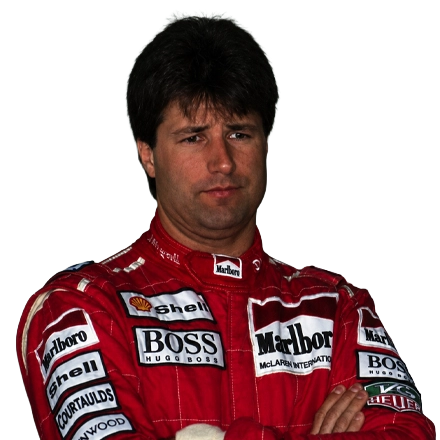
Michael Mario Andretti (born 5 October 1962) is an American former racing driver and team owner, and one of the most successful competitors in the history of American open-wheel racing. He won the 1991 CART championship and collected 42 victories during his career – more than any other driver in the CART era and one of the highest totals in American championship racing history.
Driver Bio
| Nationality | American |
| Birthplace | Bethlehem, Pennsylvania, US |
| Born | 5 October 1962 |
| First Grand Prix | 1993 South African Grand Prix |
| Last Grand Prix | 1993 Italian Grand Prix |
| Years Active | 1993 |
| Current/Last Team | McLaren |
After stepping out of the cockpit, Andretti became equally prominent as a team owner. His organisation, later known as Andretti Autosport, won multiple IndyCar championships and Indianapolis 500s. Motorsport runs particularly deep in the family: Michael is the son of Formula One World Champion and IndyCar legend Mario Andretti, while his own son Marco also became an IndyCar driver.
Early life and education
Andretti was born in Bethlehem, Pennsylvania, in the Lehigh Valley, on 5 October 1962. His father Mario Andretti was already building one of the great careers in motorsport, ultimately becoming a four-time IndyCar champion and the 1978 Formula One World Champion.
The wider family tree is almost absurdly well stocked with racing drivers. Michael’s brother Jeff competed in IndyCar, while his uncle Aldo Andretti raced open-wheel cars until injury ended his career. Aldo’s sons John and Adam also raced professionally, with John becoming a familiar name in both IndyCar and NASCAR.
When Michael’s eldest son Marco entered IndyCar in 2006, the Andrettis became the first family to have five members – Mario, Michael, Jeff, John and Marco – compete at CART, Champ Car or IndyCar level.
Michael attended Nazareth Area High School before studying at Northampton Community College in Bethlehem.
Career
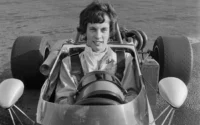
Andretti’s route into professional racing began with an extremely successful karting career. Over eight years he won 50 of the 75 races he entered before moving into cars.
He earned his SCCA National Licence in 1980 and quickly justified it. In 1981 he won six races and claimed the SCCA Northeast Division Formula Ford championship, while also making appearances in regional Formula Vee competition.
The following year brought another title. Andretti won six of 11 races to secure the 1982 Robert Bosch US Formula Super Vee Championship. He opened 1983 with another Super Vee victory before progressing to Formula Atlantic, and in 1984 he added the FIA Formula Mondial North American Cup to his growing collection of championships.
Sports cars were already appearing on the CV, too. Andretti was supposed to make his Le Mans debut in 1982 alongside his father, but their Mirage M12 was disqualified just 80 minutes before the start.
They returned in 1983 with Philippe Alliot in a Kremer Porsche 956 and finished third overall. Michael also shared a Porsche 935 with Mario, A. J. Foyt and Preston Henn in the Riverside 6 Hours, although the car failed to finish.
For the 1984 24 Hours of Daytona, Michael and Mario drove a works Porsche 962 on the car’s competition debut. They took pole position, but an engine failure ended the race early.
CART
Andretti entered CART in 1983 with Kraco Enterprises and became a full-time competitor the following season. Five third places helped him finish seventh in the championship, while fifth in his first Indianapolis 500 earned him joint Rookie of the Year honours with Roberto Guerrero.
His first CART victory arrived at Long Beach in 1986, and it opened the door to a serious championship challenge against Bobby Rahal.
One of the defining moments of that season came at Portland. Michael led approaching the finish but ran out of fuel on the final lap, allowing his father Mario to sweep past and win by just 0.07 seconds. Father had beaten son on Father’s Day, naturally.
Michael responded with victories including Milwaukee and Phoenix and entered the finale at Tamiami Park just three points behind Rahal. A broken halfshaft ended Andretti’s race – and his title hopes.
He was runner-up again in 1987. Victory in the Marlboro 500 brought him back into contention, while a dominant home win at Nazareth kept the fight alive until Rahal eventually secured the title. Andretti closed the season by winning at Tamiami.
His racing activities remained broad. He partnered Alessandro Nannini in an Alfa Romeo at the inaugural World Touring Car Championship race at Monza, finishing 16th overall and second in class. He also shared a Chevrolet Corvette GTP with cousin John Andretti at Mid-Ohio, finishing 11th.
At Le Mans in 1988, Porsche entered a 962C for Michael, Mario and John Andretti. The car ran competitively during the first half of the race before repairs and an engine problem slowed it to sixth overall. Michael and Mario returned to Daytona with a Porsche 962 in 1989, but brake trouble forced another retirement.
The 1988 CART season itself was relatively quiet. Andretti remained with Kraco and won the non-championship Marlboro Challenge, but failed to score a championship race victory.
A major change followed for 1989 when he joined Newman/Haas Racing alongside his father. Michael won at Toronto and Michigan and finished third in the championship.
He pushed even harder in 1990, winning five races and taking four pole positions. Al Unser Jr. ultimately secured the title, but Andretti once again finished runner-up.
Then came 1991.
Andretti won eight of the season’s 17 races, took eight poles and led more than half of all the laps completed during the championship. His campaign didn’t begin smoothly – he retired from the first two races and endured another painful near-miss at Indianapolis – but the second half of the year was devastatingly effective.
He won four of the final five races, and when championship rival Bobby Rahal retired from the finale at Laguna Seca, Andretti finally secured the CART title. A day earlier, just for good measure, he had also won the non-championship Marlboro Challenge.
Andretti remained with Newman/Haas for 1992. After another slow start he won three races in four during the middle of the year and later added two more victories, including the Laguna Seca finale.
It still wasn’t quite enough. Rahal beat him to the championship by only four points.
Andretti then made one of the biggest moves of his career: he left CART for Formula One. His seat at Newman/Haas went to reigning Formula One World Champion Nigel Mansell, who promptly won the 1993 CART title in his rookie season.
Michael’s years racing alongside Mario also produced some unique family milestones. The pair formed the first father-and-son front row in major American open-wheel racing and recorded 15 father-son podium appearances together.
Indianapolis 500
For all Andretti achieved in American racing, Indianapolis became the race that somehow always escaped him.
He made his Indy 500 debut in 1984 and finished fifth, sharing Rookie of the Year honours with Roberto Guerrero.
In 1991 he was leading with 12 laps remaining before engaging in a spectacular late-race battle with Rick Mears. The pair traded outside passes for the lead into Turn One, but Mears ultimately prevailed and Andretti finished second.
If that was painful, 1992 was brutal.
Andretti dominated the race, leading roughly four-fifths of the distance and at one stage holding a two-lap advantage. With only 11 laps remaining, the fuel pump failed and the car rolled to a stop. He was classified 13th.
He also retired while leading at Indianapolis in 1989, 1995 and, much later, 2003.
Andretti ultimately became the driver to lead the most Indianapolis 500 laps without winning the race – an extraordinary statistic that summed up both his speed at the Speedway and the remarkable sequence of misfortune associated with the Andretti family there.
Formula One
Andretti’s first potential route into Formula One appeared as early as 1986. Haas Lola needed a replacement for the injured Patrick Tambay at the Detroit Grand Prix, and Mario Andretti suggested Michael for the drive.
Team owner Carl Haas agreed, but Formula One’s governing body refused to grant Michael the required Super Licence. Eddie Cheever received the drive instead.
Six years later there would be no such obstacle.
Andretti signed for McLaren for the 1993 Formula One season, partnering three-time World Champion Ayrton Senna in the Ford-powered MP4/8.
Expectations were enormous. Team principal Ron Dennis publicly suggested Andretti had the ability to win Grands Prix and potentially become World Champion.
Unfortunately, almost everything about the season made his transition difficult.
Andretti had limited experience of most European circuits, while new restrictions on practice mileage reduced the amount of track time available for learning them. He was also adjusting from comparatively straightforward Indy cars to a technically sophisticated McLaren equipped with systems such as active suspension and traction control.
Standing starts were unfamiliar, too.
The season began badly. Andretti crashed at Kyalami and was involved in a huge first-lap collision with Gerhard Berger‘s Ferrari in Brazil. At Donington Park he qualified sixth but collided with Karl Wendlinger‘s Sauber on the opening lap.
At Imola, another clash with Wendlinger ended a drive that had shown genuine promise and might have produced a podium.
Andretti finally reached the finish in Spain, taking fifth place and scoring his first Formula One points.
Results remained inconsistent, however. His decision to continue living in the United States and commute to European races and tests was widely criticised, with figures inside Formula One arguing that it prevented him from fully integrating with the team and maximising testing opportunities.
Andretti himself was under relentless pressure, particularly with McLaren test driver Mika Häkkinen waiting in the wings.
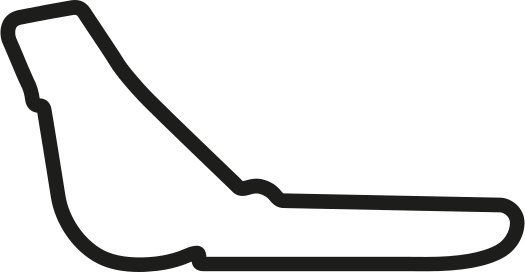
There were still flashes of quality. He scored points on three occasions, and at the Italian Grand Prix at Monza he produced easily his strongest Formula One performance.
After early problems, Andretti fought his way back through the field and finished third.
It was his first Formula One podium – and, remarkably, his final Grand Prix.
With three races remaining, Andretti and McLaren agreed to part company. Häkkinen replaced him.
The reasons for Andretti’s difficult season have been debated ever since. His son Marco later claimed that McLaren had deliberately undermined Michael in order to replace him with the less expensive Häkkinen, although that accusation has never been established as fact.
Häkkinen subsequently offered a different explanation, arguing that Andretti’s decision to remain based in America limited his testing and weakened his relationship with the team. He also suggested Michael underestimated the sacrifices required to succeed in Formula One.
Others have wondered what might have happened had Andretti remained for 1994, when many electronic driver aids were banned. With more knowledge of the circuits and cars that were somewhat closer in philosophy to those he knew from CART, perhaps the story would have been different.
Mario Andretti later expressed regret that Michael did not remain in Formula One longer.
Instead, Michael went home.
Return to CART
Andretti’s Formula One difficulties disappeared almost instantly when he climbed back into an Indy car.
He joined Chip Ganassi Racing for 1994 and won his very first race back, dominating at Surfers Paradise and leading every lap. It was also Reynard’s first CART victory on its debut.
Andretti won again at Toronto, extending an extraordinary record at the circuit. By the time his career ended, he had won there seven times.
He returned to Newman/Haas in 1995 after the departure of Nigel Mansell. Although Toronto provided his only victory of the season, Andretti scored points in every round and finished fourth in the championship.
In 1996 he was back in the title hunt. Five victories carried him to second in the standings behind Jimmy Vasser during a difficult season overshadowed by the death of Jeff Krosnoff and the split between CART and the newly created Indy Racing League.
The following years were tougher as Newman/Haas struggled with its Swift chassis, but the team’s move back to Lola machinery in 2000 revived Andretti’s fortunes. He won at Motegi and, naturally, Toronto again.
There was one more attempt at Le Mans in 1997, when Andretti shared a Courage C36 with Mario and Olivier Grouillard. An accident during the night forced them to retire, and Michael never returned to Le Mans as a driver.
By 2001, another Indianapolis 500 attempt had become a priority. Newman/Haas did not want to enter the IRL event, so Andretti moved to Team Green.
At Indianapolis he led 16 laps and was actually leading during a rain delay shortly after half distance. Had officials stopped the race permanently, Andretti could have been declared the winner.
They didn’t.
The race restarted, and a puncture plus pit-lane contact with eventual winner Hélio Castroneves cost him time. Andretti finished third.
Later that year, it was announced that he had bought into Team Green and planned to move the operation into the Indy Racing League.
His final CART season came in 2002. At Long Beach, the scene of his first series victory 16 years earlier, Andretti took career win number 42.
It was an appropriately tidy piece of symmetry.
Those 42 wins made him the most successful driver of the CART era and placed him among the leading winners in the history of American championship racing. His eight victories during the 1991 championship season also tied the modern single-season benchmark.
Across his career, Andretti finished inside the championship top ten an extraordinary 17 times.
Semi-retirement and team ownership
Andretti began 2003 by contesting the opening four Indy Racing League races before making what was intended to be his final Indianapolis 500 appearance.
Once again, he led – 28 of the opening 94 laps – and once again, Indianapolis found a new way to deny him. A throttle-linkage failure ended his challenge.
Andretti then stepped away from full-time driving and concentrated on team ownership.
His investment in Team Green helped create Andretti Green Racing, which moved into the IndyCar Series for 2003.
Success arrived quickly.
Tony Kanaan won the 2004 IndyCar championship, and Dan Wheldon followed with the 2005 title. That season was particularly memorable, with the team winning 11 of 17 races and Wheldon taking the Indianapolis 500.
Dario Franchitti added another championship in 2007 – the team’s third in four seasons – as well as another Indianapolis 500 victory.
Michael couldn’t entirely stay out of the car, though.
He returned for the 2006 Indianapolis 500, partly to help rookie son Marco through his first appearance. With four laps remaining, Michael himself was leading.
A lap later Marco went past him.
For a brief moment, the possibility of an Andretti father-and-son one-two at Indianapolis was very real. Michael eventually finished third, while Marco came agonisingly close to victory before Sam Hornish Jr. passed him metres from the finish line on the final lap.
Michael returned once more in 2007, qualifying 11th and finishing 13th before declaring that his Indianapolis driving career was finally over.
His record there was remarkable: 16 starts, a best finish of second and 431 laps led, having led the race in nine different editions – but never a victory.
The family joke about the “Andretti curse” had plenty of material to work with.
The racing operation continued to grow, eventually becoming Andretti Autosport. Michael served as both owner and strategist, including during Ryan Hunter-Reay’s successful campaigns.
Hunter-Reay won the 2014 Indianapolis 500 after a thrilling battle with Hélio Castroneves, adding another major victory to the Andretti organisation’s record.
Andretti also expanded beyond IndyCar. In 2018, his organisation partnered Ryan Walkinshaw’s operation and Zak Brown’s United Autosports to form Walkinshaw Andretti United in the Australian Supercars Championship.
The Andretti name later expanded into Extreme E as well.
Michael also pursued the family’s return to Formula One – this time as a constructor rather than a driver. In February 2022, Andretti announced that a request had been submitted to the FIA for an Andretti-branded Formula One entry.
Formula One rejected the proposed 2026 entry in January 2024, while indicating that a potential future application connected to a 2028 entry could receive different consideration.
In October 2024, Andretti stepped down from his role as CEO of Andretti Global, moving into a strategic advisory position.
Other activities
Andretti’s business interests have extended well beyond running race teams.
In 1996, he invested in a Toyota dealership in Pennsylvania, while Andretti Sports Marketing later became involved in promoting racing events including the Milwaukee Mile IndyCar race, the Indy Grand Prix of Louisiana, the Miami ePrix and Global RallyCross events.
He also ventured into reality television.
Andretti appeared on the fifth season of The Celebrity Apprentice in 2012, joining at short notice after his son Marco withdrew following the death of close friend Dan Wheldon shortly before filming was due to begin.
Michael lasted four episodes before being fired following a Buick Verano presentation challenge.
Personal life
Andretti married Sandra “Sandy” Spinozzi in 1985. They had two children, Marco and Marissa, before divorcing in 1996.
He married Leslie Wood in December 1997, and their son Lucca was born in 1999. The couple later separated and divorced.
In 2006, Andretti married model and actress Jodi Ann Paterson at the Andretti Winery in California’s Napa Valley. They later had twins, Mario and Miati, born in 2014.
Awards
Andretti’s achievements have earned him recognition across American motorsport.
He was inducted into the National Italian American Sports Hall of Fame in 2002 and the Motorsports Hall of Fame of America in 2008.
Further honours followed with induction into the Long Beach Grand Prix Walk of Fame in 2010, the Canadian Motorsport Hall of Fame’s International category in 2012 and the Indianapolis Motor Speedway Hall of Fame that same year.
For all the drama surrounding Formula One and Indianapolis, Michael Andretti’s career is ultimately defined by the numbers: a CART championship, 42 victories and nearly two decades spent fighting near the front of American open-wheel racing.
Indianapolis may never have given him the Borg-Warner Trophy as a driver, but few racers have spent quite so much time threatening to win it – and, as a team owner, Andretti eventually found plenty of other ways to make his name part of the race’s history.
Grand Prix Stats
| Race Entries | 13 |
| Race Starts | 13 |
| Did Not Start | 0 |
| Best Race Start | 5th |
| Best Race Finish | 3rd |
| Retirements | 7 |
| First-Lap Retirements | 3 |
| Not Classified | 0 |
| Disqualified | 0 |
| Did Not Qualify | 0 |
Podiums
| Podiums | 1 |
| First Podium | 1993 Italian Grand Prix |
| Last Podium | 1993 Italian Grand Prix |
| 1st Place | 0 |
| 2nd Place | 0 |
| 3rd Place | 1 |
| Most Consecutive Podiums | 0 |
| Most Podiums in a Single Season | 1 |
| Seasons with Podiums | 1 |
Qualifying
| Qualifying Sessions | 13 |
| Reached Q3 | – |
| Q2 Eliminations | – |
| Q1 Eliminations | – |
| Did Not Qualify | 0 |
Points
| Points Scored | 7 |
| Points Finishes | 3 |
| Most Points in a Single Season | 7 |
| Seasons with Points | 1 |
Stats by Season
| Year | Constructor | Entries | Starts | Wins | Podiums | Poles | Fastest Laps | Front Rows | DNF | Best Start | Best Result | Pts Finishes | Points | Championship |
|---|---|---|---|---|---|---|---|---|---|---|---|---|---|---|
| 1993 | McLaren | 13 | 13 | 0 | 1 | 0 | 0 | 0 | 7 | 5 | 3 | 3 | 7 | 11th |
Stats by Constructor
| Constructor | Years | Entries | Starts | Wins | Podiums | Poles | Fastest Laps | Front Rows | DNF | Best Start | Best Result | Pts Finishes | Points |
|---|---|---|---|---|---|---|---|---|---|---|---|---|---|
| McLaren | 1993 | 13 | 13 | 0 | 1 | 0 | 0 | 0 | 7 | 5 | 3 | 3 | 7 |
Teammates & Qualifying Head-to-Head
| Teammate | Years | Races | Qualifying H2H |
|---|---|---|---|
| Ayrton Senna | 1993 | 13 | 0-13 |