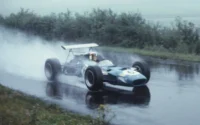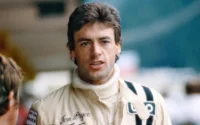






































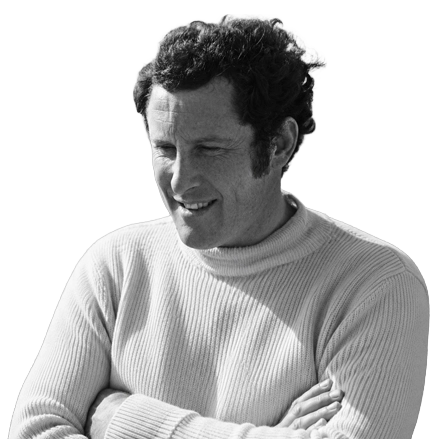
Graham Peter McRae (5 March 1940 – 4 August 2021) was a New Zealand racing driver, engineer and constructor who became one of the greatest Formula 5000 competitors in the category’s history. A dominant force during the early 1970s, McRae won the Tasman Series three consecutive times between 1971 and 1973, claimed the 1972 L&M Continental Formula 5000 Championship in the United States and later secured the 1978 Australian Drivers’ Championship. He also built his own successful racing cars through McRae Cars.
Driver Bio
| Nationality | New Zealander |
| Birthplace | Wellington, New Zealand |
| Born | 5 March 1940 |
| Died | 4 August 2021 |
| First Grand Prix | 1973 British Grand Prix |
| Last Grand Prix | 1973 British Grand Prix |
| Years Active | 1973 |
| Current/Last Team | Frank Williams Racing Cars |
Although he made only one Formula One World Championship start, McRae earned international recognition for his achievements in Formula 5000 and was named Rookie of the Year at the 1973 Indianapolis 500.
Early career
Born in Wellington, New Zealand, McRae trained as an engineer before beginning his racing career in local sports car events and hill climbs during the early 1960s. He competed regularly at circuits such as Levin before moving into New Zealand’s 1.5-litre twin-cam formula using an ageing Formula Three chassis.
Never content simply to drive, McRae soon designed and built his own National Formula car. The slim, innovative McRae chassis dominated the 1968–69 New Zealand championship, defeating highly regarded rivals including David Oxton, Ken Smith and Bert Hawthorne.
His performances also brought opportunities in the Tasman Series, where he impressed despite competing with significantly less powerful machinery. At Levin he qualified only 1.8 seconds slower than Jochen Rindt despite giving away around 160 horsepower and almost matched the pace of Graham Hill‘s Lotus 49. Those displays earned McRae the New Zealand Driver to Europe scholarship, allowing him to contest several Formula Two races in 1969 with an older Brabham BT23.
Formula 5000 dominance
McRae established himself as one of Formula 5000’s leading stars in Europe by finishing third in the 1970 European Championship before capturing the title in 1971. His aggressive driving style, immense self-confidence and occasional impatience earned him the nickname “Cassius”, a reference to heavyweight boxing champion Muhammad Ali, then known as Cassius Clay.
The standard of competition in Formula 5000 was exceptionally high, with McRae regularly racing against established Formula One drivers including Brian Redman, Trevor Taylor, Mike Hailwood, Frank Gardner, Peter Gethin and fellow New Zealander Howden Ganley.
His greatest successes came between 1971 and 1973, when he won the prestigious Tasman Series three years in succession. In 1972, he added the United States L&M Continental Formula 5000 Championship to his growing list of achievements, taking three victories against strong opposition including David Hobbs and Sam Posey. Despite competing on both sides of the Atlantic during the same season, he also finished third in the European Formula 5000 Championship.
McRae demonstrated that Formula 5000 machinery could challenge Formula One cars when he finished seventh overall—and first among the Formula 5000 runners—in the BRDC International Trophy, at one stage running ahead of Graham Hill’s Brabham and matching the pace of the McLarens driven by Denny Hulme and Peter Revson.
His performances even earned him a potential Formula One opportunity with Tyrrell after Jackie Stewart was sidelined by illness, although scheduling conflicts prevented the appearance from happening.
Competition became tougher in 1973 as James Hunt and Jody Scheckter arrived in the American Formula 5000 series with stronger financial backing, but McRae remained competitive, while also continuing to race in Europe. Financial difficulties and development challenges limited his later campaigns, although he still showed flashes of his old speed.
His final major championship success came in 1978 when he claimed the Australian Drivers’ Championship, giving him a fifth Formula 5000 title.
Formula One and Indianapolis
McRae’s only Formula One World Championship appearance came at the 1973 British Grand Prix, driving for Frank Williams Racing Cars. Unfortunately, the car was uncompetitive, and his race ended on the opening lap with retirement.
The same year he fulfilled another lifelong ambition by competing in the Indianapolis 500. Despite limited oval racing experience, he finished 16th and was awarded the prestigious Rookie of the Year honour for his impressive debut.
McRae Cars
McRae’s engineering ability matched his driving talent.
In 1972, together with designer Len Terry and Malcolm Bridgland, he developed a new Formula 5000 car initially known as the Leda LT27. After McRae and businessman John Heynes purchased Bridgland’s interest, the company became McRae Cars Ltd, based in Poole, Dorset, and the car was renamed the McRae GM1.
The GM1 proved highly successful, with fourteen examples built between 1972 and 1973. It enjoyed considerable success in Formula 5000 and later in the British Hill Climb Championship, where Roy Lane became one of its most successful exponents.
McRae continued developing new designs, producing the one-off GM2 in 1973 before selling the concept to Jack McCormack, who developed it into the Talon. A further evolution, the GM3, appeared in 1976 before later forming the basis of the GM9 Can-Am car.
Away from racing, McRae also applied his engineering skills to road cars. In the 1990s he created one of the most faithful replicas of the Porsche 356 Speedster, using Porsche 914 mechanical components and carefully reproducing the appearance of the original 1954–55 cars. Around 38 examples were built before illness forced production to cease.
Death and legacy
McRae died on 4 August 2021 at the age of 81 after several years of ill health.
Remembered as both an outstanding driver and gifted engineer, he occupies a unique place in New Zealand motorsport history. His dominance of Formula 5000, success on four continents and willingness to design and build his own championship-winning cars made Graham McRae one of the most influential competitors the category has ever produced.
Grand Prix Stats
| Race Entries | 1 |
| Race Starts | 1 |
| Did Not Start | 0 |
| Best Race Start | 28th |
| Best Race Finish | – |
| Retirements | 1 |
| First-Lap Retirements | 1 |
| Not Classified | 0 |
| Disqualified | 0 |
| Did Not Qualify | 0 |
Qualifying
| Qualifying Sessions | 1 |
| Reached Q3 | 0 |
| Q2 Eliminations | 0 |
| Q1 Eliminations | 0 |
| Did Not Qualify | 0 |
Stats by Season
| Year | Constructor | Entries | Starts | Wins | Podiums | Poles | Fastest Laps | Front Rows | DNF | Best Start | Best Result | Pts Finishes | Points | Championship |
|---|---|---|---|---|---|---|---|---|---|---|---|---|---|---|
| 1973 | Frank Williams Racing Cars | 1 | 1 | 0 | 0 | 0 | 0 | 0 | 1 | 28 | n/a | 0 | 0 | NC |
Stats by Constructor
| Constructor | Years | Entries | Starts | Wins | Podiums | Poles | Fastest Laps | Front Rows | DNF | Best Start | Best Result | Pts Finishes | Points |
|---|---|---|---|---|---|---|---|---|---|---|---|---|---|
| Frank Williams Racing Cars | 1973 | 1 | 1 | 0 | 0 | 0 | 0 | 0 | 1 | 28 | n/a | 0 | 0 |
Teammates & Qualifying Head-to-Head
| Teammate | Years | Races | Qualifying H2H |
|---|---|---|---|
| Howden Ganley | 1973 | 1 | – |