


















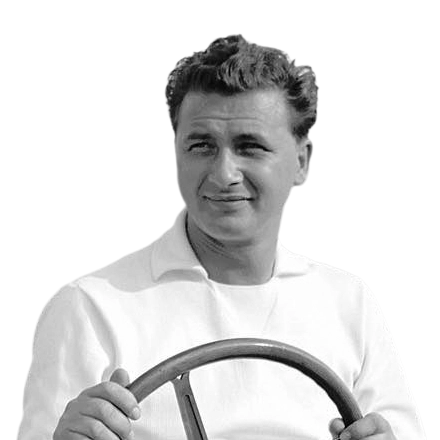
Hans Herrmann was one of Germany’s most enduring and improbable racing figures—a Formula One podium finisher, endurance racing master, and the man who delivered Porsche’s first overall victory at the 24 Hours of Le Mans.
| Nationality | German |
|---|---|
| Born | 23 February 1928 Stuttgart, Württemberg, Germany |
| Died | 9 January 2026 (aged 97) Germany |
Born in Stuttgart, Herrmann’s career stretched across motorsport’s most dangerous and transformative decades. In Formula One, he competed in 19 World Championship Grand Prix between 1953 and 1962, scoring one podium finish and 10 championship points at a time when simply finishing a race was a triumph. In sports car racing, he became a Porsche legend, winning Le Mans outright in 1970 at the wheel of a Porsche 917, a victory that sealed both his reputation and his retirement.
After the death of Tony Brooks in 2022, Herrmann became the last surviving Formula One podium finisher from the 1950s—a living link to the sport’s most perilous era.
From baker to road-race survivor
Herrmann’s path into racing was anything but conventional. Trained as a baker by trade, he entered motorsport in the immediate post-war years and soon found himself working alongside pre-war legends such as Alfred Neubauer, while competing in some of the most brutal events ever staged. His career spanned the era of the Mille Miglia, Targa Florio, and Carrera Panamericana, making him one of the last firsthand witnesses to a time when public roads doubled as race circuits.
He earned the nickname “Hans im Glück”—“Lucky Hans”—after surviving a string of incidents that would have ended most careers. The most famous came during the 1954 Mille Miglia, when a railway crossing gate dropped just moments before an oncoming express train. Driving a low-slung Porsche 550 Spyder, Herrmann realised braking was impossible. He tapped navigator Herbert Linge on the helmet to make him duck—and the Porsche slipped under the barrier and across the tracks seconds before the train thundered past, leaving spectators stunned.
Mercedes-Benz and the Silver Arrows
Herrmann’s talent earned him a place with the Mercedes-Benz factory team from 1954 to 1955, where he served as a junior driver behind giants such as Juan Manuel Fangio, Karl Kling, Hermann Lang, and later Stirling Moss.
At the 1954 French Grand Prix, the returning Silver Arrows dominated with a 1–2 finish. Herrmann set the fastest lap but was forced to retire. Later that season, he claimed a podium finish at the Swiss Grand Prix, despite often being assigned older or less reliable versions of the Mercedes-Benz W196.
The 1955 Argentine Grand Prix tested drivers to the limit in extreme heat. When Kling and Moss were forced to retire early, Herrmann was drafted in to share driving duties, finishing fourth and earning a shared championship point. Fangio won the race by a staggering two laps. Herrmann also showed exceptional pace in the 1955 Mille Miglia with the Mercedes-Benz 300 SLR, matching Moss for speed before reliability again intervened.
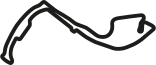
His season—and Mercedes’ racing program—was cut short after a crash in practice for the 1955 Monaco Grand Prix. Though a return at the Targa Florio was planned, the fatal Le Mans disaster later that year brought Mercedes’ motorsport activities to an abrupt halt.
Formula One Other teams
In the years that followed, Herrmann became one of Formula One’s most versatile privateer drivers, racing for Cooper, Maserati, and BRM. His adaptability was tested repeatedly, none more so than at the 1959 German Grand Prix at AVUS, where brake failure sent his BRM airborne in a terrifying crash. Herrmann was thrown clear of the car and slid along the track as it somersaulted behind him—yet again walking away from an accident that reinforced his uncanny reputation for survival.
Porsche, persistence, and frustration
Herrmann’s relationship with Porsche defined much of his career. Driving various iterations of the Porsche 718, he achieved notable success in sports car racing, including victories at the 1960 12 Hours of Sebring and the Targa Florio.
When Formula One regulations changed in 1961, allowing the open-wheel Porsche 718 to compete, the results were underwhelming. Herrmann finished 15th (last) in the Dutch Grand Prix, a race notable for being the first F1 World Championship event with no retirements. Feeling overlooked within Porsche’s hierarchy—particularly as teammates Dan Gurney and Jo Bonnier received greater support—Herrmann left the team at the start of 1962. Though Gurney later scored wins in the Porsche 804, the company withdrew from Formula One entirely at the end of the season.
The Abarth years
From 1962 to 1965, Herrmann drove for Abarth, competing primarily in hillclimbs and smaller sports car events. While outright victories were rare, the lightweight Abarths dominated their classes from 850cc to 1600cc, and Herrmann’s role as the team’s only professional driver gave him deep insight into car testing and development.
His departure came abruptly in 1965, after dissatisfaction with car preparation for the Schauinsland hillclimb. Herrmann returned home instead—to witness the birth of his son, Dino—and soon afterward ended his association with Abarth, setting his sights back on Stuttgart.
Porsche returns—and Le Mans destiny
In 1966, Herrmann returned to Porsche as the company renewed its push in the World Sportscar Championship. Early results with the underpowered Porsche 906 and its successors brought podiums but not victories. Breakthroughs followed in 1968, when Herrmann won both the 24 Hours of Daytona and the 12 Hours of Sebring, partnering with Jo Siffert.
The 1000 km Nürburgring, however, remained cruelly elusive. Despite competing in every edition since 1953, Herrmann finished second three consecutive times from 1968 to 1970, beaten by teammates including Siffert and Vic Elford.
At Le Mans in 1969, victory slipped away by just 120 meters in a Porsche 908. One year later, redemption arrived.
Assigned to Porsche Salzburg, the Austrian factory-backed team, Herrmann partnered with Richard Attwood in a Porsche 917K, painted in Austria’s red and white colours. In torrential rain, attrition ravaged the field. Of only seven finishers, Herrmann and Attwood emerged victorious, securing Porsche’s first overall Le Mans win in 1970.
Retirement, business, and later life
Before the race, Herrmann had half-jokingly promised his wife that a Le Mans victory would mean retirement. Having witnessed too many fatal accidents—including the death of a close friend and neighbour, Gerhard Mitter, in 1969—he kept his word. At age 42, Herrmann announced his retirement on live television after parading the winning car through Stuttgart, from the Porsche factory to city hall.
To exit his contract with Porsche Salzburg, Herrmann was required to recommend a successor—a task he completed for Louise Piëch. He then turned his attention to business, building a successful automotive supply company. His later life was not without drama; in the 1990s, he survived a kidnapping, escaping after being held for hours in the trunk of a car.
Herrmann remained a respected figure in historic motorsport, regularly demonstrating classic racing cars at events such as the Solitude Revival. He died on 9 January 2026, aged 97.
Few drivers lived as long—or escaped as often—as Hans Herrmann.
Hans Herrmann Formula One World Championship career
| F1 Career | 1953–1955, 1957–1961, 1966, 1969 |
|---|---|
| Teams | Teams Veritas, Mercedes, Maserati, Cooper, BRP, Porsche, privateer Ecurie Bonnier |
| Entries | 22 (18 starts) |
| Championships | 0 |
| Wins | 0 |
| Podiums | 1 |
| Career points | 10 |
| Pole positions | 0 |
| Fastest laps | 1 |
| First entry | 1953 German Grand Prix |
| Last entry | 1969 German Grand Prix |
Hans Herrmann Teammates
| 18 drivers | Involvement | First Year | Last Year |
|---|---|---|---|
| Karl Kling | 6 | 1954 | 1955 |
| Juan Manuel Fangio | 8 | 1954 | 1957 |
| Hermann Lang | 1 | 1954 | |
| Stirling Moss | 2 | 1955 | |
| André Simon | 1 | 1955 | |
| Carlos Menditeguy | 1 | 1957 | |
| Giorgio Scarlatti | 1 | 1957 | |
| Jean Behra | 1 | 1957 | |
| Masten Gregory | 1 | 1957 | |
| Wolfgang Seidel | 1 | 1958 | |
| Francisco Godia-Sales | 1 | 1958 | |
| Troy Ruttman | 1 | 1958 | |
| Jo Bonnier | 3 | 1958 | 1961 |
| Giulio Cabianca | 1 | 1958 | |
| Ian Burgess | 1 | 1959 | |
| Fritz d’Orey | 1 | 1959 | |
| Dan Gurney | 2 | 1961 | |
| Carel Godin de Beaufort | 1 | 1961 |
Hans Herrmann Complete Formula One Results
| Year | Entrant | Chassis | Engine | 1 | 2 | 3 | 4 | 5 | 6 | 7 | 8 | 9 | 10 | 11 | WDC | Pts |
|---|---|---|---|---|---|---|---|---|---|---|---|---|---|---|---|---|
| 1953 | Hans Herrmann | Veritas Meteor | Veritas 2.0 L6 | ARG | 500 | NED | BEL | FRA | GBR | GER 9 | SUI | ITA | NC | 0 | ||
| 1954 | Daimler Benz AG | Mercedes-Benz W196 | Mercedes M196 2.5 L8 | ARG | 500 | BEL | FRA Ret | GBR | GER Ret | SUI 3 | ITA 4 | ESP Ret | 7th | 8 | ||
| 1955 | Daimler Benz AG | Mercedes-Benz W196 | Mercedes M196 2.5 L8 | ARG 4* | MON DNQ | 500 | BEL | NED | GBR | ITA | 22nd | 1 | ||||
| 1957 | Officine Alfieri Maserati | Maserati 250F | Maserati 250F1 2.5 L6 | ARG | MON DNQ | 500 | FRA | GBR | NC | 0 | ||||||
| Scuderia Centro Sud | Maserati 250F | Maserati 250F1 2.5 L6 | GER Ret | PES | ITA | |||||||||||
| 1958 | Scuderia Centro Sud | Maserati 250F | Maserati 250F1 2.5 L6 | ARG | MON | NED | 500 | BEL | FRA | GBR | GER Ret | POR | NC | 0 | ||
| Jo Bonnier | Maserati 250F | Maserati 250F1 2.5 L6 | ITA Ret | MOR 9 | ||||||||||||
| 1959 | Scuderia Centro Sud | Cooper T51 | Maserati 250S 2.5 L4 | MON | 500 | NED | FRA | GBR Ret | NC | 0 | ||||||
| British Racing Partnership | BRM P25 | BRM P25 2.5 L4 | GER Ret | POR | ITA | USA | ||||||||||
| 1960 | Porsche System Engineering | Porsche 718 | Porsche 547/3 1.5 F4 | ARG | MON | 500 | NED | BEL | FRA | GBR | POR | ITA 6 | USA | 28th | 1 | |
| 1961 | Porsche System Engineering | Porsche 718 | Porsche 547/3 1.5 F4 | MON 9 | GER 13 | ITA | USA | NC | 0 | |||||||
| Ecurie Maarsbergen | Porsche 718 | Porsche 547/3 1.5 F4 | NED 15 | BEL | FRA WD | GBR | ||||||||||
| 1966 | Roy Winkelmann Racing | Brabham BT18 (F2) | Ford Cosworth SCA 1.0 L4 | MON | BEL | FRA | GBR | NED | GER 11 | ITA | USA | MEX | NC | 0 | ||
| 1969 | Roy Winkelmann Racing | Lotus 59B (F2) | Ford Cosworth FVA 1.6 L4 | RSA | ESP | MON | NED | FRA | GBR | GER WD | CAN | ITA | USA | MEX | NC | 0 |