






















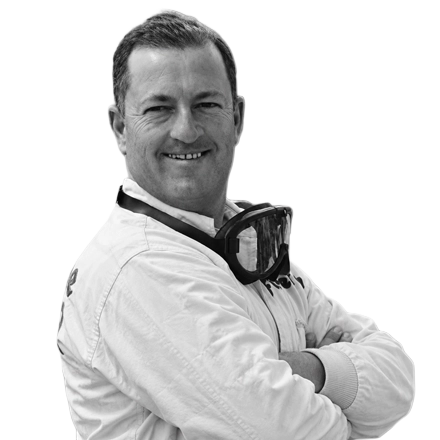
James “Hap” Sharp was an American racing driver, engineer, and team owner whose name is forever linked with one of motorsport’s most innovative projects: Chaparral Cars. Though he competed in Formula One, Sharp’s greatest legacy came through helping revolutionise sports car design alongside Jim Hall.
Driver Bio
| Nationality | American |
| Birthplace | Tulsa, Oklahoma, USA |
| Born | 1 January 1928 |
| Died | 7 May 1993 |
| First Grand Prix | 1961 United States Grand Prix |
| Last Grand Prix | 1964 Mexican Grand Prix |
| Years Active | 1961–1964 |
| Current/Last Team | Privateer: Brabham |
Born on New Year’s Day, Sharp earned the nickname “Hap” from “Happy New Year,” a fittingly memorable moniker for a man who would go on to leave a lasting mark on racing history. Raised in the United States, Sharp became part of the post-war generation of American drivers who combined courage, technical curiosity, and entrepreneurial spirit.
Racing career
Driver and competitor
Sharp built a successful career as a racer in multiple disciplines and became known for his speed, intelligence, and calm professionalism. He competed in six Formula One World Championship Grands Prix, joining the small but growing number of Americans to test themselves on the global stage during the sport’s early decades.
Although he scored no World Championship points, simply reaching Formula One from the United States in that era was a notable achievement. European-based Grand Prix racing was still geographically and culturally distant from most American drivers, and opportunities were limited.
Sharp was also highly active in American road racing, where his broader talents would find their greatest outlet.
Chaparral revolution
Founding Chaparral Cars
In 1962, Sharp and Jim Hall formed Chaparral Cars in Midland. The partnership would become one of the most important innovation stories in motorsport history.
Their first major creation, the Chaparral 2, was immediately radical. It featured a mid-engine layout and an aerospace-inspired semi-monocoque fibreglass chassis—ideas far ahead of much contemporary sports car thinking.
At a time when many competitors still relied on traditional construction methods, Chaparral embraced aircraft principles, lightweight materials, and relentless experimentation. Sharp was central to both the business and competitive side of the operation.
Innovation and influence
The Chaparral programme would go on to pioneer concepts that later became standard in world motorsport, including advanced aerodynamics, movable wings, composite construction ideas, and sophisticated automatic gearboxes.
Cars such as the Chaparral 2E and Chaparral 2J became legends not only because they won races, but because they changed how engineers thought about race cars.
Sharp’s role as co-owner and driver helped transform Chaparral from a bold Texas idea into a globally respected name.
Legacy as a driver
While Jim Hall often became the public face of Chaparral’s technical brilliance, Sharp was an essential partner—trusted driver, organiser, and competitor. He provided the practical racing feedback and stability every revolutionary project needs.
His own Formula One appearances and broader driving résumé underline that he was far more than a businessman attached to a team name. Sharp was a genuine racer who could compete at the highest level.
Personal life
Sharp remained closely associated with motorsport throughout his life. Friends and contemporaries remembered him as thoughtful, capable, and deeply committed to racing.
His nickname “Hap” ensured he was rarely forgotten, but behind the cheerful name was a serious competitor who helped reshape international sports car racing.
Death
Sharp died on 7 May 1993 at the age of 65 after being diagnosed with cancer. His death was ruled a suicide.
Grand Prix Stats
| Race Entries | 6 |
| Race Starts | 6 |
| Did Not Start | 0 |
| Best Race Start | 14th |
| Best Race Finish | 7th |
| Retirements | 1 |
| First-Lap Retirements | 0 |
| Not Classified | 1 |
| Disqualified | 0 |
| Did Not Qualify | 0 |
Qualifying
| Qualifying Sessions | 6 |
| Reached Q3 | – |
| Q2 Eliminations | – |
| Q1 Eliminations | – |
| Did Not Qualify | 0 |
Complete Formula One World Championship results
| Year | Entrant | Chassis | Engine | 1 | 2 | 3 | 4 | 5 | 6 | 7 | 8 | 9 | 10 | WDC | Points |
|---|---|---|---|---|---|---|---|---|---|---|---|---|---|---|---|
| 1961 | ‘Hap’ Sharp | Cooper T53 | Climax Straight-4 | MON | NED | BEL | FRA | GBR | GER | ITA | USA 10 | NC | 0 | ||
| 1962 | ‘Hap’ Sharp | Cooper T53 | Climax Straight-4 | NED | MON | BEL | FRA | GBR | GER | ITA | USA 11 | RSA | NC | 0 | |
| 1963 | Reg Parnell Racing | Lotus 24 | BRM V8 | MON | BEL | NED | FRA | GBR | GER | ITA | USA Ret | MEX 7 | RSA | NC | 0 |
| 1964 | Rob Walker Racing Team | Brabham BT11 | BRM V8 | MON | NED | BEL | FRA | GBR | GER | AUT | ITA | USA NC | MEX 13 | NC | 0 |
Teammates & Qualifying Head-to-Head
| Teammate | Years | Races | Qualifying H2H |
|---|---|---|---|
| Masten Gregory | 1963 | 2 | 0-2 |
| Rodger Ward | 1963 | 1 | 0-1 |
| Chris Amon | 1963 | 1 | 0-1 |
| Jo Siffert | 1964 | 2 | 0-2 |
| Jo Bonnier | 1964 | 2 | 0-2 |